
Related videos:
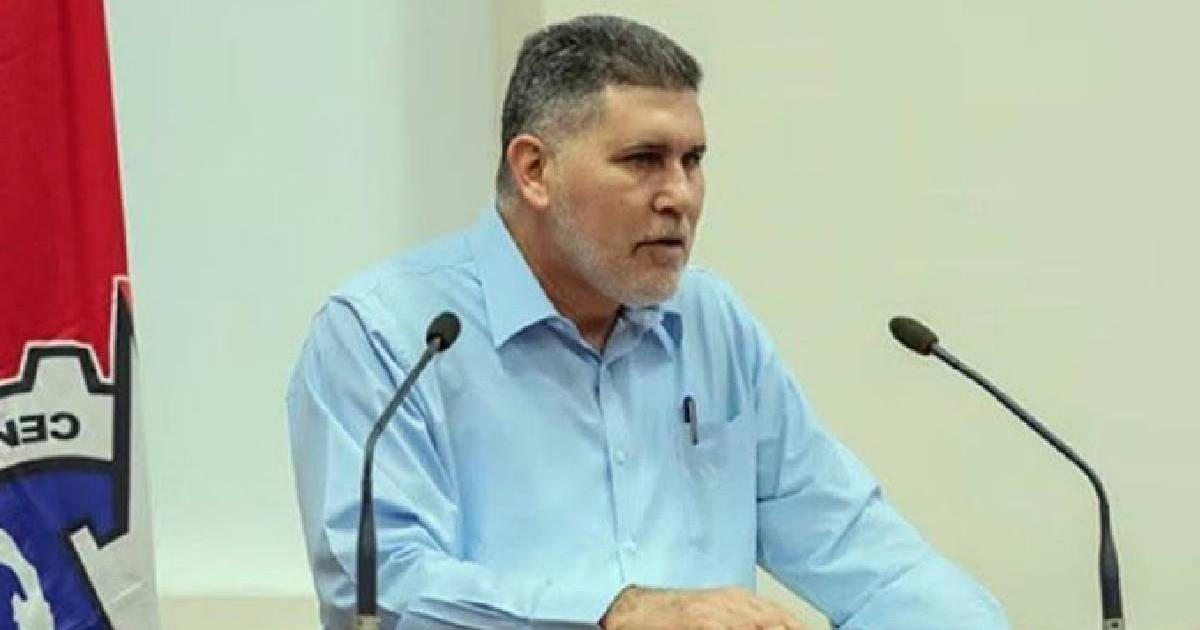
Oscar Pérez-Oliva Fraga, Vice Prime Minister and Minister of Foreign Trade and Foreign Investment of the Cuban regime, accused the United States on Thursday of wanting to impose a "forced economic dependency" on Cuba, to the detriment of foreign partners and companies that have historically operated on the island.
The official, great-nephew of Fidel and Raúl Castro, made these statements during the General Assembly of Associates of the Chamber of Commerce of the Republic of Cuba, held at the Hotel Nacional de La Habana, as reported by the state-run media Invasor.
Pérez-Oliva Fraga noted that, while foreign shipping companies and airlines are abandoning Cuban ports and routes to Havana for fear of secondary sanctions, U.S. companies continue their regular flights to Cuba without the risk of reprisals.
"We are being forced into an economic dependency on the United States, to the detriment of the participation of our partners and the companies that have traditionally contributed actively to the economic and social development of the Island, some for over 30 or 49 years," stated the official.
The Vice Prime Minister described the trade between the two countries as a one-way relationship—from north to south—subject to administrative approvals by sectors, products, and companies, with increasing restrictions on the renewal of licenses under financial conditions that he deemed "very rigid and unfavorable for Cuba."
He also recalled that the island cannot export its main products—nickel, tobacco, rum, and biopharmaceuticals—to that market, nor receive American tourists, which would deprive the country of significant external income.
"It is a trade to which we are forcibly dragged, to the detriment and under threat to our traditional partners, and it is an unequal trade," he declared.
Regarding the withdrawal of tourism and shipping companies, Pérez-Oliva Fraga attributed the main cause to the lack of fuel rather than a voluntary decision: "All the tourism companies, including those that have announced their total or partial withdrawal, want to continue in Cuba. Nobody wants to leave Cuba."
The official also described the second executive order signed by Trump on May 1, 2026, which internationalized secondary sanctions against any company worldwide with business ties to the island, as "a letter of marque that President Trump gave to the Secretary of State, subcontracting the policy towards Cuba."
These measures from Washington add to the executive order of January 29, 2026, which declared a national emergency and imposed an energy blockade with tariffs of up to 50% on third parties supplying oil to Cuba, prompting the withdrawal of shipping companies such as Hapag-Lloyd and CMA CGM, as well as airlines like Air Canada, Rossiya, and Nordwind.
The official's speech occurs amid the most severe economic crisis in Cuba since the Special Period: a projected GDP contraction of 7.2% for 2026, accumulating a decline of 23% since 2019, daily power outages lasting between 20 and 25 hours, and a reliance of 70-80% on food and energy imports.
Pérez-Oliva Fraga, a figure identified as a possible successor to Díaz-Canel, defended the package of 176 economic transformation measures approved by the National Assembly on June 18 and 19, 2026, which include private banking, currency exchanges, purchasing shares in state-owned companies, and direct exports by private individuals.
"We must solve our problems ourselves, preserving our sovereignty, independence, self-determination, and social system, which no one doubts is the fairest and which we need to build. However, for that to happen, the economy must function," the official concluded before directors of the Chamber of Commerce and representatives of state and private enterprises.
Filed under: