
Related videos:
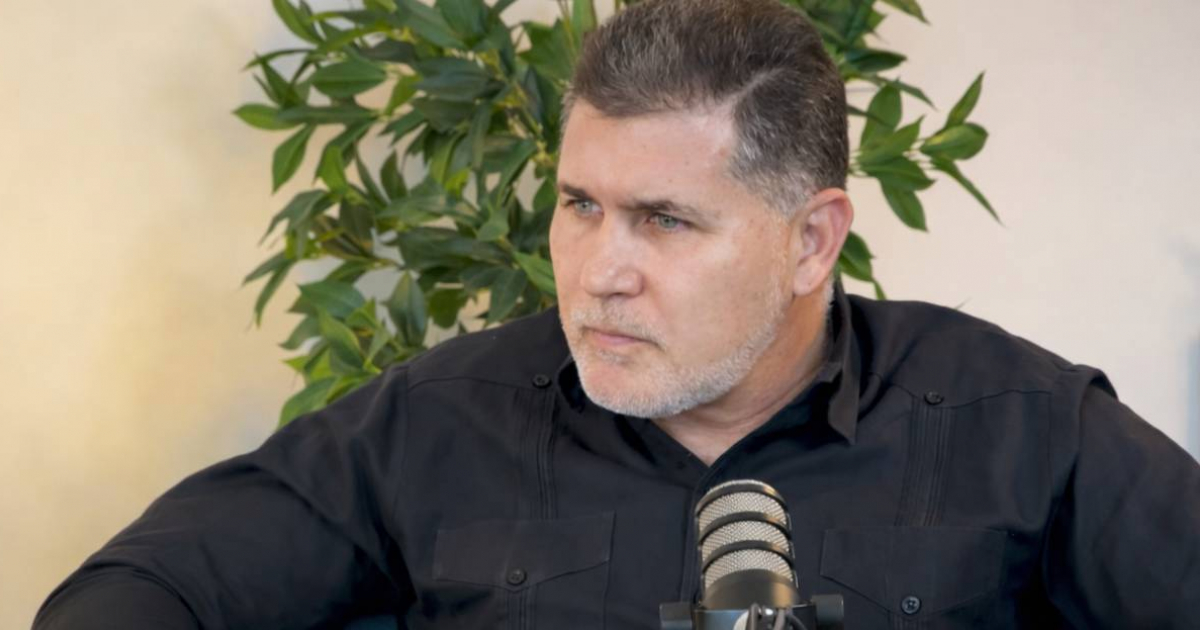
Óscar Pérez-Oliva Fraga, Cuba's deputy prime minister and nephew-great-nephew of Fidel and Raúl Castro, has become the most referenced figure in analyses about a possible controlled transition on the island, just as the regime negotiates with Washington under unprecedented pressure since the 1962 Missile Crisis.
The analyst Agustín Antonetti described it this Tuesday in precise terms: "Óscar Pérez-Oliva Fraga would be the one to position himself as the new Delcy Rodríguez in Cuba, post-Díaz-Canel."
The comparison points to a loyal operator to the clan who can negotiate with Washington without carrying the symbolic weight of the Castro surname, much like the vice president of Venezuela stepped in as acting president after the capture of Nicolás Maduro by the United States.
Óscar Pérez-Oliva Fraga combines three elements that make him unique in the Cuban political landscape. Firstly, he carries the Castro blood but was not directly involved in the initial phase of the Cuban Revolution.
He is the son of Mirsa Fraga Castro and the grandson of Ángela Castro, the older sister of Fidel and Raúl. He has family ties, but is not in the immediate line of heirs.
The second element is his discreet professional background. He is 54 years old, an electronic engineer graduated from CUJAE, and began to stand out within the military conglomerate GAESA, as the Director of Business Evaluation in the Mariel Special Development Zone, where he was subordinate to the late General Luis Alberto Rodríguez López-Calleja.
Learn how the military and economic framework of the regime operates, but he is neither a military officer nor an economist. His career has focused on business strategies for the opening of Cuba to foreign trade.
The regime has been preparing him for years as a top-level leadership figure. However, they have done so with extreme caution. He began to make headlines in the press in 2024 when he was promoted to the position of Minister of Foreign Trade and Foreign Investment. He was elevated to Deputy Prime Minister on October 17, 2025, while simultaneously retaining his previous role.
At the end of 2025, he was appointed a member of the National Assembly. This is the third element that puts him in the spotlight, as it legally enables him to assume the presidency of Cuba, according to current legislation.
The spokesperson for the economic opening changes in Cuba
Óscar Pérez-Oliva Fraga has been responsible for announcing the changes in economic opening. In 2024, he communicated the possibility for foreign companies to hire Cuban workers directly, without the mediation of the traditional state employer entities. "We are broadening the options for the investor," he said.
In February, he appeared on the official program Mesa Redonda to explain the energy crisis, acknowledging "internal deficiencies" and assuring that "it would not be justified by the economic blockade of the United States."
Those words, which sounded empty to many exiles, hold significant weight for a large segment of the Cuban people and for international opinion, as they break away from the usual discourse of the regime.
On Monday, he announced a set of measures to attract investments from Cubans abroad: participation as partners or owners of private businesses, access to the banking system in foreign currency, granting of land in usufruct, and opening up to large infrastructure projects.
He first made the announcement to a foreign media outlet and then provided the details on Cuban Television. In this way, he strategically captured the world's attention before directing the focus towards the national audience.
These measures are presented as decisions of the Cuban government, but some analysts believe they are a direct concession in the context of the negotiations of the regime with Washington. These conversations remain active and were confirmed on March 13 by Miguel Díaz-Canel, after spending weeks denying that there was any diplomatic dialogue.
This Tuesday, the U.S. Secretary of State, Marco Rubio, launched new criticisms against the Cuban regime and stated that the economic reforms being implemented on the island are not enough to resolve the deep crisis in the country.
He warned that the changes need to be deeper in order to reach concrete agreements. "They need to put new people in charge," Rubio said.
The possible departure of Díaz-Canel
The context that propels Óscar Pérez-Oliva Fraga is partly due to the pressure from the United States and, on the other hand, the discrediting of the government of Miguel Díaz-Canel. The current leader has Cuba in the midst of a simultaneous crisis on several fronts. The people see him as a puppet of Raúl Castro, lacking authority.
However, it is not only that which affects his mandate. Díaz-Canel has also been "indirectly" linked to corruption scandals that have yet to be disclosed, involving his colleague and former Minister of Economy and Planning, Alejandro Gil, who is imprisoned in Cuba.
Cubans have not forgotten that detail, despite the secrecy with which the regime handled that case.
The pressure from the Trump Administration for Díaz-Canel's departure is becoming increasingly intense. Sources from the U.S. government claim that it is a prerequisite for making significant progress in talks with Havana.
Díaz-Canel must resign and initially, the U.S. government would leave it up to the Cuban side to decide how to carry out that step.
So far, negotiations with the United States seem to be primarily channeled through Raúl Guillermo Rodríguez Castro, known as "El Cangrejo" and the grandson of Raúl Castro, who serves as the direct interlocutor for Secretary of State Marco Rubio.
Óscar Pérez-Oliva Fraga would be the public face that would allow the Castros to maintain their status in Cuba, gradually stepping away from public life. The regime would make him the key figure to begin a gradual opening of the economy and transition to politics in a peaceful manner.
The table is set for a change of ruler in Cuba. The vice premier will face his main obstacle in the Cuban exile community in Miami, where critical voices reject any scenario that preserves the Castro regime. This would compel him to show signs of change from his very first day in power.
The congresswoman María Elvira Salazar was emphatic this Tuesday: "There is no negotiation with the Castros, nor with that regime. Here we only talk about how to transition towards democracy, freedom, and all the human rights that the people deserve."
Filed under: