
Related videos:
A diplomatic cable from the State Department, leaked and published by the magazine The Nation, reveals that Washington instructed its embassies to pressure other countries to curb a debate in the UN regarding Cuba scheduled for July 7.
The leak has sparked international tensions and, at the same time, has provided the Cuban regime with a new opportunity to bolster its narrative of external confrontation.
A cable that reveals diplomatic pressure
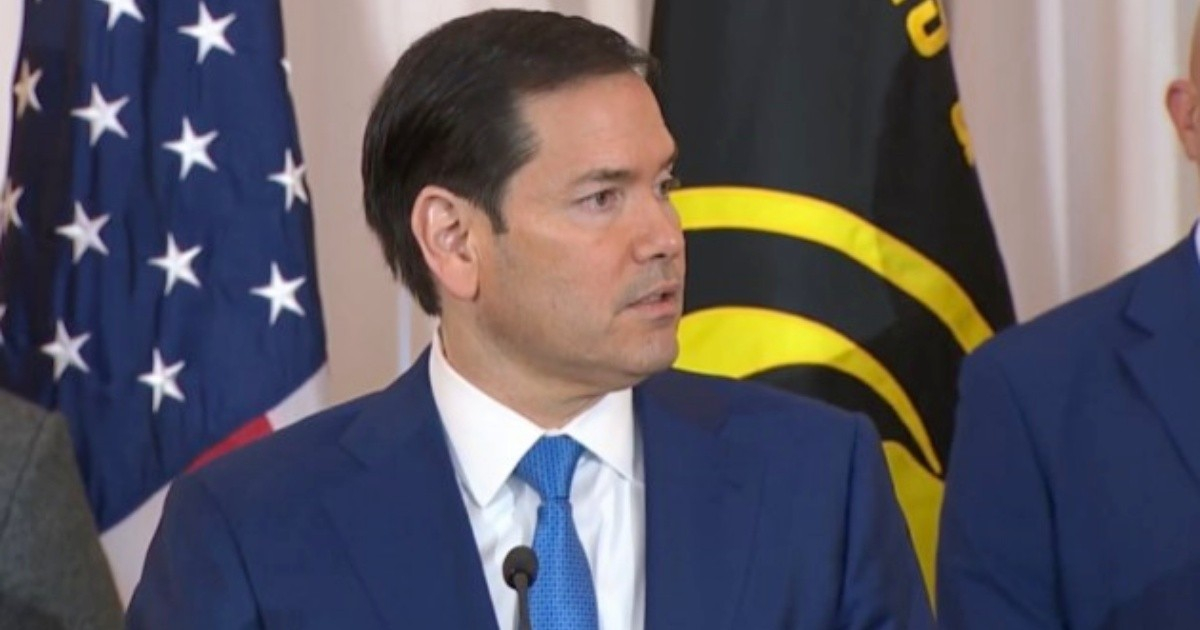
The document, dated July 1 and signed by Secretary of State Marco Rubio, illustrates how the United States aims to influence the stance of various countries at the General Assembly.
However, the episode also highlights a recurring pattern: Havana takes advantage of every diplomatic clash to divert attention from the internal crisis facing the island.
The magazine The Nation published an article on July 2nd, signed by journalists Peter Kornbluh and Ken Klippenstein, revealing the contents of a cable classified as "Sensitive but Unclassified" (SBU).
The document, consisting of three pages, was obtained by Klippenstein and is titled “Engaging UN member states on July 7 UN General Assembly open debate on Cuba.”
Instructions differentiated by country
According to the research, the cable divides countries into three categories with differentiated guidelines.
Firm allies of Washington are being urged to openly criticize the Cuban regime for its economic model, mismanagement, and corruption.
Non-aligned countries are requested to refrain from intervening in the debate, while governments that have traditionally supported Havana are warned that the United States will closely monitor their positions.
The document also states that the annual resolution against the embargo has become a propaganda platform that the regime uses to evade accountability.
In that context, it sees no need to open a new extraordinary debate.
Economy in crisis and official narrative
The cable states that the Cuban economy lacks a solid foundation and attributes its deterioration to incompetence and poor management.
At the same time, it asserts that the United States has offered 100 million dollars in humanitarian aid, the delivery of which -according to Washington- has been hindered by the Cuban authorities.
The Nation indicates that this aid has been on the table for over a month and that its distribution would be conditioned on independent channels, such as non-governmental organizations and the Catholic Church, rather than state structures.
In parallel, Díaz-Canel recently admitted to errors made by the regime, although he reiterated that the embargo is the main cause of the crisis.
That narrative avoids taking responsibility for the impact of a centralized economic model, the lack of reforms, and political control.
The leak was quickly exploited by the regime.
The Foreign Minister Bruno Rodríguez Parrilla had denounced days earlier alleged pressures from the United States, and following the disclosure of the cable's content, Havana reinforced that narrative in its official media.
Rodríguez stated that Cuba does not pose a threat to the United States and described the embargo as a "crime against humanity."
However, the Cuban government omits that, despite more than 30 consecutive votes at the UN against sanctions, it has not implemented structural changes nor improved the human rights situation.
The extraordinary session on July 7 will test Washington's diplomatic pressure capabilities. Meanwhile, millions of Cubans continue to face a daily crisis in which the regime prioritizes political control over real solutions.
Filed under: