
Related videos:
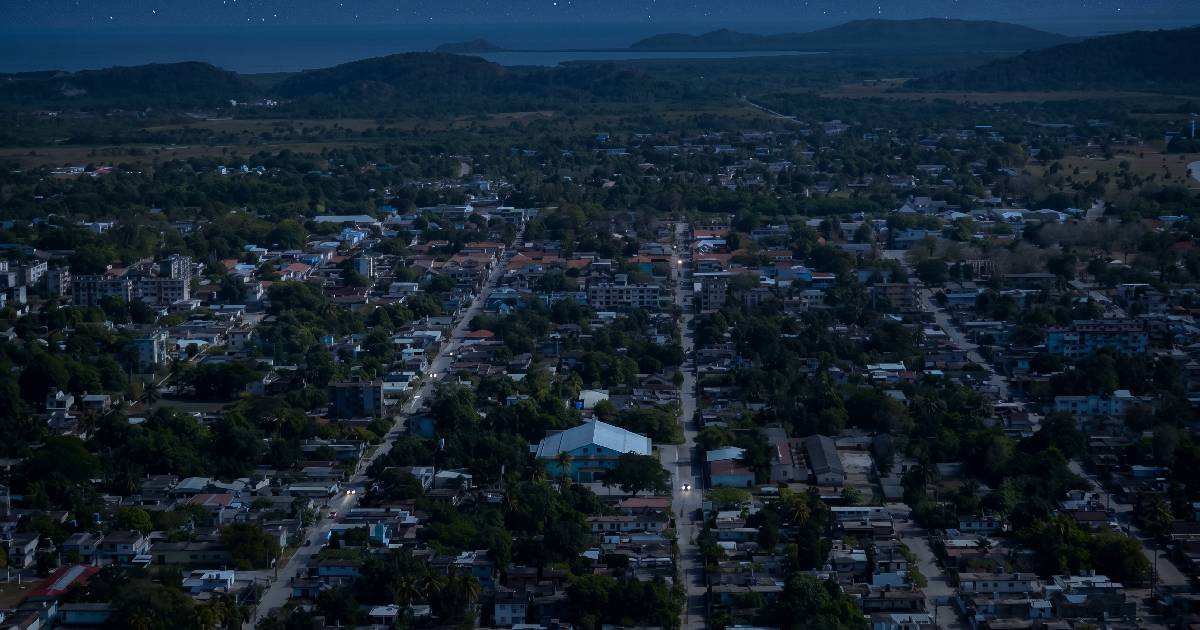
On the Isle of Youth, the residents organize their lives around just two hours of electricity, a short time that is insufficient for cooking, preserving food, doing laundry, and charging phones before the next blackout.
A chronicle published this Friday by the official newspaper Victoria depicts this reality through a football metaphor, where each minute of electricity equals a decisive play.
With just 120 minutes of supply, household tasks compete with each other for an impossible-to-manage space, while any interruption or distraction represents a lost opportunity.
The situation is exacerbated by the lack of water, forcing many families to simultaneously confront two of the main consequences of the basic services crisis.
Without sufficient electricity to pump or store liquid, basic activities such as cooking or having access to cold water become daily challenges.
The limited duration of electrical service also restricts communication possibilities. Charging a mobile phone, essential for staying informed or contacting family, becomes a priority that often cannot be completed before the power outage returns.
The narrative reflects how uncertainty dominates the daily lives of the residents of Pine Island. No one knows for sure when electricity will return or how long it will be available, a reality that forces constant reorganization of household activities and highlights the ongoing deterioration of the country's energy infrastructure.
Beyond the literary device used to describe this routine, the narrative presents a situation that has become commonplace for thousands of Cuban families, as electricity has ceased to be a guaranteed basic service and has transformed into a scarce resource that impacts the very possibility of cooking, preserving food, accessing water, or maintaining contact with the outside world.
On the Isle of Youth, meanwhile, each family continues to play their own final every night: "There are no extensions here. No penalties that matter. Only the murmur of the sea and the uncertainty of when the next match will arrive," the text concluded.
The deterioration has been progressive. In June 2025, the island broke its historical reputation as a blackout-free territory when the local electricity company implemented scheduled outages of five hours for the first time.
In February, power outages were extended to cyclic four-hour intervals due to a lack of fuel. On March 11, the broadcaster Ramón Leyva Morales, known as Carapachibey Piñero, reported in a video: "Here in the Isle of Youth, there are 18 hours of power outages daily, and it's been like this for four weeks."
On May 29, Rubén Campos Olmo, the general director of the Electric Union, acknowledged on the official program Mesa Redonda that the territory he himself described as "perhaps the best in the country for electric generation" was operating with only six hours of electricity per day.
By July 2026, those six hours have been reduced to two.
The shortage of electricity is leading to a direct food crisis. In June, a resident identified as @Yanet_diary on Instagram reported having paid 700 pesos for a ground beef that arrived at her home fermented, with a bad smell and a greenish color.
The content creator explained that in the municipality "we only get electricity for two hours a day, every eight hours", which completely disrupts the cold chain.
The geographic isolation exacerbates the situation. The ferry Perseverancia, the only maritime connection between the island and Batabanó, has been out of service since May due to a malfunction in its electric engine.
The Ministry of Transportation reduced the service to one trip per week starting June 20, which has limited food supplies and the mobility of residents.
As a temporary measure, in March the Electric Company enabled four power outlets in solar parks so that residents could charge their electronic devices.
The government attributes the worsening situation to the executive orders signed by President Donald Trump in January and May, which prohibit the entry of fuel to Cuba.
Experts and critics point out, however, that the root of the problem lies in decades of mismanagement and disinvestment in the electrical infrastructure.
Filed under: