
Related videos:
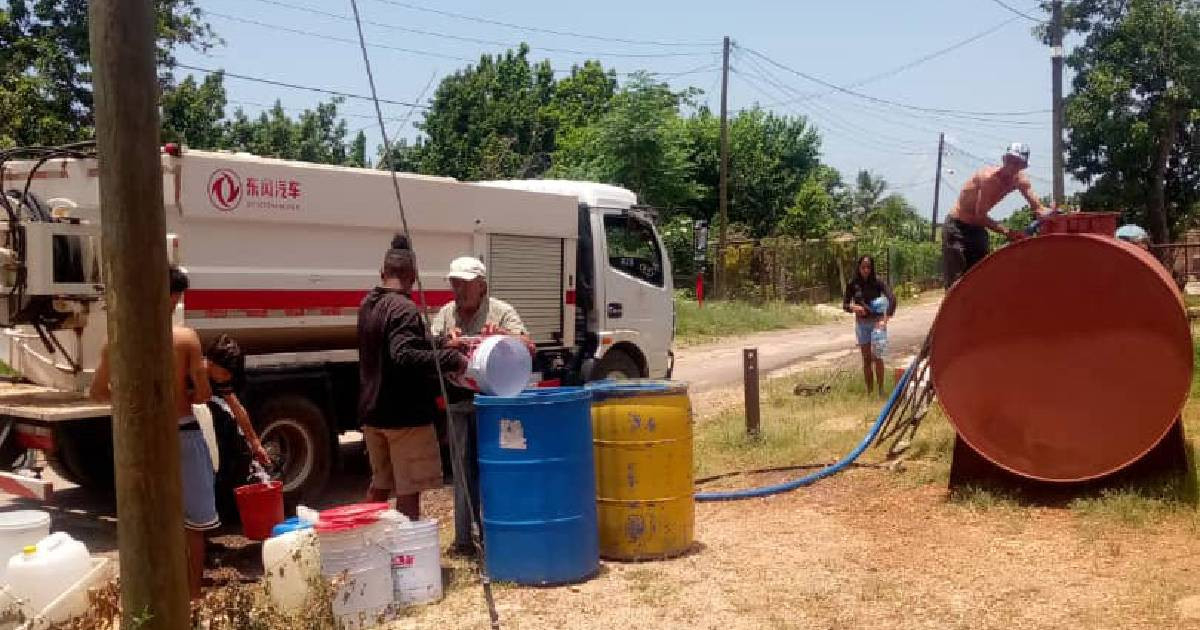
More than 225,000 people in the province of Artemisa, representing 65% of its population, do not receive water regularly due to prolonged blackouts and the deterioration of pumping equipment, the provincial Water and Sanitation Company acknowledged this Friday in a report outlining the magnitude of the water crisis in that area.
Of that total, around 200,000 residents are directly affected by shortages due to the lack of electricity to operate pumping systems, while another 25,000 suffer from broken equipment, specified a report published by the provincial newspaper El artemiseño.
Jorge Cobas Vidal, director of the Provincial Water and Sewer Company, noted that the most affected municipalities are San Cristóbal, Candelaria, Artemisa, Bahía Honda, and Guanajay, where the pumping motors remain shut down for 20 to 22 hours a day due to the lack of electricity.
San Cristóbal faces the most critical situation with electrical circuit 341, which has gone over 24 consecutive hours without power. The mere two hours of supply that it receives are insufficient to serve communities such as Fierro, López Peña, Santa Cruz, el Lácteo, Florencio Morejón, Mango Jobo, and Campo de Tiro.
In the provincial capital itself, the situation is no better. "The Waterloo well sometimes remains off for 24 hours, which causes hydraulic circuit number 3, where a large population lives in the upper area, between streets 22 and 40, particularly near the Tomás Romay polyclinic, to take a long time to receive water, as it stays in the lower areas during the two hours of pumping after a prolonged blackout. We need to pump for at least 12 continuous hours for the water to reach the most affected area," Cobas Vidal explained.
In Guanajay, the La Loma neighborhood requires a continuous supply from the water source, while the Beliert source often exceeds 16 hours of shutdown.
In Bahía Honda and Punta de Piedra, the pumping system also fails to fulfill its function. "With just two or three hours of electricity, there isn't enough time to supply," the official admitted.
Las Terrazas, in Candelaria, relies on circuit 1570, described by the authorities themselves as the most complex in the entire province.
Of the 42 submersible pumps that Artemisa has, three are out of service and are awaiting repair at workshops in San José de las Lajas, in Mayabeque, where territories with the highest number of breakdowns are prioritized.
However, according to the state media, "Artemisa is not among the territories with the highest number of breakages."
The supply of water through tankers, whether state or private, also faces obstacles due to fuel shortages. Cobas also warned about illegal activities detected in the sale of water and the profiteering from the fuel intended for transporting the liquid, although it acknowledged that most complaints do not turn into formal reports.
The crisis in Artemisa is part of a water supply collapse that affects the entire island. In Santiago de Cuba, areas such as Altamira and El Cristo have gone without water service for between 39 and 48 days due to electrical failures at pumping stations.
In Guantánamo, the distribution cycles have been extended to 25 days, with about 60,000 people relying on a single pumping system.
In Camagüey, authorities recently urged residents to boil water due to a shortage of chlorine gas, with between 30 and 40 daily cases of hepatitis A.
Official data from May confirmed that nearly three million Cubans lack regular access to drinking water, and millions suffer from intermittent supply.
The hydraulic system operates with only 37% of the necessary fuel, and 87% of the country's aqueducts depend on the National Electric System to function, which means that every blackout results in a simultaneous water outage for hundreds of thousands of people.
Filed under: