
Related videos:
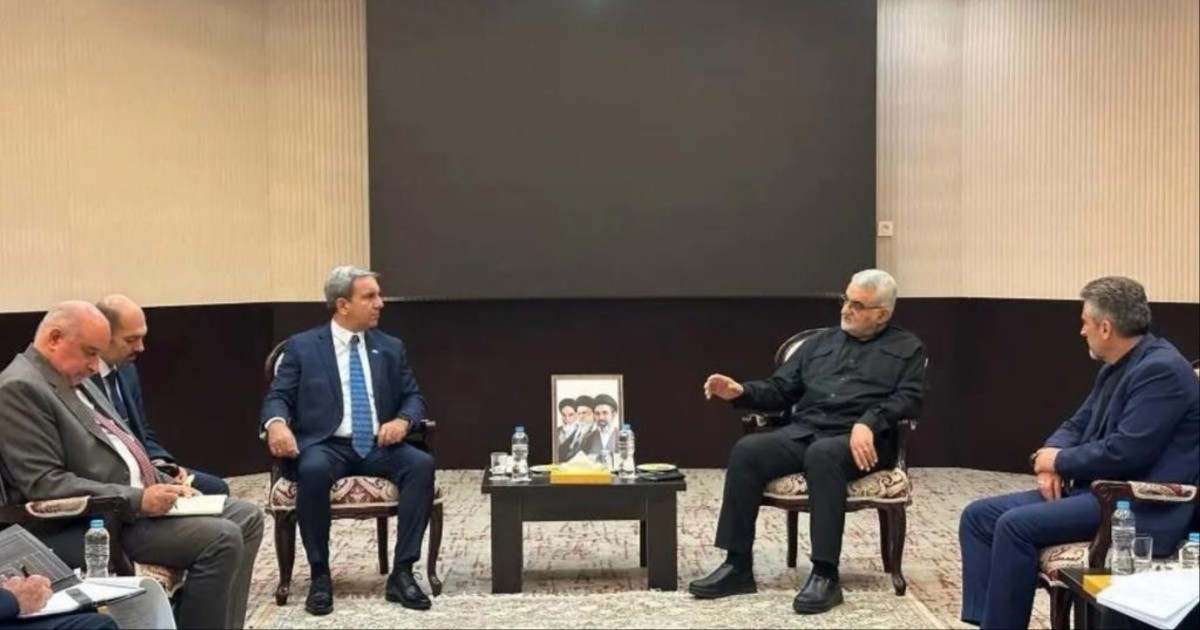
The Cuban regime appointed the Minister of Higher Education, Walter Baluja García, as head of the official delegation that traveled to Tehran to participate in the ceremonies honoring Ayatollah Alí Jameneí, whose state funeral began on July 4 in the Iranian capital.
According to a statement from the Cuban embassy in Iran, Baluja García was received that same day by Alaeddin Boroujerdi, a member of the National Security and Foreign Policy Commission of the Islamic Consultative Assembly of Iran, with whom he discussed bilateral relations and the necessity to advance in economic, commercial, financial, and cooperation ties.
Boroujerdi "expressed his gratitude for the presence of the Cuban delegation in Iran to pay tribute to the martyr leader, Ayatollah Seyyed Ali Khamenei," according to the same statement.
Jamenei was assassinated on February 28, 2026 during the so-called "Operation Epic Fury," a joint airstrike by the United States and Israel that also claimed the lives of his daughter, granddaughter, daughter-in-law, and son-in-law. Iran declared 40 days of official mourning, and the six-day state funeral took place across five cities in Iran and Iraq, with the final burial scheduled for July 9 in Mashhad, the ayatollah's hometown.
The choice of a Minister of Higher Education —rather than a chancellor or vice president— to lead the delegation is striking, given the level of alliance both regimes profess. However, it can be interpreted as a calculated gesture: sufficiently visible to reaffirm solidarity, yet without elevating the diplomatic profile to the highest level.
Cuba was one of about 30 delegations from allied countries present at the funerals, alongside Nicaragua, Belarus, Serbia, Qatar, and Egypt, among others. No Western country or any nation that supported the military attack sent representation.
Participation in the funerals is the culmination of a series of gestures of solidarity from the Havana regime towards Tehran since the death of the ayatollah. On the same February 28, Miguel Díaz-Canel described the bombings as a "flagrant violation of International Law." The following day, he referred to the assassination of Jamenei as an "execrable act." On March 5, Díaz-Canel signed the condolence book at the Iranian embassy in Havana alongside Foreign Minister Bruno Rodríguez Parrilla and the Director of Bilateral Affairs at the Ministry of Foreign Affairs.
The regime also formally requested the UN Security Council to intervene to halt the military offensive by the United States and Israel against Iran.
Cuba and Iran have maintained diplomatic relations since August 8, 1979, following the triumph of the Islamic Revolution, and share common positions in international forums against the Western liberal order. In December 2023, Díaz-Canel visited Tehran and was personally received by Khamenei, sealing agreements in energy, health, and technology.
The new Supreme Leader of Iran, Mojtaba Jameneí, son of the ayatollah, was appointed on March 9, 2026, by the Assembly of Experts, although he was injured in the legs during the attack on February 28 and has not appeared in public since.
Filed under: