
Related videos:
Raúl Guillermo Rodríguez Castro, 42 years old, known as "El Cangrejo," granted his first interview to a U.S. media outlet —— published this Monday, following two days of discussions in June in Havana, where he portrayed himself as the man willing to negotiate directly with Donald Trump about the future of Cuba.
From the same office that his grandfather Raúl Castro occupied at the Havana Convention Center, the former leader's grandson clearly outlined his boundaries: "I have never been interested in politics. It has never been a vocation of mine. But if at any moment the revolution needs me, I will step up," emphasizing that he would never sacrifice the principles of the 1959 revolution or national sovereignty.
At the same time, he opened the door to Washington without ambiguity: "I can negotiate with anyone designated by the U.S. If given the opportunity, of course I would negotiate with Trump."
Rodríguez Castro does not hold an official position in the Cuban government, but he is a colonel in the Ministry of the Interior and the head of his grandfather's personal security.
His real influence goes far beyond just the role: in meetings with high-ranking officials of the regime, they defer to him; when he walks into a hallway, people stand at attention.
His public emergence occurs under extreme pressure. The Trump administration has imposed more than 240 sanctions since January 2026, with an oil blockade that reduced Cuba's energy imports by between 80% and 90%, causing blackouts of up to 25 hours a day in more than 55% of the territory and a projected GDP contraction of -6.5% for this year.
In this context, El Cangrejo has established direct contacts with Washington that no other Cuban official can claim: he spoke with Secretary of State Marco Rubio in January, met in April with Jeremy Lewin —Rubio's de facto envoy to Cuba— and was present when CIA Director John Ratcliffe visited Havana in May.
Significantly, he has not been sanctioned by Washington, something that analysts interpret as a deliberate signal that the Trump administration considers him a possible interlocutor.
In mid-April, he sent a secret letter to Trump with proposals for economic cooperation and a request to lift sanctions, but it was intercepted by a Customs agent at Miami Airport; its bearer, businessman Roberto Carlos Chamizo, was returned to Havana. Rodríguez Castro denied that the letter was intended for the U.S. president.
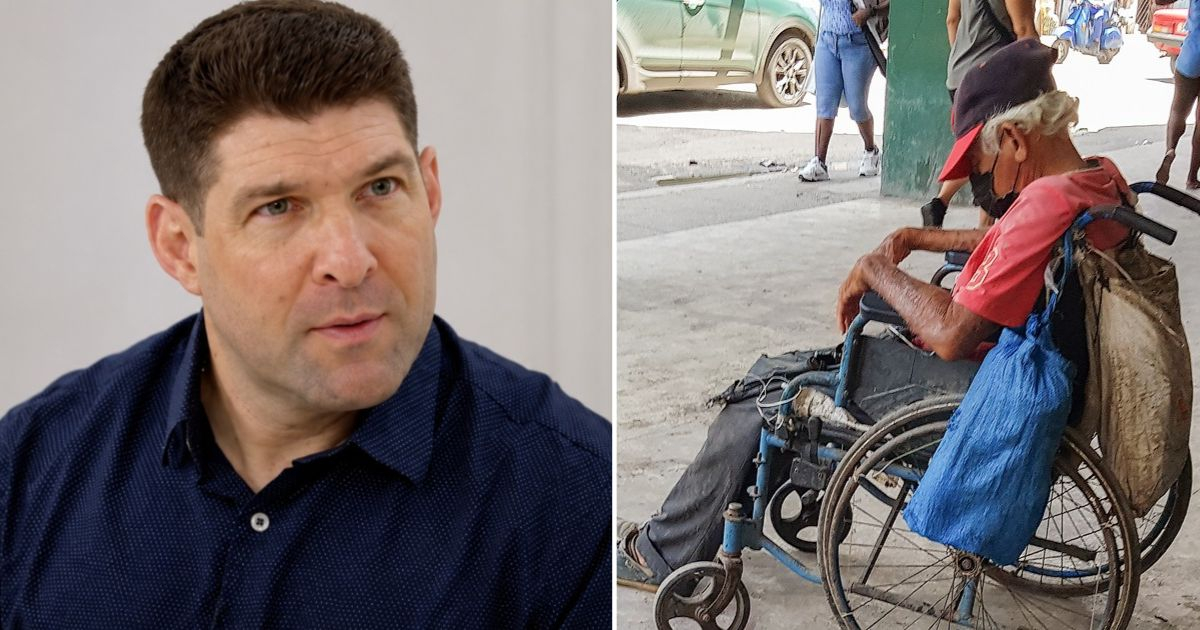
The profile of Raúl Castro's grandson contrasts sharply with the revolutionary rhetoric he espouses: he wears Hugo Boss and Dolce & Gabbana, sports Hermès sneakers, and travels on private jets while Cuba sinks deeper into scarcity.
According to a joint investigation by Latin American media, he made at least 23 private flights on a jet to Panama between 2024 and the end of 2025 for luxury shopping.
"It pains me that many people cannot live like I do. It weighs on me how people struggle. And I work every day to change that situation," he stated.
About the more than 1,200 political prisoners accounted for by the organization Prisoners Defenders, it was stated that Cuba would be willing, under appropriate conditions, to release "people considered political prisoners," although it added: "The truth is not absolute."
Ricardo Herrero, executive director of the Cuba Study Group, summarized the paradox: "This administration has helped create Raulito. It has achieved consensus among the various factions of the Cuban state in favor of market opening. But that is not enough for those around Rubio, who want to see political change, not just economic."
Rubio was decisive before the House Foreign Affairs Committee in June: "I really don't think this system is capable of reforming itself, unless new people take control or a new mindset is imposed."
Filed under: