
Related videos:
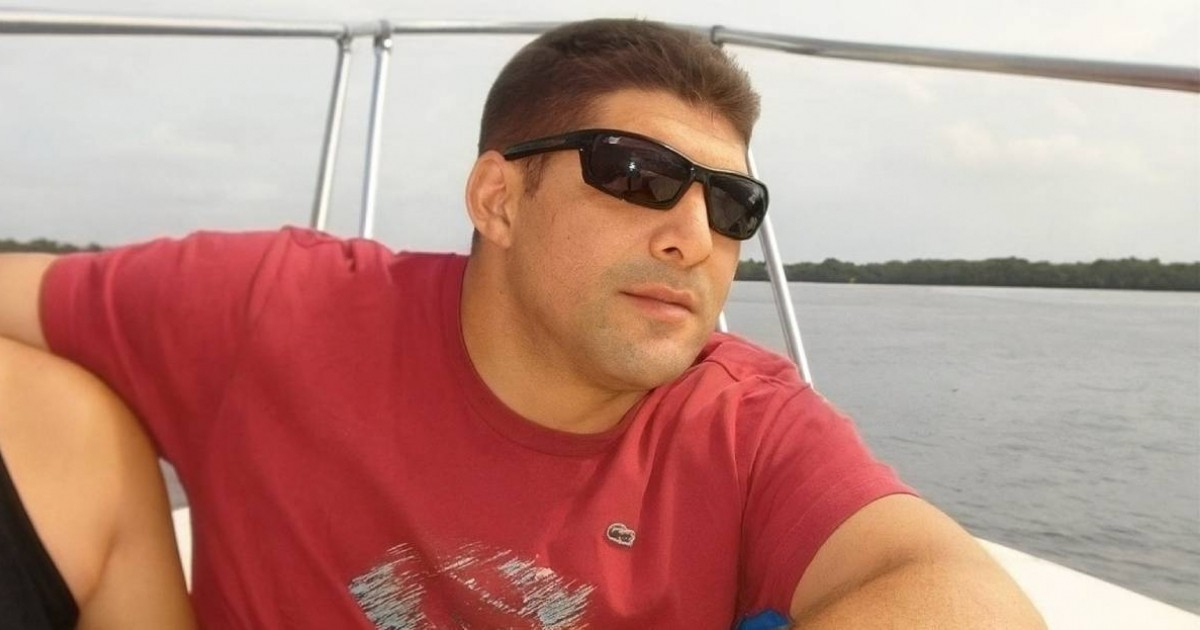
Raúl Guillermo Rodríguez Castro, the 42-year-old grandson of Raúl Castro known as "El Cangrejo," stated in his that it hurts him that Cubans do not live like he does — a statement that contrasts sharply with his luxurious lifestyle and the misery endured by the Cuban people under the system he represents and defends.
The interview, published this Monday by USA Today after two days of conversations in June in Havana, is the first that Rodríguez Castro has given to a media outlet in the United States. In it, he appeared wearing light blue skinny jeans, a black Hugo Boss t-shirt, and Hermès sneakers, seated in the office that belonged to his grandfather at the top of the Havana Convention Palace, the home of the Cuban parliament.
Meanwhile, ordinary Cubans survive on monthly salaries of between 10 and 15 dollars, endure power outages of up to 25 hours a day, and suffer from a shortage of food and medicine that led the UN High Commissioner for Human Rights, Volker Türk, to warn in June about the deterioration of healthcare and its impact on children.
Rodríguez Castro keeps the classified reports he reads every morning in a Salvatore Ferragamo leather briefcase. Furthermore, he made at least 23 trips on a private jet to Panama between 2024 and the end of 2025, according to a journalistic investigation.
In the interview, Rodríguez Castro also expressed his willingness to negotiate with Washington: "I can negotiate with anyone appointed by the U.S. If given the opportunity, of course, with Trump."
At the same time, he tried to distance himself from politics: "I've never been interested in politics. It has never been my calling. But if at any point the revolution needs me, I will do it."
Without an official position in the government, Rodríguez Castro is a colonel in the Ministry of the Interior and has been the head of Raúl Castro's personal security since 2016. His true influence stems from his lineage and decades of access to the core of power: as a teenager, he attended state meetings, including debates between Fidel and Raúl Castro. Frank Mora, a professor at Florida International University, summarizes it unambiguously: "He is the favored grandson. Raúl Castro trusted his father, and he is the grandson he loved the most."
This is his second public appearance, but the first before a U.S. media outlet. On June 19, he had already spoken with the Arab media The National to defend the package of 176 economic reforms approved by the regime — the largest in its history — which includes private banking and the influx of private capital. At that time, he admitted that negotiations with Washington have not yielded results: “I would like to answer yes to that question, but the reality is no.”
Washington responded with skepticism. The State Department described the reforms as "superficial smoke signals," and on June 23, Marco Rubio announced new sanctions against five entities linked to GAESA, including the International Financial Bank and GeoMinera S.A.
The backdrop is an unprecedented energy crisis: Trump's Executive Order 14380, signed in January 2026, imposed secondary tariffs on those supplying oil to Cuba, collapsing energy imports by between 80% and 90%.
The statement that it "hurts" him that many people do not live like him, made from a position of power while the island suffers from blackouts, is profoundly contradictory: it is precisely the system that El Cangrejo represents, defends, and aims to preserve that conditions the daily lives of millions of Cubans.
Filed under: