
Related videos:
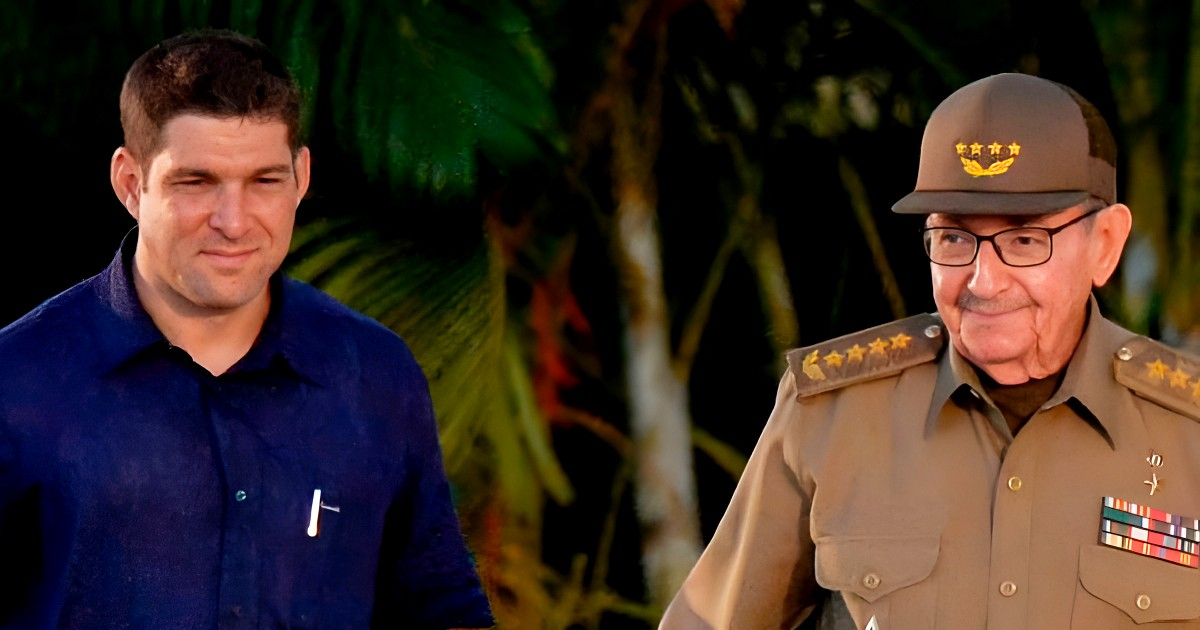
Raúl Guillermo Rodríguez Castro, the favorite grandson of Raúl Castro known as "El Cangrejo," who possesses no merit yet holds power solely due to his lineage, revealed in an exclusive interview with — published this Monday and the first he has given to an American media outlet — that his day begins around five in the morning reviewing secret documents from the ministries of Interior, Foreign Affairs, and the Armed Forces of Cuba.
Rodríguez, 42 years old, keeps those classified reports in a Salvatore Ferragamo leather portfolio and discusses them later with his 95-year-old grandfather, sometimes during lunch, according to research by USA TODAY conducted over two days in June in Havana.
The routine outlines an exercise of informal power that contrasts with his official position: the colonel from the Ministry of the Interior does not hold any position in the Cuban government, although he appears in state documents as responsible for the personal security of the regime's top leaders.
"It deeply pains me that people cannot live like I do. My greatest sorrow is that people struggle. But I get up every day to change that situation," Rodríguez Castro stated in the interview.
While the Cuban people endure blackouts of up to 25 hours a day in more than 55% of the territory, the grandson of the former dictator travels the world in a private jet wearing designer clothes: fitted jeans, a Hugo Boss t-shirt, Hermès sneakers, and a stainless steel Rolex on his left wrist.
A joint investigation by the Panamanian newspaper La Prensa, the Venezuelan media outlet Armando.Info, and the Latin American Center for Investigative Journalism documented that between 2024 and the end of 2025, he made at least 23 private trips to Panama for the purchase of luxury items. Rodríguez Castro did not deny these trips and stated that their purpose was to seek investment opportunities for Cuba.
Their real influence extends far beyond personal security.
Advisor on investments, negotiations, and public policy, she has built connections in Washington that no other Cuban official can boast: she spoke with Secretary of State Marco Rubio in January 2026 following the U.S. military operation in Caracas that resulted in the deaths of 32 Cuban soldiers; met with Rubio in Saint Kitts and Nevis in February; and was present when CIA Director John Ratcliffe visited Havana in May.
Significantly, the Trump administration has sanctioned dozens of regime officials—including President Miguel Díaz-Canel himself—but not Rodríguez Castro, something analysts interpret as a deliberate signal.
“Raulito offers them greater flexibility because he is a quasi-official figure. He is a military man. But his role is much broader than what is officially reflected,” stated Pablo Uchoa, a security specialist in Latin America from University College London.
Rodríguez presents himself as the man capable of directly negotiating with Donald Trump the future of the island.
"If I am appointed, I can negotiate with anyone selected by the government of the United States. Given the opportunity, of course I would be willing to work with Trump," he stated.
However, his margin of maneuver has evident limits. In mid-April, he sent a secret letter to Trump with proposals for economic cooperation, but it was intercepted by a Customs agent at Miami airport; the businessman transporting it was sent back to Havana.
In June, he supported a fuel supply agreement with a company from Florida that the White House blocked at the last moment.
Rubio, for his part, stated before the House Foreign Affairs Committee that he had not found any Cuban official capable of leading a transition aligned with U.S. interests: "I really don’t believe this system is capable of reforming itself, unless new people take power or a new way of thinking prevails."
"Rodríguez Castro is the avatar of Raúl Castro and wields significant power while his grandfather remains alive," summarized María José Espinosa, Executive Director of the Center for Engagement and Advocacy in the Americas, based in Washington.
Filed under: