
Related videos:
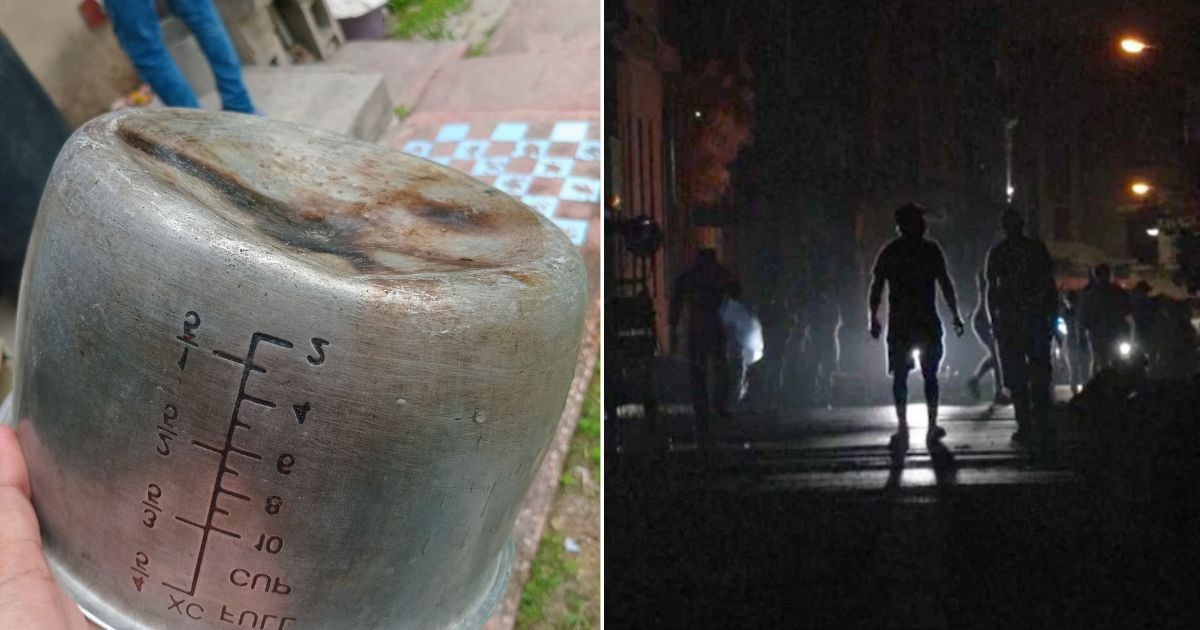
The Cuban writer, linguist, and translator Rodolfo Alpízar Castillo published an ironic reflection on Facebook this Sunday titled "Is it Cuban Cubaneo?", in which he sarcastically dismantles the double standards of the Cuban regime regarding the pot-banging protests: those from outside are labeled as "popular discontent"; those from within are considered a picturesque expression of national idiosyncrasy.
The catalyst was an interview that Miguel Díaz-Canel recently gave to the Puerto Rican weekly CLARIDAD, which has historically aligned itself with Castroism. When asked why there has been no social outbreak in Cuba, the leader responded: "People bang on pots, some with more displeasure and others... you know us, the 'Cuban way of being' too… I say: well, bang your pots at the neighbors to the north, who are the ones keeping us in this blackout."
Alpízar, a figure recognized by the very cultural institutions of the regime —former vice president of the Literary Translators Section of UNEAC and winner of the National Culture Distinction in 2013— highlights the contradiction with feigned naivety: when there are protests against inflation in other countries, the official Cuban press enthusiastically covers them and calls them "a manifestation of popular discontent against government measures."
But when Cubans bang their pots from their homes —because going out onto the street, as Alpízar warns, could land them in jail despite what the Constitution states— the state media reports nothing, and the head of state labels them as "Cuban cubaneo."
The writer takes official logic to the absurd with an uncomfortably unanswered question: if there is a protest with pots and pans in Argentina tomorrow, will it not be an expression of popular discontent, but rather an "Argentinian cubanization"? He concludes with a phrase that mixes humor and weariness: "Man, I'm too old for this, I don't understand anything so simple."
The irony points to something that Díaz-Canel acknowledged in the same interview without apparent contradiction: "Here there is a shortage of transportation, food, and medicine; here there are prolonged blackouts of more than twenty hours. This causes dissatisfaction; no one can be happy; the people are suffering." Nevertheless, he attributed the entirety of the crisis to the U.S. embargo, dismissing any responsibility of the regime's management.
The reality on the streets contradicts the festive narrative. The electric generation deficit reached a historic high of 2,208 MW on June 25, leaving nearly 70% of the country without electricity. The Cuban Conflict Observatory recorded 1,311 protests just in May 2026, the highest monthly figure known, and 107 street protests in June, a historic record nearly double the previous maximum.
The regime responded with militarization and armed black berets, police operations, and internet shutdowns. Cubalex documented at least 38 arrests in June, including six minors. A resident of Zamora, in Marianao, who protested after more than 24 hours without electricity summed it up accurately: "They have fuel to patrol the neighborhood and repress, but not to keep the country guaranteed with basic services."
The response from Cubans on social media was as ironic as Alpízar's. One commentator wrote: "Full pots don’t make noise; their clatter is from hunger and for freedom." Another wryly warned: "After all, he shouldn't send anyone to jail if he authorized it himself." Someone summed it up in four words: "The height of cynicism."
This is not the first critical text that Alpízar has publicly directed at the ruler: on June 13, he posted five demands on Facebook —amnesty, freedom of expression, abolition of the death penalty, transparency, and a plebiscite— a voice that the regime cannot easily dismiss with the argument of being a "mercenary of imperialism." Meanwhile, Díaz-Canel concluded his interview with his usual conviction: "We are not going to give up."
The CEPAL projects a contraction of the Cuban GDP of 6.5% in 2026, the worst in all of Latin America. Some economists predict it will be significantly higher.
Filed under: