
Related videos:
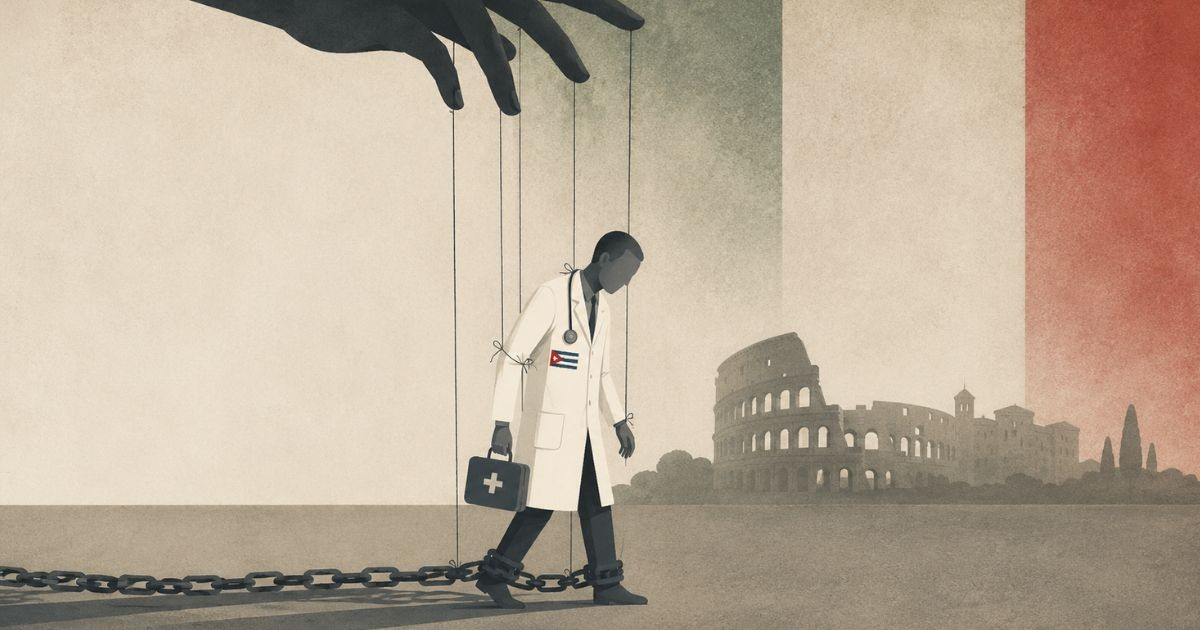
The Italian region of Calabria refuses to do without its more than 200 Cuban doctors despite the diplomatic pressure from the Trump administration, which labels these missions as "human trafficking" and "modern slavery," according to a report by the AP agency.
"The Cuban medical brigades are a key source of cash for the bankrupt regime," stated the State Department in an email response to the news agency.
In the specific case of Calabria, the region has signed individual contracts with each doctor and deposits their salaries directly into Italian bank accounts, instead of paying the Cuban state agency.
However, the doctors themselves acknowledged to the AP that they send up to half of their income to Cuba.
"We are aware of the economic situation that Cuba is going through. This is a contribution we make voluntarily because Cuba trained us, educated us, and turned us into doctors," explained the emergency medicine specialist Zoila Yakelin Arevalo Cruz.
The cardiologist Daysi Luperon Loforte rejected the label imposed from Washington: "We do not consider ourselves modern slaves at all, as someone has called us. We love our country, we make an economic contribution, and we are happy to do so."
The governor of Calabria, Roberto Occhiuto, a member of Forza Italia —a party with anti-communist roots—, hosted Mike Hammer, the charge d'affaires of the United States in Cuba, and the consulate general in Naples in February.
The meeting was cordial, but Hammer made it clear that Washington would prefer alternative sources for medical personnel.
"I faced some pressure during the Biden administration as well. But the pressure increased with Trump," admitted Occhiuto, who nonetheless remained resolute: "I have reiterated to Ambassador Hammer that I need to keep the hospitals open and that I intend to retain the Cuban doctors currently in Italy in their positions."
The governor acknowledged that he would like to triple the Cuban workforce to about 1,000 doctors, but he has restrained himself to avoid further irritating Washington.
The medical chief of the Polistena hospital, Francesco Moschella, summarized the situation before the arrival of the Cubans in January 2023: "It was a disaster. I was only keeping the emergency room open."
What Washington is denouncing is a scheme in which the Cuban regime charges market rates to recipient countries and gives the doctors only a fraction of that money, keeping the rest through the Cuban Medical Services Marketing Agency (CSMC), an entity linked to the military conglomerate GAESA.
The State Department estimates that these missions generate between 6 billion and 8 billion dollars annually for Havana, making them its main source of foreign currency, surpassing tourism.
Secretary of State Marco Rubio has gone further, accusing the program of constituting "a form of human trafficking", referencing the fact that the Cuban government retains the majority of the salaries and, according to reports, confiscates passports.
U.S. pressure has indeed had an effect on other countries.
In March 2026, Jamaica ended a nearly 50-year medical cooperation agreement with Cuba, impacting around 300 healthcare workers, and Honduras expelled more than 150 Cuban doctors.
The European Parliament approved an amendment in April 2025 that officially condemns Cuban medical brigades as "modern slavery" and "forced labor," and the Inter-American Commission on Human Rights published a 199-page report that same month recommending that American countries withdraw from the program.
Filed under: