
Related videos:
La Unión Eléctrica (UNE) reported this Saturday that the National Electroenergetic System (SEN) has been reconnected from Santa Clara to the province of Holguín, as part of the recovery process following the fourth total blackout in Cuba in 2026, which occurred on Friday when the system completely collapsed at 4:30 PM.
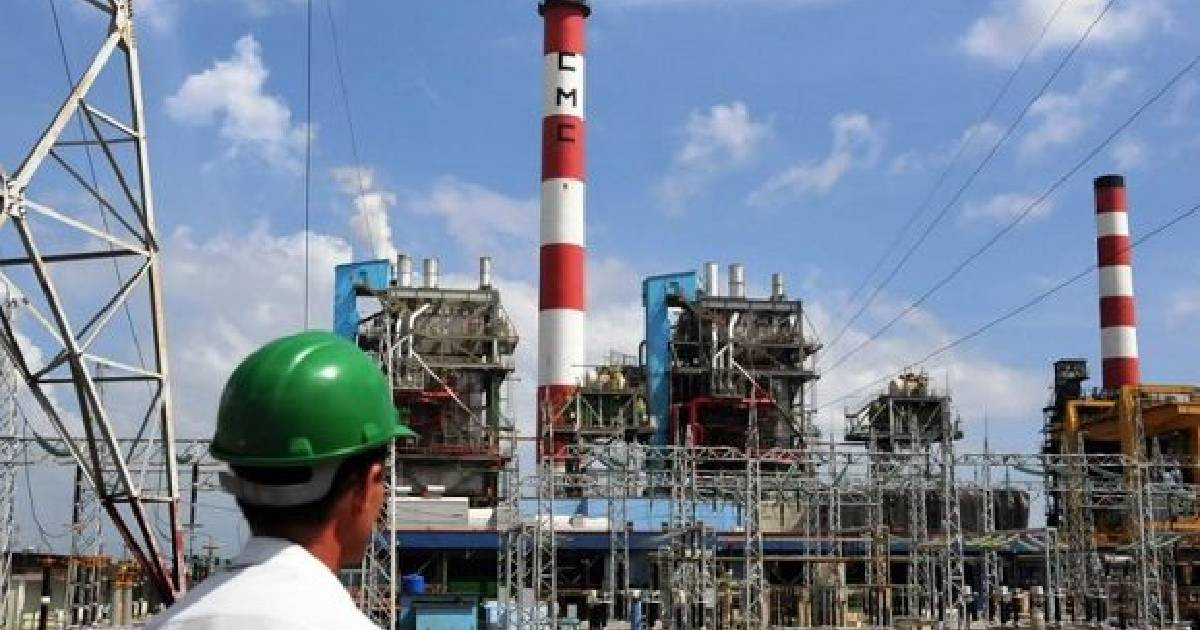
According to the official UNE post on Facebook, the state-owned company also announced that "the East is preparing for its recovery through the integration of Unit 3 of Renté," and that "in the coming hours, the startup of Unit 1 of Felton will begin."
The entity acknowledged that it operates under severe restrictions. "Even with the existing fuel limitations, services at vital centers across the country are prioritized," it emphasized.
The collapse on Friday was triggered at 3:55 PM by a failure in the 220 kV line between Santa Clara and Sancti Spíritus, which led to the division of the National Electrical System and the shutdown of several thermal units, resulting in a total disconnection just 35 minutes later.
The situation worsened during the early hours of this Saturday, when a loss of pressure in the western microsystem further complicated the restoration of the system.
The scenario before the blackout was one of extreme fragility. The availability of the national electrical system was only 935 MW against a demand of 3,100 MW, with 106 distributed generation plants shut down due to a lack of fuel, which accounted for an additional 890 MW out of service.
This is the eighth total blackout in approximately 24 months, occurring just three days after Cuba recorded the largest energy deficit in its history, 2,341 MW, with 73% of the population affected simultaneously on July 8.
The government response has been rhetorical. The Minister of Energy and Mines, Vicente de la O Levy, stated that "no one gives up here" without announcing any structural measures, while the leader Miguel Díaz-Canel merely called to "better organize" the blackouts without committing to investment to increase generation.
Citizen outrage overflowed on social media. "We can't live like this for an entire life; there are children, young people, and the elderly here. Something has to change to improve this because frankly, we are at extreme levels that make life unbearable," wrote a Cuban on social media.
Others questioned the structural fragility of the system: "And in those 35 minutes, isn't there an action plan in the SEN that prevents such a failure in the 220 kV line between the two cities from going beyond the local scope?"
Irony also had its place. "They’re already saying that with a short circuit in an outlet of a house, the SEN will collapse," summarized another citizen the widespread perception about the state of the system.
Experts estimate that modernizing Cuba's electrical infrastructure would require between 8 billion and 10 billion dollars, a figure that the regime neither possesses nor has any prospect of acquiring, while the thermoelectric plants are between 40 and 60 years old without comprehensive capital maintenance.
Filed under: