
Related videos:
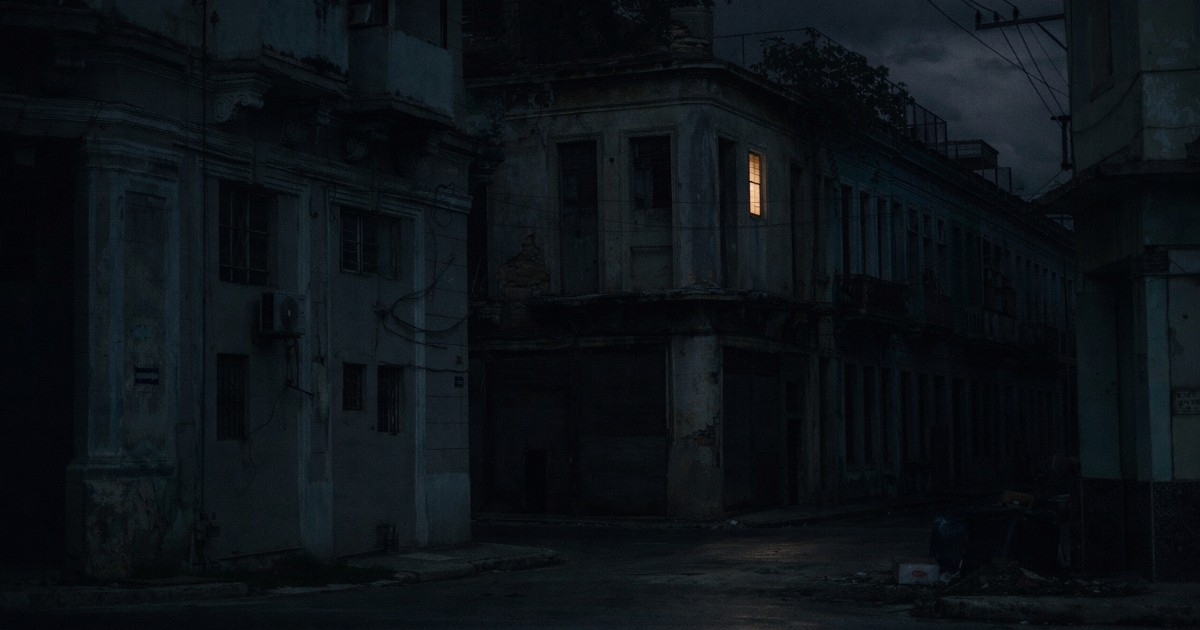
The Electric Union (UNE) reported this Saturday that the process of restoring the National Electroenergetic System (SEN) is facing an additional complication: during the early morning, there was a tension collapse in the microsystem of the western region, just hours after the country experienced its fourth total blackout of the year.
The collapse on Friday was triggered when a failure in the 220 kV line between Santa Clara and Sancti Spíritus caused the breakdown of the National Electric System (SEN) at 3:55 PM, leading to several thermal units going offline and resulting in a total disconnection just 35 minutes later, at 4:30 PM.
According to the official statement from the UNE, the initial strategy consisted of establishing microsystems in each province of the country to ensure vital services while gradually working on restoration.
The state company indicated that the priority now is to reintroduce the generation of the Energás Boca de Jaruco units in order to initiate the sequential startup of the thermoelectric plants (CTE) Máximo Gómez, Ernesto Guevara, Antonio Guiteras, Carlos Manuel de Céspedes, and Diez de Octubre.
Only once the connection to the eastern part of the country is restored will the CTE Lidio Ramón Pérez Felton and Antonio Maceo be incorporated.
The statement concludes with a phrase that the regime repeats like a mantra during every crisis: "The electric workers have worked intensively throughout the night and early morning to restore service as soon as possible." What it does not mention is the catastrophic state of the system that makes every new collapse inevitable.
At the time of the blackout on Friday, the availability of the National Electric System was only 935 MW compared to a demand of 3,100 MW, with a projected deficit exceeding 2,100 MW.
Additionally, 106 distributed generation plants remained halted due to a lack of fuel, representing an additional 890 MW out of service.
The government’s response has once again been rhetorical.
The Minister of Energy and Mines, Vicente de la O Levy, posted on X that "the dedicated and committed electrical and oil workers in Cuba face the blackout every day" and that "no one gives up here", without announcing any structural measures.
Days earlier, the leader Miguel Díaz-Canel simply asked to "better organize" the blackouts without committing to any investment to increase generation.
The context intensifies the seriousness of the moment: the blackout occurred on the eve of July 11, the fifth anniversary of the massive popular protests of 2021.
Cuba has gone more than three months without receiving regular shipments of oil, and the power plants are between 40 and 60 years old without comprehensive maintenance. On July 8th, the greatest energy deficit in the country's history was reached: 2,341 MW, with 73% of the population affected simultaneously.
This is the fourth total blackout in Cuba in 2026 and the eighth in approximately 24 months, an unprecedented acceleration that the regime has neither been able to nor appears willing to reverse with concrete measures.
It is estimated that modernizing the Cuban electrical system would require between 8 billion and 10 billion dollars, a figure that the dictatorship has no prospect of obtaining.
Filed under: