
Related videos:
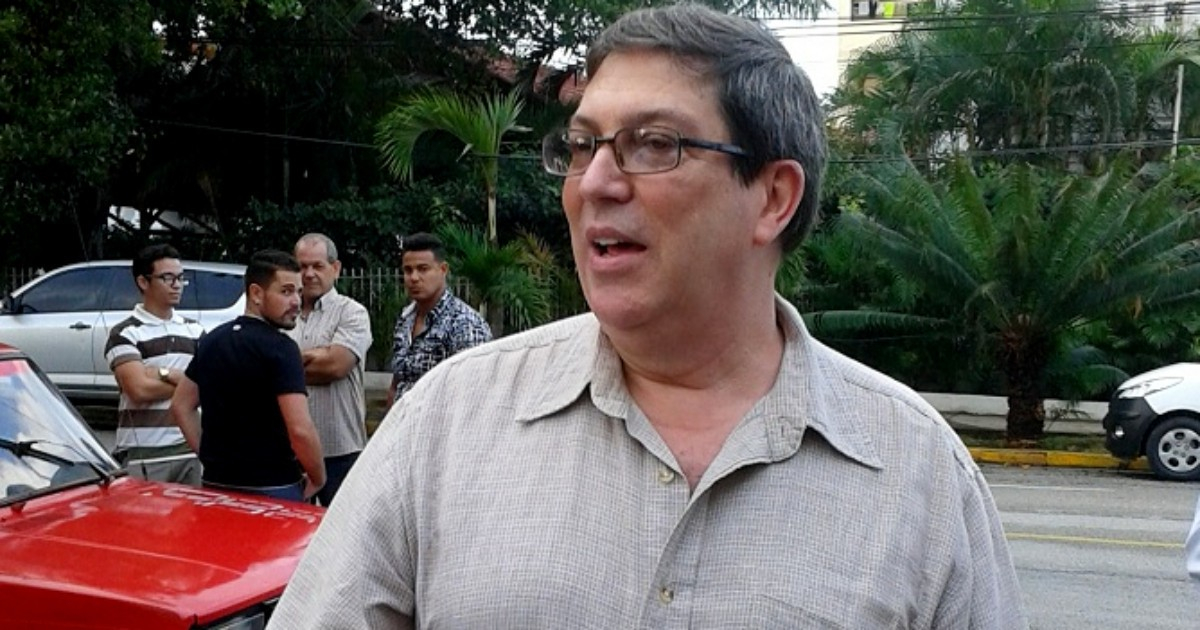
Cuban Foreign Minister Bruno Rodríguez Parrilla resorted to his usual script this Saturday, blaming the U.S. embargo for the fourth total blackout that Cuba is experiencing in 2026, completely ignoring the structural collapse of an electrical system that has gone for decades without real maintenance.
In a message posted on X, he stated that "the new disconnection of the National Electric System is a direct consequence of the energy siege and the extreme intensification of the U.S. blockade against Cuba."
According to him, the crisis is the result of a "collective punishment of the Cuban people that the U.S. government is betting on to destroy the Cuban Revolution."
"Our Party and Government, together with the brave electrical workers, will continue to work tirelessly for the restoration of the SEN and its gradual improvement," he concluded.
Rodríguez's rhetoric omits data that contradicts his version: Cuban thermoelectric plants have accumulated between 40 and 60 years of age without comprehensive capital maintenance, and the Antonio Guiteras CTE, the largest in the country, has not received such intervention since 2010. Only this year it has gone offline 17 times.
The fourth total collapse of the SEN in 2026 occurred on Friday at 4:30 PM, triggered by a failure in the 220 kV transmission line between Santa Clara and Sancti Spíritus that divided the system in just 35 minutes. At that moment, the availability of the SEN was only 935 MW against a demand of 3,100 MW, with a deficit exceeding 2,100 MW.
During the early hours of this Saturday, the restoration process faced an additional complication: a new voltage collapse in the western microsystem further worsened the situation for millions of Cubans who have been without electricity for hours.
This is the eighth complete blackout in approximately 24 months.
On July 8, the largest energy deficit in the country's history was recorded: 2,341 MW, affecting 73% of the population simultaneously. In areas of Matanzas, power outages have lasted up to 87 consecutive hours; in Havana, it has exceeded 30 continuous hours without electricity.
The true cause of the crisis is not the embargo, but the end of subsidized Venezuelan oil and the obsolescence of the infrastructure. Venezuela, which at its peak sent 100,000 barrels daily, reduced that number to 27,000 in 2025 and stopped shipments in January after the capture of Nicolás Maduro. Cuba needs 110,000 barrels daily, produces only 40,000, and has gone more than three months without receiving regular supplies from abroad.
The Secretary of State Marco Rubio publicly dismantled the regime's narrative, stating that there is no oil blockade and that the crisis is due to the collapse of Venezuelan subsidies and decades of neglect of the infrastructure.
The U.S. ambassador to the UN, Mike Waltz, also denounced that while the people remain in the dark, the residences of the Castro family and the power centers have a constant supply of electricity.
Rodríguez is not alone in his rhetoric: Prime Minister Manuel Marrero also attributed the blackout to the embargo, and the Minister of Energy Vicente de la O Levy merely stated, "No one here is giving up" without announcing any structural measures.
Modernizing the Cuban electrical system would require between 8 billion and 10 billion dollars, a figure that the regime neither has nor has any prospects of obtaining.
The blackout coincides with the fifth anniversary of the 11J protests of 2021, the largest anti-government demonstrations since 1959, which were partly triggered by power outages.
Last May, over 1,300 protests were recorded in Cuba driven by power outages lasting up to 40 hours, a sign that the patience of the Cuban people has its limits, which no tweet from the chancellor can ignore.
Filed under: