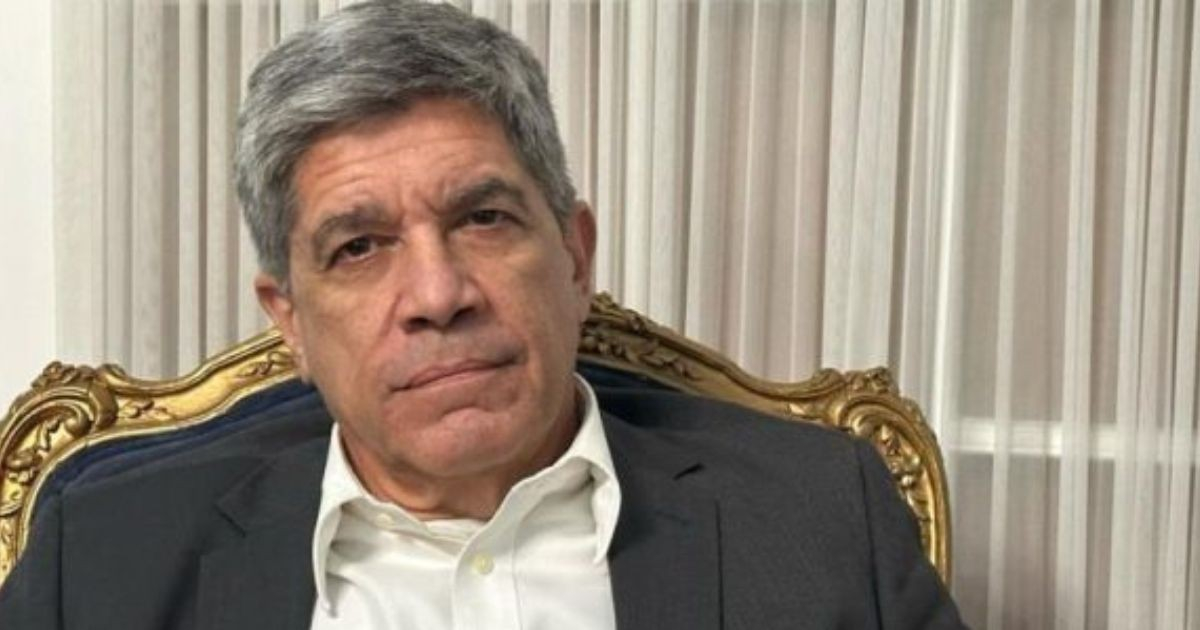
The Deputy Minister of Foreign Affairs of Cuba, Carlos Fernández de Cossío, published a direct accusation against Washington this Friday: he stated that the United States government is "the main source of terrorism" in the Western Hemisphere.
"It can be stated with certainty that the main source of terrorism, at least in the Western Hemisphere, is the U.S. government, and it involves state terrorism. Its nerve centers are in Virginia, specifically in Langley and the Pentagon, along the banks of the Potomac," wrote the official on his personal account on X.
The statement comes a day after Foreign Minister Bruno Rodríguez Parrilla accused Washington of waging a "psychological war" against Havana through alleged leaks to the press.
On Wednesday, CBS News revealed that Pentagon planners evaluated military options against the island at the end of June, including an airborne assault with the 101st Airborne Division. Rodríguez warned that an attack would result in a "bloodbath" and denied that Cuba poses any threat to the U.S.
On Thursday, Marco Rubio announced new measures against leftist extremism. During the Ministerial Conference on the Resurgence of Political Terrorism, held in Washington, the Secretary of State accused the Cuban regime of having developed a network of intelligence and ideological influence over the decades.
He stated that this network contributed to the strengthening of extreme left movements in the United States and the Western Hemisphere. He also recalled Havana's historical support for armed groups such as the FARC, ELN, and the Tupamaros.
In that same context, the State Department announced a new policy that will prevent foreign citizens who finance, recruit, or collaborate with extremist left-wing terrorist organizations from entering the United States.
The measure will be implemented under Section 212(a)(3)(C) of the Immigration and Nationality Act and is part of the security strategy promoted by the administration of President Donald Trump to enhance the fight against political terrorism and strengthen international cooperation.
On the same day, President Donald Trump fueled uncertainty about a possible military attack on the island, stating on Fox News: "A lot of things are going to happen in Cuba in the next couple of months, perhaps."
Washington keeps Cuba on its list of state sponsors of terrorism, a designation reinstated by Trump on January 20, 2025. Meanwhile, Havana accuses the United States of being the true aggressor.
On July 11, Secretary of State Marco Rubio warned that the Cuban leadership still has the opportunity to undertake "real reforms" before it is "too late".
Related videos:
Filed under: