
Related videos:
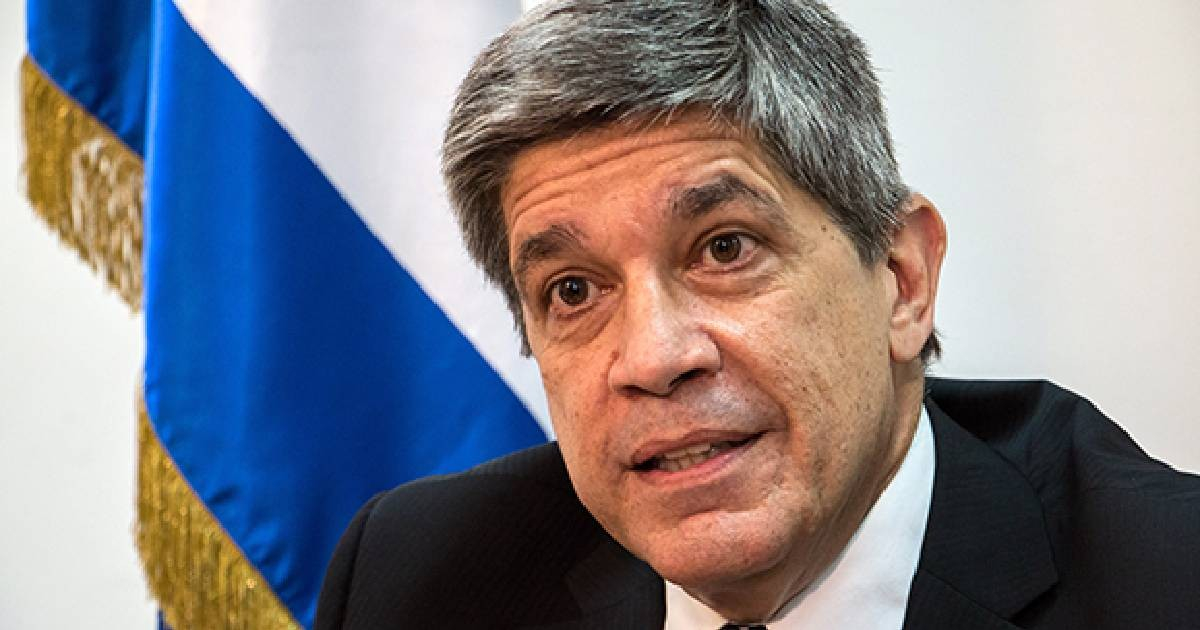
Carlos Fernández de Cossío, Deputy Minister of Foreign Relations of the Cuban regime, published a post on Facebook in which he entirely attributes responsibility for power outages, gas shortages, accumulated waste, the health crisis, and inflation affecting the Cuban population to the United States, without ever mentioning the management of the regime itself.
In his publication, Cossío describes the situation as "the cruel and daily war that the nation is subjected to" and states that "a certain class of politicians feels pride and its members celebrate each other for such achievements," referring to the American officials.
The text details the suffering of the Cuban people: "The measure of success in the political design of the U.S. against Cuba is determined by the number of hours of blackouts endured by the population, the number of families lacking gas for cooking, the food that spoils due to the inability to refrigerate, the surgeries that are postponed or cannot be performed, the erosion of infant mortality rates, and the consequent deaths of newborns."
What Cossío omits is that this same crisis has structural causes directly linked to decades of underinvestment by the regime in energy infrastructure.
The electricity deficit in Cuba exceeds 2,100 MW, with only 1,100 MW available against a demand of 3,200 MW. Blackouts in Havana last for up to 32 consecutive hours, and in areas of Matanzas, they reach 85 hours straight without power. Nine of the country's 16 thermoelectric plants are out of order, including the largest one, Antonio Guiteras.
The military conglomerate GAESA controls between 40% and 70% of the formal Cuban economy—tourism, foreign currency trade, ports, banking, and telecommunications—without being accountable to any institution or the citizenry. The U.S. State Department characterizes GAESA not as a company, but as a "mechanism of repression."
Cossío himself experienced a revealing misstep on May 13, when he published and deleted in less than 30 minutes the phrase "a country that falls or fails on its own doesn't need to be pushed", a blatant contradiction to his usual narrative of blaming solely the embargo.
The Secretary of State Marco Rubio dismantled the argument of the oil blockade in May: “Cuba used to receive free oil from Venezuela. They provided a lot of oil for free. They took about 60% of that oil and sold it for money. It didn't even benefit the people.”
Rubio labeled the Cuban government as "incompetent communists running that country" who "don’t know how to fix it."
The Trump administration responded with new sanctions against GAESA entities, including RAFIN S.A., the International Financial Bank, and Almacenes Universales S.A., and described the 176 economic reforms approved by the regime as "superficial smoke signals."
While Cossío concludes his publication by presenting each improvised solution of the Cuban people as "defeats of imperialism," the Cuban Observatory of Conflicts recorded a historic high of 1,311 monthly protests in May, with slogans that have evolved from "current and food" to "Down with the dictatorship!"
Filed under: