The poet, improviser, and literary researcher Juan Carlos García Guridi published this week on his Facebook profile the poem "I ASK," a composition in tenths that harshly questions the loss of dignity, the absence of freedom, and the deterioration of daily life in Cuba, which immediately resonated among his followers as a mirror of collective anguish.
The piece, shared on his Facebook account this Wednesday, arrives four days before July 26, the date when the Cuban regime commemorates National Rebellion Day — the 73rd anniversary of the Moncada assault — and which this year is linked to the so-called "Year of the Centennial of Fidel Castro."
From the very first verse, García Guridi transforms the question into a weapon: "What have they done to us? I ask / as we lose day by day / our dignity, our joy / and cannot find the point / of the salt; what a serious matter / that has divided us?"
The poem moves resolutely towards the demand for freedom: "I ask: Do we not deserve freedom? / We are just one step away, / that is the only truth."
One of the most quoted passages by its readers is the stanza that gives this note its title: "After January and after / July, where are we going? / In what place do we remain / when everything turns upside down?" This directly alludes to dates laden with symbolism in the Cuban political calendar.
The poem concludes with an image of suppressed anger: "I ask: What life is / this life that kills us? / A discourse that no one heeds / but everyone fears... / I am the anguish, the AKM, / the fury that unleashes."
García Guridi, born in Batabanó in 1968, is one of the most active cultivators and researchers of the decima and popular poetry in Cuba, with more than a dozen published books, including "Décimas habaneras del siglo XX" (1999), "La poesía popular en Cuba" (1999), and "Salvar la décima: El encabalgamiento" (2003). The decima espinela, a form he uses in "PREGUNTO", is considered an icon of Cuban identity with a long tradition of social critique and political resistance.
It is not the first time in 2026 that the poet turns to verses to depict the crisis. In May, he published a viral humorous décima about the situation in the country with the punchline "and if Donald Trump doesn't come / I'm going to go look for him," and in June he shared the sonnet "They Say," a denunciation of broken promises and the country's stagnation.
The post generated a wave of reactions among its followers. One internet user wrote: “You are unique. You speak so many truths in your verses that sometimes it astonishes, and sometimes it makes one tremble.” Another remarked: “God, there is so much suffering in those verses! We all ask ourselves so many questions every day. But no one has an answer; only uncertainty is present in our lives.” A third person was more direct: “The most brutal torture that can be inflicted on a human being is being applied in our country; we have nothing left.”
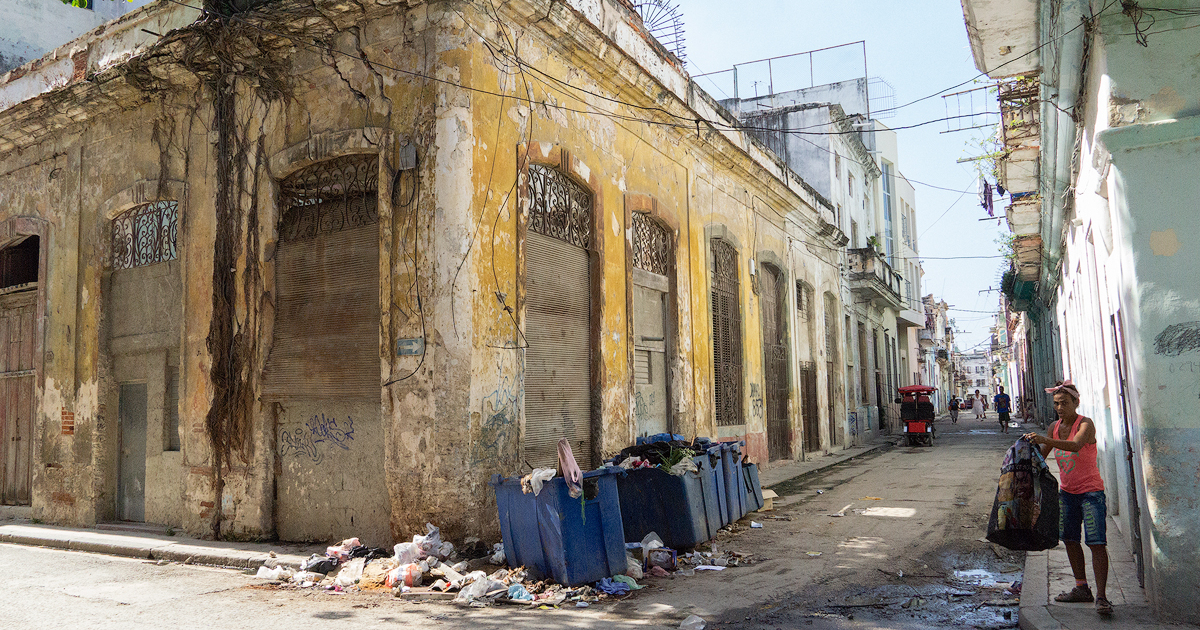
The poem arrives at a time when Cuba is experiencing one of its worst humanitarian crises. The Cuban Observatory for Human Rights estimates that 89% of the population lives in extreme poverty, while the Food Monitor Program reports that 96.91% lack adequate access to food. Power outages last between 25 and 32 hours daily in various parts of the country, with extreme cases of more than 72 hours in provinces like Matanzas. The informal exchange rate of the dollar skyrocketed to 670 pesos since June 2026, up from 435 pesos in December 2025.
In that context, García Guridi's questions are not rhetorical: they echo the sentiments of millions of Cubans who, as another reader noted in the comments, ask themselves the same questions "daily" "without finding answers."
Related videos:
Filed under: