The pro-government Cubadebate reported on Thursday that the Council of State held an ordinary session to analyze the alleged progress in the implementation of the economic and social transformations approved by the National Assembly on June 18, triggering a wave of mockery and sarcasm among Cubans on social media.
The Prime Minister Manuel Marrero Cruz assured at the meeting, presided over by Esteban Lazo Hernández and with the presence of Miguel Díaz-Canel, that since that parliamentary session, 171 proposals and assessments from the deputies have been processed, the government's working system has been updated, and six decrees-law have been approved — five related to agriculture and one modifying the Road Safety Code.
The Minister of Justice, Rosabel Gamón Verde, clarified that the legislative schedule for implementing the transformations includes a total of 138 legal norms, although she warned that others may arise during the process itself.
The Council of State also approved submitting five bills to the Seventh Ordinary Session of the National Assembly — convened for July 29 —: the Labor Code, the Agricultural and Forestry Land Law, the Housing Law, the Law on the Organization of the Central Administration of the State, and the Law on the Personal Identity and Residence System.
The announcement of "progress" came at a particularly ironic moment: just hours before the hotel chain Meliá completed its total withdrawal from Cuba, closing its 34 hotels on the island due to operational, legal, and financial difficulties. One internet user summed it up bluntly: "Wow, so much progress, can you believe that even Meliá left?"
The economic context makes it even more difficult to sustain the official narrative: power outages lasting between 20 and 40 consecutive hours, a projected contraction of GDP between 6.5% and 7.2%, an official year-on-year inflation rate of 15.89% in May, and an informal exchange rate that exceeds 670 Cuban pesos per dollar. "What progress? Ahh, yes, oil at 2,500," wrote another user, while a neighbor from the Las Brisas neighborhood in Cotorro reported that her block has been without running water for eight months and that residents are forced to buy it from a street vendor.
The breeding ground for mockery was prepared by Díaz-Canel himself four days earlier, when in an interview with RT en Español he used the metaphor "utopia is on the horizon" to respond to whether Cuba has a way out of the crisis, a phrase that Cubans interpreted as an admission that there is no concrete solution in sight.
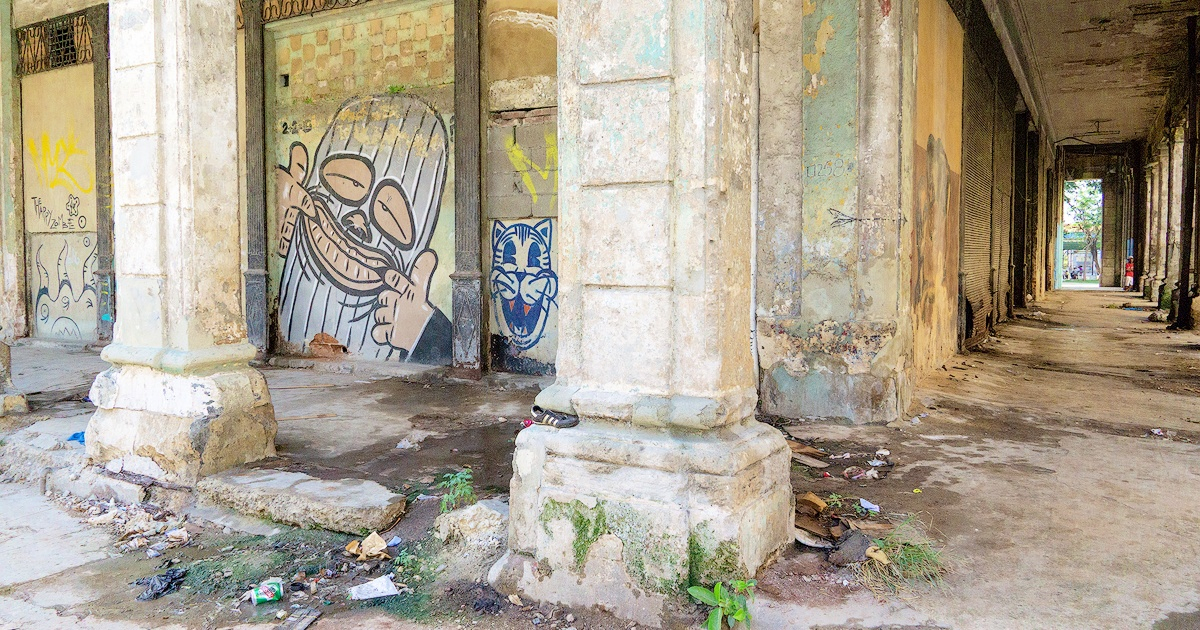
The comments on Facebook regarding the Cubadebate article transformed into a catalog of popular skepticism. "If the utopia is on the horizon and the horizon moves forward 10 steps while the utopia retreats two steps, how many utopias can Pancha plan?” asked an internet user with mathematical irony. Another was more straightforward: "All we see are ruins and failures. Only by reading Cubadebate can we see the progress."
References to utopia multiplied as an echo of the ruler's own words. "Advances on the horizon? To infinity and beyond. Hopefully they can at least guess one, because lately everything they've done has gone wrong," wrote a user, in the phrase that inspired the headline of this note. Another remarked, "67 years of making utopian measures that fade into the horizon." And one more, with resignation: "Advances???... oh yes, of course, the lemony utopia is the only one making progress... one step forward and one step back."
Frustration with unproductive meetings was also voiced. "Enough with the meetings; we want results and to live like dignified people," demanded an internet user. Another recalled the guidelines of the PCC approved in 2011: "That reminds me of the 'guidelines': 10 years talking nonsense for nothing and to no avail."
The regime promised to implement 121 of the more than 170 transformations before the end of July, prioritizing retirees and vulnerable individuals, in what it presents as the largest reform package in decades. For Cubans who have been without water, electricity, and the ability to buy cooking oil for months, these advancements remain, like a utopia, on the horizon.
Related videos:
Filed under: