There are images that encapsulate better than any statistic the moral state of a country.
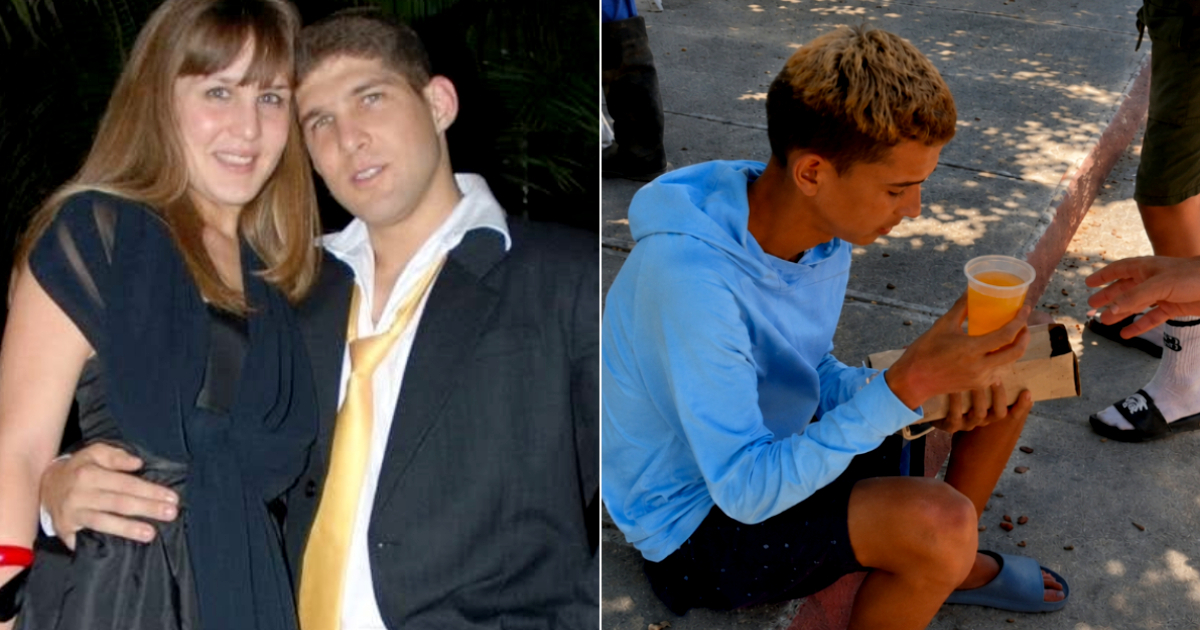
In one scene, a teenager receives a food box during a donation and responds with complete naturalness: "I'm going to save it for my grandparents". He doesn't think of himself first. He thinks of two elderly people who are likely hungrier than he is.
In the other one, Raúl Guillermo Rodríguez Castro, "El Cangrejo", grandson of Raúl Castro, talks about the Yankees, Paris, foie gras, the opulence of Moscow, Rolex watches, Hermès clothing, and private jet trips.
When asked about that distance from the rest of the country, he responds: "It pains me that many people can't live like I do".
Between both scenes lies the entirety of the tragedy of contemporary Cuba.
It is not simply a matter of poverty. Nor is it solely about inequality. What is truly obscene is that both Cubas are not the result of chance but rather consequences of the same political system.
The child saves food because in Cuba, thousands of families depend on donations for sustenance. His grandparents represent a generation that, after a lifetime of hard work, survives on pensions that are unable to ensure a decent meal.
Meanwhile, those who have held power for decades enjoy privileges that are inaccessible to the rest of the population.
Immorality does not solely reside in the existence of a privileged elite. All societies are familiar with inequalities. What is morally unbearable is that this elite has built its prosperity precisely from a system that for more than sixty years promised equality, social justice, and the elimination of privileges.
The contrast takes on an even more unsettling dimension when the regime itself tries to present Rodríguez Castro as a legitimate interlocutor to discuss the future of Cuba with the United States.
The Crab does not hold any elected office. He has not been appointed through a public process. He is not accountable to any representative institution. His only political credential is belonging to the family that has concentrated power for over six decades.
And yet, is negotiating, expressing opinions, and positioning itself as a possible bridge between Havana and Washington while millions of Cubans lack even a voice to decide the future of their own country.
That is perhaps the most eloquent image of the Cuban system: power is not legitimized by merit, democratic representation, or the will of the people, but by proximity to those who have exercised it for generations.
It is hard to imagine a deeper contradiction with the official discourse that for decades condemned family oligarchies, privileged castes, and the hereditary transmission of power.
The story of the teenager and that of El Cangrejo are not two separate news items. They are the same country seen from opposite extremes.
While a child learns too early that sharing hunger is also a way of loving, the ruling elite talks about foie gras, luxury watches, and the great capitals of the world as if real Cuba exists in a parallel universe.
And perhaps that is the most devastating fact of all: the issue is not only that a portion of the leadership lives better than the rest. The problem is that it has stopped understanding how the rest live.
When a ruler demands sacrifices from a position of privilege, when they speak of resistance while others stand in line to buy bread, when they legitimize as interlocutors those who represent the greatest privileges of the system, any moral authority to invoke equality or social justice ceases to exist.
The drama of Cuba does not only consist of having a privileged caste. It consists of that caste continuing to claim to speak on behalf of a people whose reality it seems to have stopped recognizing a long time ago.
Related videos:
Filed under: