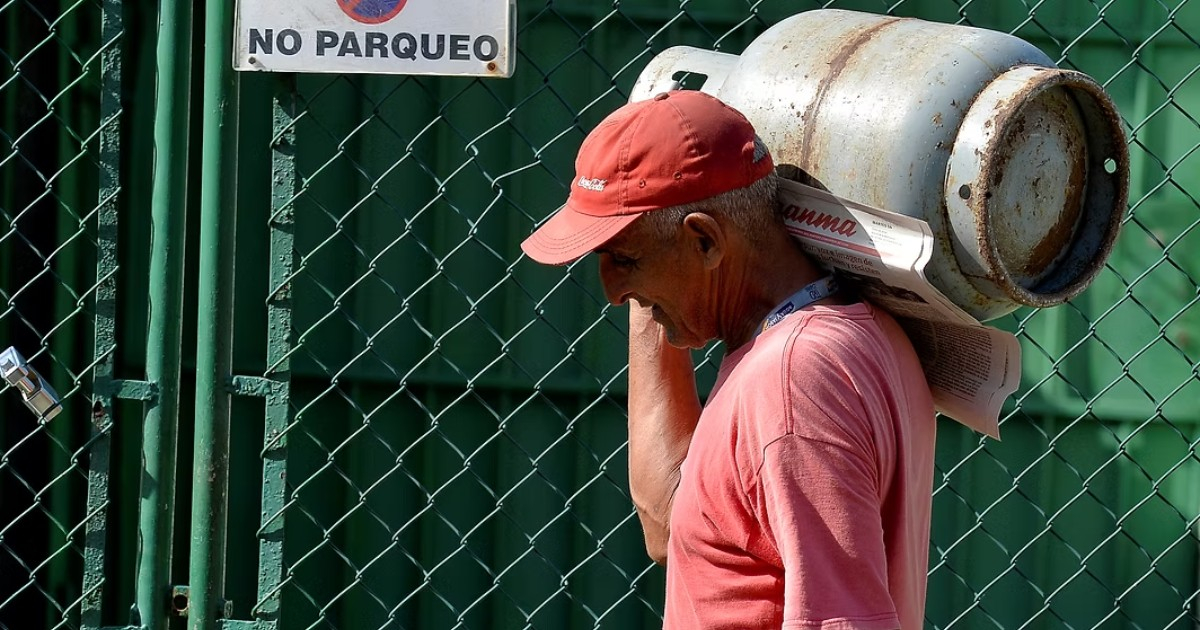
The Cuban regime has raised the official price of the 10-kilogram liquefied petroleum gas (LPG) cylinder to 350 Cuban pesos, an increase of nearly 64% compared to the 213 pesos used as a reference by the independent observatory Food Monitor Program.
The measure, combined with the scarcity of this fuel, puts Cuban families in an increasingly precarious situation.
The increase was formalized through Resolution 155/2026, published in the Official Gazette, at a time when thousands of Cuban families are allocating nearly all their income to survive.
In addition, certain cylinders and accessories will begin to be sold in dollars, further deepening the dollarization of essential goods.
The previous official price of the cylinder was 225 Cuban pesos, effective from March 2024, although FMP uses a reference rate of 213 pesos.
The historical increase is eloquent: from 110 pesos before 2021 to 180 in March of that year, then to 225 in 2024, and now to 350, a tripling in just five years.
The rise in fuel prices impacts households that no longer have any margin. According to calculations made by FMP in 2025, two adults in Havana need around 41,735 Cuban pesos per month to maintain a barely sufficient diet.
And that calculation does not even take into account the cooking costs or other basic services that are only available in the black market.
The situation is worsening because LPG ceased to be a reliable option long before this increase. Chronic interruptions in its distribution have pushed thousands of families to rely on electricity for cooking, but the electrical grid also collapses, resulting in blackouts lasting over 24 consecutive hours in several provinces.
Faced with this double blockade—without gas and without electricity—many families turned to charcoal and firewood, alternatives that are also not accessible: a bag of charcoal can cost nearly half the monthly salary, with prices ranging from 3,200 to 5,000 pesos depending on the province, compared to an official average salary of 6,930 pesos.
In June, gas capsules were sold for 24 dollars on platforms like KMCero and were being resold for 50 dollars in the informal market. In July, they reached 70,000 pesos in Sancti Spíritus, according to citizen reports on social media.
The underlying food situation is critical. The National Food Security Survey 2025 by FMP, conducted with over 2,500 responses across the 15 provinces and the special municipality, revealed that in the last year, one in three Cuban households had at least one member who went to bed without eating, a deterioration of 9.3 percentage points compared to 2024.
More than 60% of families modified their diets and routines, and many eliminated one daily meal.
And the dollarization of cylinders and accessories adds another layer of exclusion. "For most families who rely solely on state salaries or pensions paid in Cuban pesos, this represents a new barrier to access," the observatory warned.
FMP concluded that "the rising cost of gas adds a new link to a chain of expenses that makes something as basic as providing hot meals increasingly difficult," in an economy where the energy crisis, inflation, and loss of purchasing power are simultaneously impacting the same households that can no longer cope.
Related videos:
Filed under: