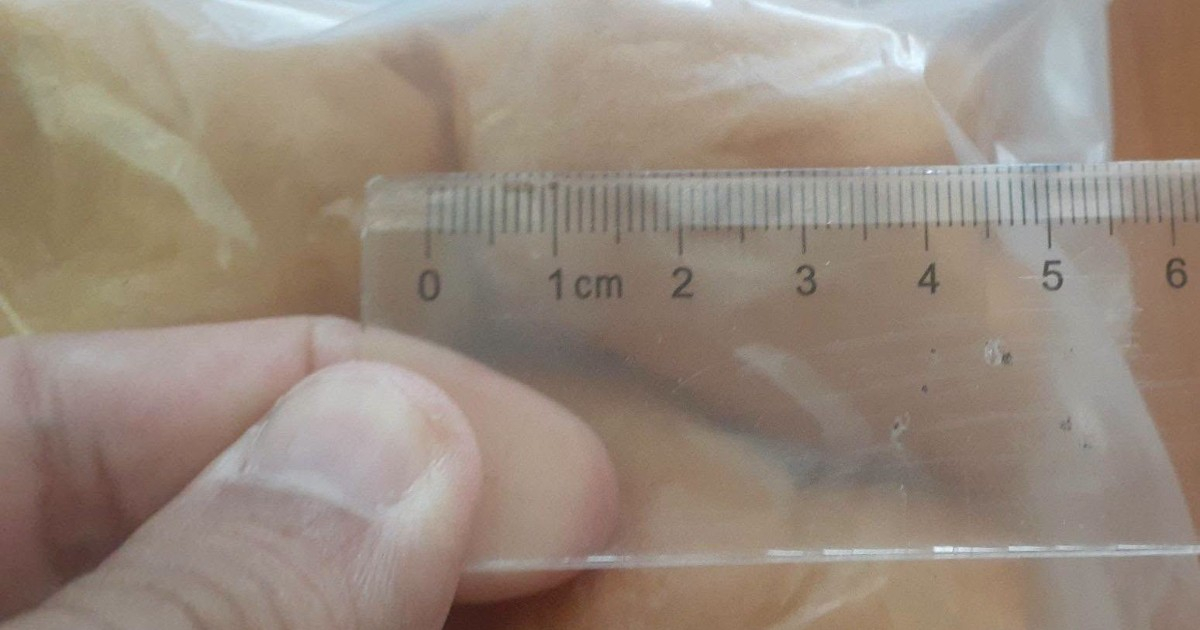
A Cuban identified as Dqva Jaime posted on Facebook this Tuesday a complaint against a MIPYME, in which he described the private sector as the "number one enemy of socialism" after discovering that the business refuses to accept bank transfers for the sale of bread, in violation of current regulations.
The author reported that he purchased two packages of bread at a sales point of OnBazar—located in a space that was originally a mattress factory and later an aluminum carpentry—and that the establishment refused online payment for that product. For other goods, the MIPYME imposes a limit of 2,000 Cuban pesos per transfer, although increasingly it claims it does not accept that payment method at all.
"As long as these bandits continue to do as they please and the authorities look the other way —or, at most, make appeals to the conscience of these bandits to accept online payments— something that the government established by law as mandatory for all economic actors," wrote Dqva Jaime, who concluded that the owners of small and medium-sized enterprises (MIPYMES) are "capitalists" with "the conscience of the exploiter."
The reported conduct would violate the Resolution 111/2023 of the Central Bank of Cuba, in effect since August 2023, which requires all economic actors—state-owned enterprises, MIPYMES, and self-employed workers—to accept electronic payments without restrictions. Despite over 8,000 inspections and 476 business closures reported in provinces like Sancti Spíritus, less than 10% of private businesses regularly accept transfers, and the official press admitted in July 2026 the failure of the banking policy.
The post sparked a heated debate. Several users supported the criticism and called on the government to enforce the law, while others flipped the argument: they pointed out that the root of the problem lies with the State itself, which pays salaries through cards but does not guarantee access to cash, and that wholesale suppliers also do not accept transfers, creating a vicious circle that forces private businesses to operate in cash.
"The blame isn't on the Mipymes; it's on the government at all levels that doesn't have the guts to confront them and put them in their place," wrote a commentator.
Another went further in his criticism of the regime: "If the Government allows and supports what is against socialism, it is because the Government is antisocialist. This Government is counter-revolutionary and pro-capitalist, and it is time to acknowledge it as such."
On the other hand, a user responded with irony: "The number one enemy is precisely socialism. It keeps you in misery."
There were also practical reactions. A commentator shared a WhatsApp channel with over 10,000 followers that maps businesses in Cuba that do accept transfers, as an alternative to official inaction. Another reported having tried to report the phenomenon to the authorities in the municipality of Caimito, Artemisa province, but they demanded the exact address of each establishment in order to process the complaint, despite his assertion that the noncompliance is widespread.
The controversy arises at a time of increasing ideological tension surrounding the private sector. In June 2026, the National Assembly approved a package of 176 economic measures that removes the limit of 100 workers per MIPYME and allows an individual to own more than one private business, which has generated backlash among factions of the government that interpret it as a deepening of capitalism. "Afterward, they don't want us to distrust the 176 measures that are even more radical towards privatization," warned one of the commentators on the post.
Related videos:
Filed under: