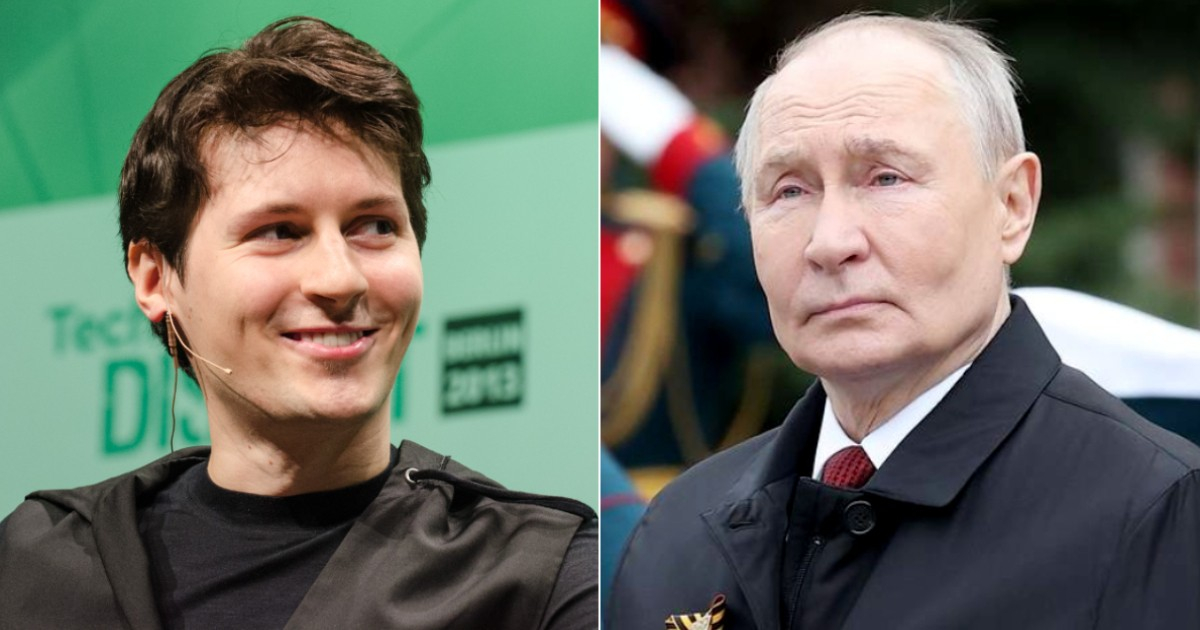
The Federal Security Service (FSB) of Russia issued an international search warrant this Wednesday against Pavel Durov, founder and CEO of the messaging app Telegram, whom they accuse of "complicity in terrorism."
The FSB's statement indicates that the measure is part of a criminal investigation into the alleged use of the platform by Ukrainian intelligence services to recruit young Russians for sabotage activities.
The specific accusation centers around the dating bot Leo Match, which is banned in Russia. According to the BBC, the FSB claims that Telegram refused to remove it and that Ukrainian agents were using it to pose as young girls in order to contact and then blackmail Russian men.
According to the FSB, 46 citizens aged between 12 and 22 have been detained since July 2025 in various regions of the country for assaulting members of the security forces and committing acts against energy and transport infrastructure after being recruited through that bot.
Durov, who is in France, had already anticipated this legal offensive: earlier this year, he publicly stated that Moscow had opened a criminal investigation against him and accused the authorities of fabricating excuses to restrict Telegram in what he described as an attempt to "suppress the right to privacy and freedom of expression."
The arrest warrant arrives at a time when Telegram holds an uncomfortable position for the Kremlin within the information ecosystem of the war in Ukraine.
On one hand, the platform is the preferred channel of the so-called voenkory, the pro-Kremlin military bloggers who spread propaganda in favor of the “special military operation.”
On the other hand, that same platform hosts channels that relatively freely publish reports of Russian military defeats, images of Ukrainian drone attacks on refineries and infrastructure on Russian territory, and a growing social discontent with the war and with the figure of Vladimir Putin.
This duality makes Telegram a structural threat to the Kremlin's informational control, which has spent years trying to subdue without success. According to Reuters, in 2018 Russia ordered its total blockade after Durov refused to hand over the encryption keys to the FSB, but the measure failed as users circumvented it using virtual private networks and was lifted in 2020.
Since then, Putin's government has promoted its own state messaging service, MAX, as an alternative, and has enforced unprecedented digital restrictions that also impact WhatsApp.
Durov, born in Russia and naturalized as a French citizen in 2021, is also facing an unresolved legal case in France: he was detained in August 2024 after exiting a plane near Paris and charged with crimes related to organized crime, including distribution of child sexual abuse material, drug trafficking, fraud, and refusal to cooperate with investigators.
The French judiciary imposed a bail of 5 million euros and a ban on leaving the country at the time, restrictions that have gradually eased since 2025.
The international search warrant issued this Wednesday marks the most serious escalation to date in the clash between the Kremlin and the most widely used messaging platform in Russia, placing Durov at the center of two simultaneous legal processes in countries with radically different legal systems and motivations.
Related videos:
Filed under: