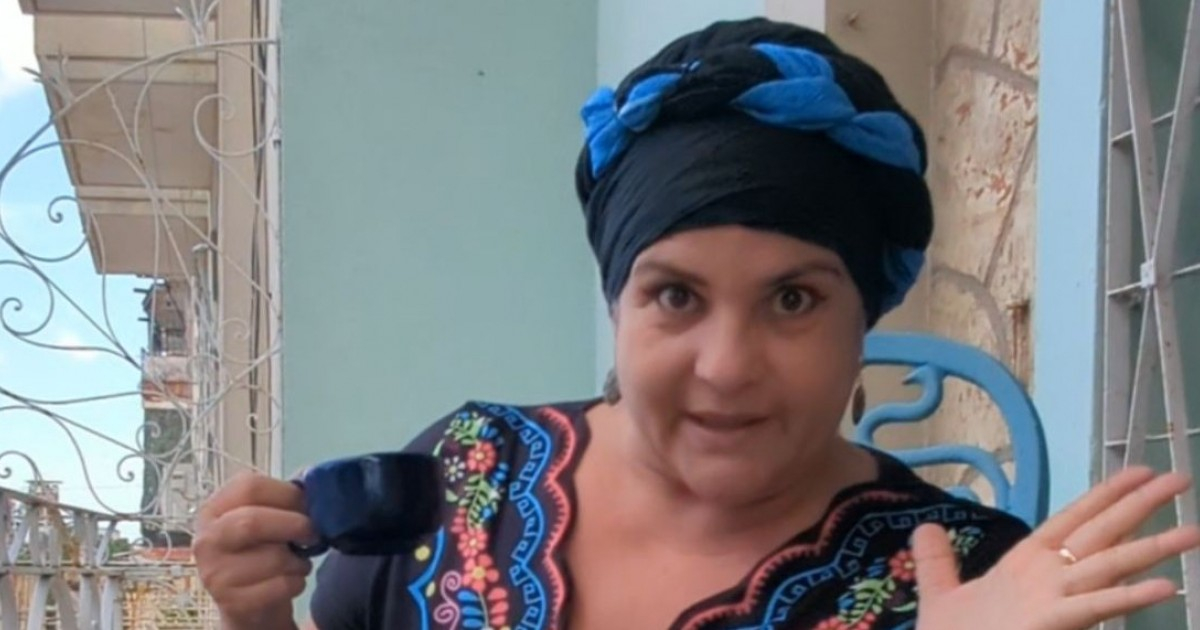
The Cuban broadcaster and activist Laritza Camacho reacted this Friday on Facebook to the package of 176 economic measures that the Cuban regime discussed in the National Assembly, using a tailoring metaphor to describe what she believes is an adjustment designed from above to subjugate the people: “They are making us a custom suit”.
The comment arrived hours after the National Assembly of People's Power (ANPP) concluded its ordinary session on July 29 and 30 at the Palace of Conventions in Havana, where key laws related to the largest package of economic reforms in Cuba since the Special Period of the 1990s were approved.
Camacho was blunt in highlighting the central paradox of the moment: "There are 176 measures, and none are sufficient even to read the first three. Therefore, no one knows anything."
The reference to "alumbrón" points to the devastating electrical crisis that the island is experiencing. On July 29, the Electric Union reported a record deficit of 2,380 MW, the highest of the year, which left nearly 74% of the country without service during peak hours. In some areas of Matanzas, residents endured up to 87 consecutive hours without electricity that month; in Havana, the average was around 15 hours per day without service.
In that context, the activist denounced that the parliament convened in a communication void imposed by the regime's own crisis: "The ANC meets and blah, blah, blah knowing that the people are neither watching nor listening because 'simply' there is no power to watch TV, barely enough to use a mobile phone, and there is also no coverage or connection."
For Camacho, each of the 176 measures is not a solution but a warning sign: "Each measure in question is a noise, something that sounds dull and dangerous like the minutes before a river rises... and when the river sounds, it's because it carries stones."
The 176 measures were presented on June 18, 2026 during an extraordinary session of the ANPP and include the opening to private banking, private currency exchange, removal of the 100-worker limit for small and medium enterprises, the possibility for an individual to own multiple businesses, and greater access for the private sector to imports, exports, and the fuel market. The government itself acknowledged that the package entails "more elements of private property, private production, capitalism, and market."
At the close of the parliamentary session in July, 110 out of the 121 measures scheduled for June and July had already been approved, according to official reports. The administrative reform passed in that same session reduced the central state bodies from 27 to 21 and eliminated 92,000 positions in public administration.
Camacho has been systematically questioning these reforms for weeks. On July 25, she noted that the measures "are taken so that they and their own can entrench themselves in power and luxury". On July 20, she pointed out the contradiction of having a Food Sovereignty Law without food on the shelves. And since the initial announcement of the package in June, she has asked: “Who guarantees that those who have done everything wrong can now do everything right?”
The publication this Friday sparked a wide wave of responses among Cubans, who shared their skepticism with dark humor. One internet user wrote that the "suit" would be "the wooden one"; another described it as "a straightjacket model suit"; and a third person summed up the collective sentiment: "That tailor-made suit they are making for us is for our final journey, and may God have us prepared for it."
Cuba has experienced three complete collapses of the National Electric System in July: on the 6th, 10th, and 14th; along with additional episodes at the end of the month, all while parliament was discussing the reforms that, according to Camacho, no one could follow due to a lack of electricity.
Related videos:
Filed under: