The National Electric System (SEN) experienced another disconnection in the western region of Cuba this Saturday, leaving several provinces from Pinar del Río to Matanzas without electricity, following reports of outages in the area, as journalist Lázaro Manuel Alonso informed on social media.
The official spokesperson said that the incident occurred "a few minutes ago," and that more details would be provided shortly.
The official report from the Electric Union (UNE) had already stated in the morning that at 6:00 am, the system availability was only 895 MW against a demand of 2,825 MW, with 1,930 MW affected at that time.
The situation worsens during the nighttime hours. According to the UNE forecast for the peak this Saturday, the availability would only reach 1,080 MW against a demand of 3,200 MW, resulting in a deficit of 2,120 MW and an estimated impact of 2,150 MW, meaning that 67% of the demand would remain unmet.
For the noon schedule, the UNE estimated an impact of 1,700 MW, with no significant relief expected throughout the day.
Ten thermoelectric units are out of service, according to the official report from this Saturday: six due to malfunction and four under maintenance.
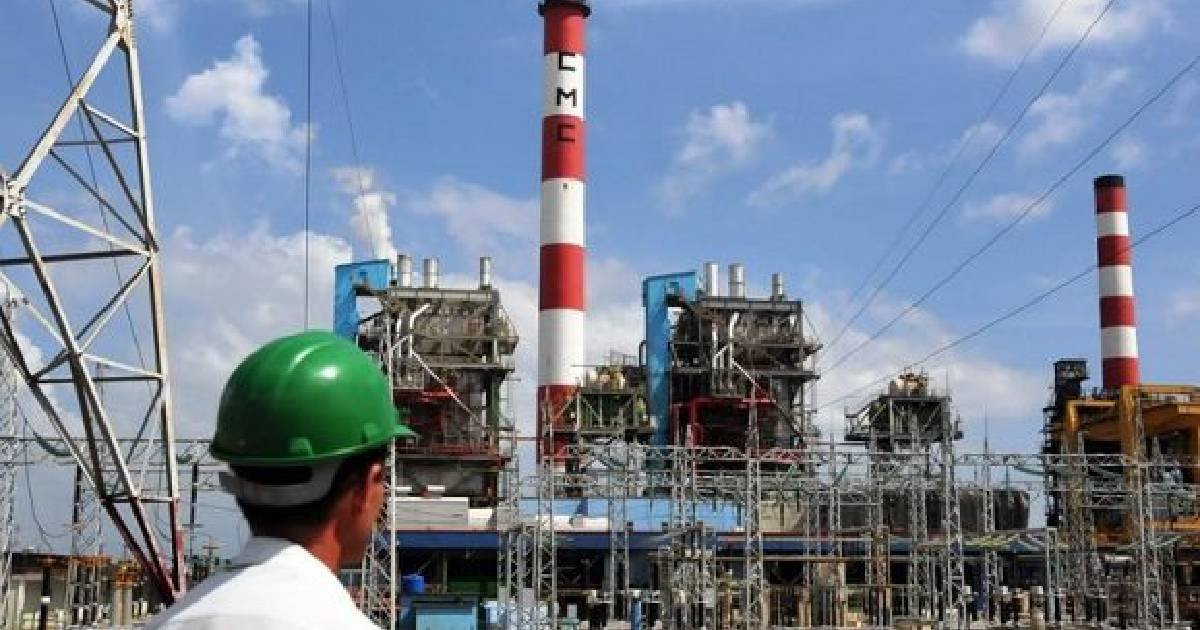
Among the units out of service are units 6 and 8 of the CTE Mariel, unit 2 of the CTE Santa Cruz, the unit of the CTE Antonio Guiteras —the largest thermoelectric plant in the country, located in Matanzas—, unit 2 of the CTE Felton, and unit 3 of the CTE Renté.
Unit 3 of the Santa Cruz Thermal Power Plant, Unit 5 of the Nuevitas Thermal Power Plant, and Units 5 and 6 of the Renté Thermal Power Plant are under maintenance. The limitations in thermal generation total 334 MW.
The CTE Guiteras has experienced recurring breakdowns throughout 2026: it suffered a leak in the boiler in June, a new breakdown in July while technicians were searching for the fault after cooling down the boiler, and it is once again listed as out of service in the report from this Saturday.
For the nighttime peak, the entry of three units is expected, which would add a total of 185 MW: unit 8 from the Mariel thermal power plant with 60 MW, unit 2 from the Santa Cruz thermal power plant with 80 MW, and unit 3 from the Renté thermal power plant with 45 MW.
As the only positive aspect, the photovoltaic solar parks contributed 5,288 MWh on Friday, with a maximum output of 822 MW, although this source does not operate during the nighttime hours of peak demand.
On Friday, the maximum impact reached 2,256 MW at 10:10 PM, according to UNE itself.
This episode adds to a series of collapses that has made 2026 the most critical year for the Cuban electrical system.
Cuba has experienced at least five total disconnections of the National Electrical System so far this year, with incidents in March and multiple outages in July —on the 6th, 10th, 11th, and 14th— while the collapse of the western microsystem on July 11 highlighted the particular vulnerability of the area that again lost power this Saturday.
The historical record of affected power was recorded on July 8, 2026, with 2,341 MW impacted simultaneously, a figure that the projected deficit for tonight threatens to approach.
Related videos:
Filed under: