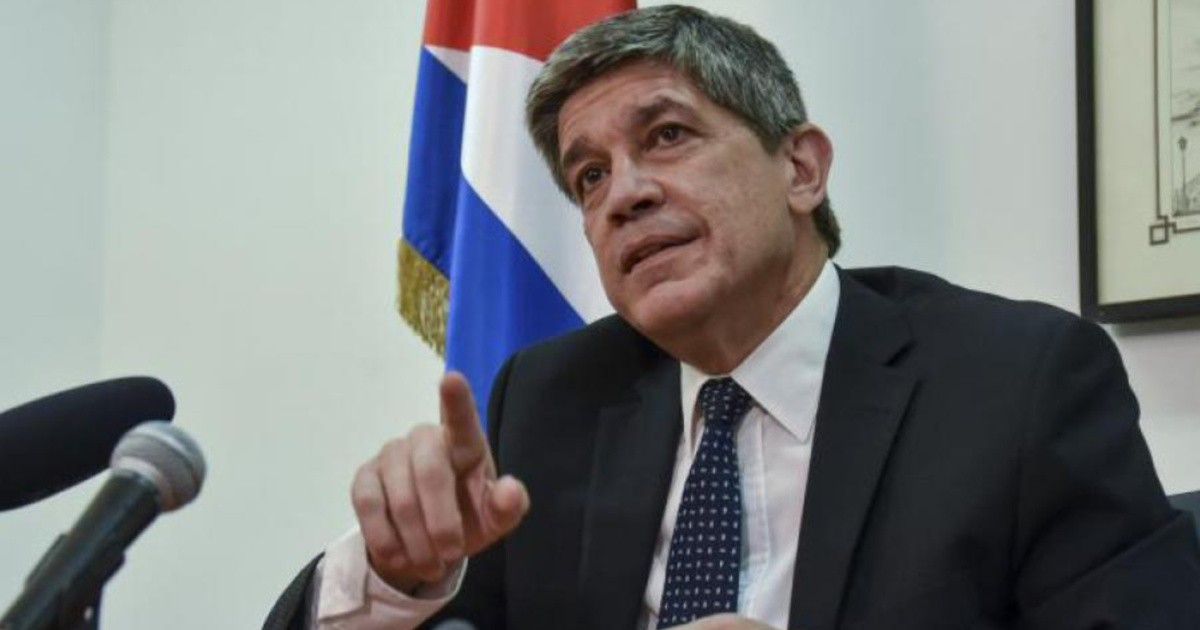
The vice-chancellor of the Cuban regime, Carlos Fernández de Cossío, published a message this Sunday on his X account in which he accused the U.S. government and its Secretary of State Marco Rubio of spreading "lies" about Cuba, arguing that these falsehoods also aim to conceal what he called an internal crisis within American society.
According to the state agency ACN, the official from the Ministry of Foreign Affairs (MINREX) stated that Washington's statements are not solely a strategy to justify its policies towards the island, but have an additional purpose: to attempt to provide an explanation for the discontent that, according to him, exists within American society itself.
"The lies of the U.S. government and its Secretary of State regarding Cuba are not only an attempt to justify the unjustifiable aggression. It is also a deceitful way to try to explain the internal revulsion in their country against injustice and abuse in a society in crisis," Fernández de Cossío wrote on the social network.
The deputy minister added, according to ACN, that these statements are part of a strategy to obscure the consequences of the coercive measures applied against Cuba, which the regime describes as rejected by the international community.
The vice chancellor's words come amid a sustained escalation of U.S. sanctions. The Trump administration, with Marco Rubio as Secretary of State, accumulated over 240 restrictive measures against Cuba since January 2026, including Executive Order 14404, signed on May 1, which expanded sanctions to the energy, defense, mining, and financial services sectors.
Between May and July, at least five rounds of appointments took place. The most recent one, on July 23, included new sanctions against nine entities and two individuals linked to the Cuban government.
Fernández de Cossío has been one of the most active voices of the regime against Washington during this period. On July 24, he described the sanctions as an "open war against the entire people", and on July 17, he accused the U.S. of being the "main source of terrorism" in the Western Hemisphere.
On July 27, it also revealed that Cuba accepted a communication channel proposed by Washington, but the process stalled because the U.S. demanded concessions regarding the Cuban political system.
On July 31, in an interview with the New York Times, the vice chancellor opened the door for companies linked to Trump to do business on the island, indicating that the real obstacle would be the U.S. laws themselves.
Rubio, for his part, stated on July 11 that he urged Cuban leaders to make "real reforms before it’s too late", while Cuban Foreign Minister Bruno Rodríguez claimed on June 30 that the sanctions were "causing deaths" in Cuba amid shortages of food, fuel, medicines, and electricity.
The statement made this Sunday adds a new angle to the regime's communication strategy: presenting international pressure not as a consequence of its own policies, but as a symptom of a supposed internal crisis within American society.
Related videos:
Filed under: