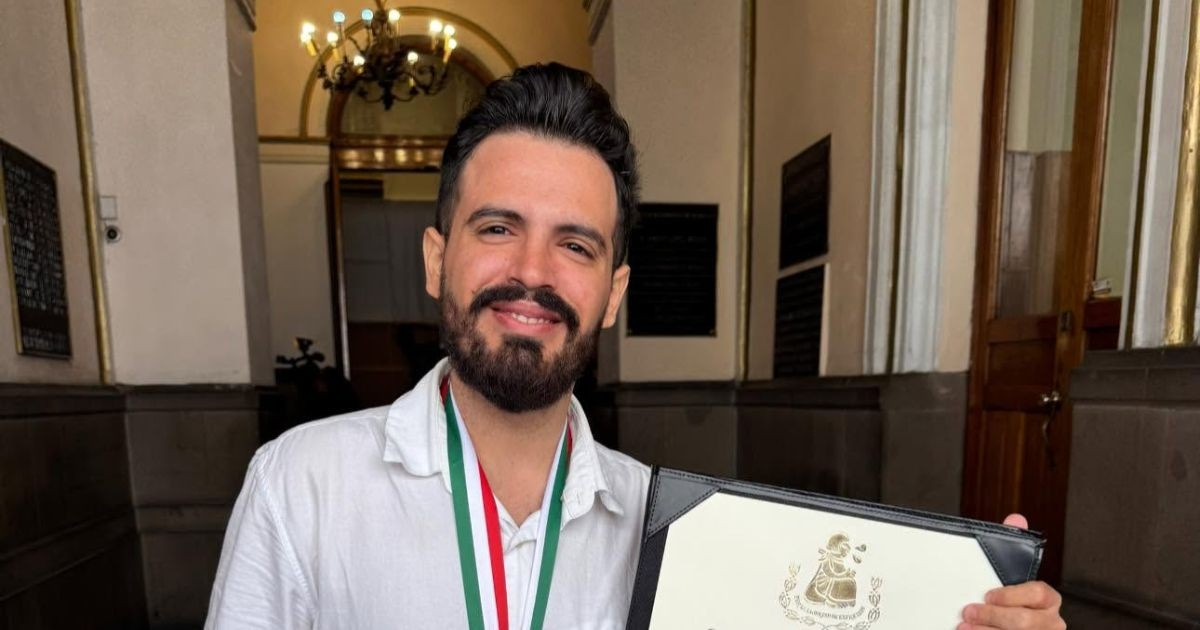
Pedro Jorge Velázquez, the Cuban communicator known as "El Necio" and a public defender of the regime for years, announced this Sunday his return to social media after several months of absence with a text in which, without intending to be self-critical, he ended up describing the same crisis that millions of Cubans have been denouncing for years and that he helped to downplay.
The revelation came wrapped in reflections on his profession: Velázquez explained that his pause extended "because of how radically difficult it has become to live in Cuba—something that everyone who experiences it knows well—day after day, where the most basic things like having water in the bathroom, cold in the refrigerator, and coolness at night are now PROBLEMS, which require a personal effort that no one was accustomed to."
The man who traveled to Moscow published "poems" to Fidel Castro from the Russian capital and claimed that in Russia there was "admiration for Putin" following the deployment of Cuban troops; it turns out he is also wandering in search of water and going to a friend's house to find ice.
“I’m walking out of my house to get water and I’m going to a friend’s house to make ice: those who know me know that I’m not lying,” she wrote, as if the news was hers and not that of the approximately one million Cubans who rely on tanker trucks for their water supply.
What Velázquez "discovered" during his break has a name and figures: blackouts lasting between 20 and over 40 consecutive hours, 43.3% of households receiving water only every three days or less, and 461 out of 651 essential medications out of stock in state pharmacies since 2024.
Velázquez himself states without hesitation: "We are living through a severe humanitarian crisis. People suffer and sacrifice to survive, they shout, bang on pots, and get angry; but people also move forward with bravado and courage...".
The text does not mention at any point the responsibility of the Cuban government in that crisis. Instead, it points to “those who predicted with hundreds of sanctions and a strategy of suffocation against an innocent people, to assassinate this joy,” in a reference to the embargo that conveniently omits six decades of dictatorship as a structural cause of the disaster.
Another gem of the text is its declaration of independence: “I distance myself from any objective to fulfill, from any guidance, and from any attempt to silence my voice.” The phrase recalls when in February 2026, when the U.S. imposed visa restrictions on him due to his alleged participation in harassment campaigns against U.S. diplomats in Cuba.
Her rhetorical question also stands out: "What is life like in Cuba in 2026?" There are those who still believe that this question can only be answered with a postcard of a crumbling building, or the almost eternal blackouts, or the enormous trash heaps in the streets, or the current slogan/hashtag that has been promoted, or a new SOS Cuba launched by a horde of bots […] or with the latest unfulfilled promise." The list, coming from someone who for years attacked those who described exactly that, carries a particular flavor.
The UN launched a humanitarian appeal in March for 94 million dollars to assist nearly two million people on the island. Two months later, the organization reported that the still exceeded 60 million.
This is the reality that the communicator "discovered" during his break, the same one he helped to conceal for years from his privileged platforms.
Related videos:
Filed under: