For years, the Cuban government has placed a significant part of its economic strategy on tourism.
Billions of dollars were allocated for the construction of new hotels and the development of tourism hubs largely managed by the military conglomerate GAESA, with the expectation of attracting a growing influx of foreign visitors and increasing foreign currency revenue.
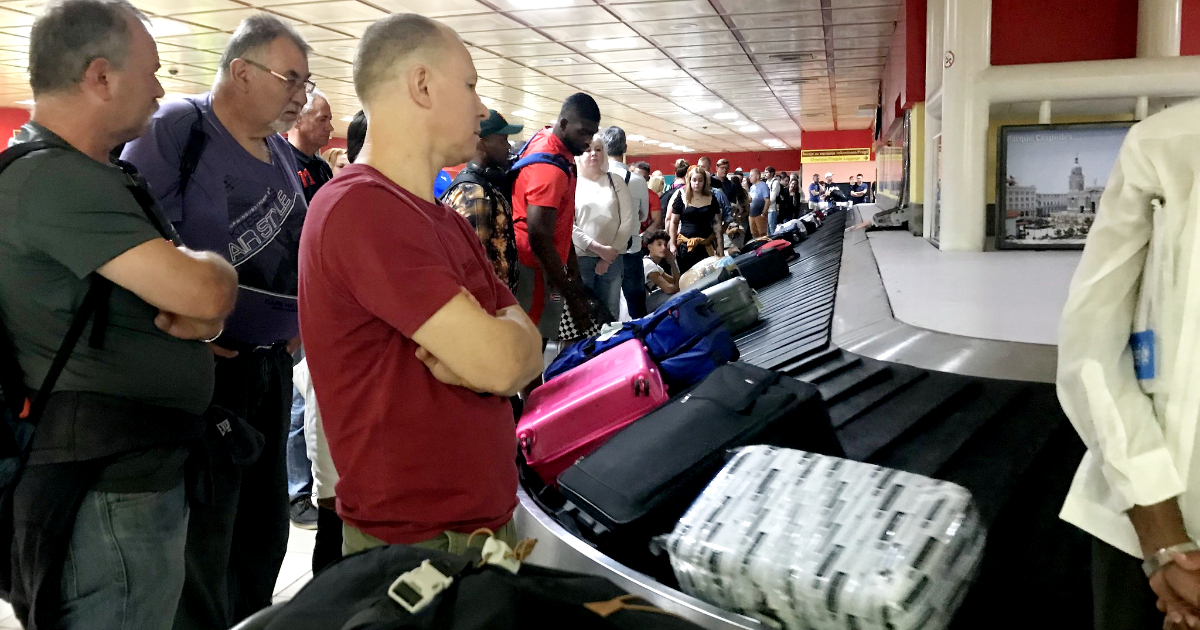
However, the most recent report from the research center Cuba Siglo XXI states that this model is currently experiencing its worst moment and presents a fact that encapsulates the change that has occurred: nearly half of the individuals who arrived on the Island in May 2026 were Cubans residing abroad, many of them primarily aiming to visit their families and bring aid, rather than engaging in tourism.
According to calculations by Emilio Morales, author of the dossier, based on statistics from ONEI regarding traveler entries by residence, Cubans residing abroad accounted for 47.6% of the entries recorded in May, an unprecedented proportion that reflects the collapse of traditional tourism.
The report emphasizes that a significant portion of these travelers do not stay in hotels or participate in conventional tourist circuits. They tend to stay with family members and travel loaded with food, medicine, basic necessities, and remittances to alleviate the deep economic crisis that the Island is experiencing.
Hotels built for a tourism that no longer arrives
As the profile of those arriving in the country changes, the report outlines an increasingly worrisome outlook for the hotel industry.
Between January and May 2026, only 359,491 international visitors arrived in Cuba, a decrease of 58.45% compared to the same period the previous year and 82.74% below the levels recorded before the pandemic.
Hotel occupancy also reflects this decline. The report indicates that it dropped from 23% in March 2025 to 18.9% a year later and fell to just 12.9% in May 2026.
According to the authors, these figures demonstrate that a large portion of the hotel infrastructure built over the last decade remains virtually empty.
The bet on hotels
One of the main arguments of the report is that the regime prioritized the expansion of the tourism sector for years while other strategic sectors experienced a progressive decline.
The report claims that considerable resources were allocated to the construction of luxury hotels, while issues in electricity generation, public transport, agricultural production, water supply, and the healthcare system worsened.
According to Cuba Siglo XXI, that policy has also diminished the island's tourist appeal.
The frequent blackouts, the scarcity of fuel, the challenges in ensuring food availability, the deterioration of public services, and the limitations in transportation affect both the local population and the experience of foreign visitors.
A tourism sustained by the diaspora
The report states that, under the current conditions, Cubans living abroad have become one of the main supports for the flow of travelers to the Island.
Unlike traditional vacation tourism, these trips primarily address family and humanitarian needs. Visitors bring food, medicines, hygiene products, household appliances, and other items that are hard to find in the Cuban market, in addition to providing financial support to their relatives.
For the authors of the dossier, this change reflects the exhaustion of the tourism model that has underpinned a significant part of the state's foreign exchange earnings for decades.
The report concludes that the combination of the internal economic crisis, the deterioration of basic services, the loss of competitiveness of the Cuba destination, and the recent U.S. sanctions against GAESA and its ecosystem is accelerating the decline of a sector that has been presented for years as the main engine of the national economy.
Related videos:
Filed under: