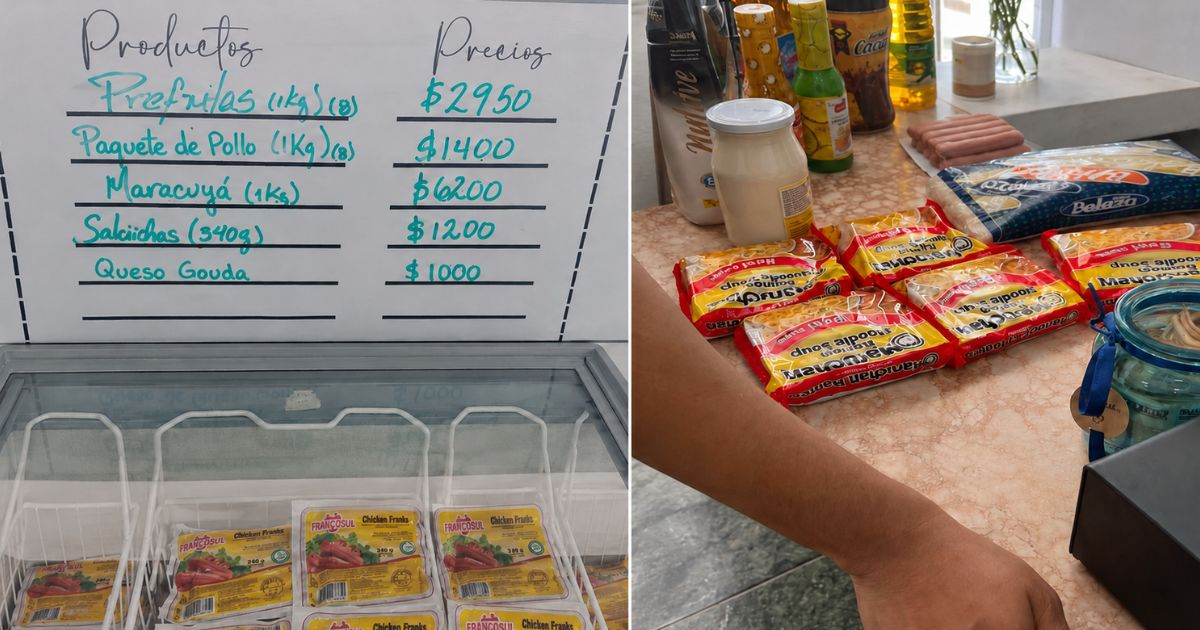
The Cuban regime has made it clear in recent hours that, after eliminating price caps and allowing the increase in the cost of basic products, it now intends to restore order nationwide through fines, seizures, forced sales, and closures against private businesses.
The Municipal Administration Council of Plaza de la Revolución in Havana reported this Wednesday that inspectors carried out 20 control actions in establishments belonging to non-state management forms.
According to the statement, the authorities detected the sale of sausages, oil, chicken, and ground beef without prices displayed to the public, in addition to values they described as "abusive and speculative" related to the purchase and resale of those products.
As a result of the inspections, 17 fines were imposed under Decree 30/2021 of the Ministry of Finance and Prices. Additionally, three forced sales were ordered, although the official statement did not specify which products were sold or the prices set by the inspectors.
In another establishment, the authorities found that electronic payment gateways were not being used. The business was fined under Decree Law 91/2024 and its activity was temporarily suspended.
The municipal government warned that it will strengthen actions against those who violate its regulations and threatened to temporarily close establishments for a period of up to three months.
Among the possible sanctions, he also mentioned confiscation, forced sale of goods, and the imposition of new fines.
The offensive comes just weeks after the Ministry of Finance and Prices formally eliminated retail price caps for cut-up chicken, cooking oils —except for olive oil—, powdered milk, pasta, and sausages through .
Miguel Díaz-Canel himself acknowledged that the price caps did not succeed in containing inflation and led to the disappearance of products, diversion to the illegal market, and price increases.
However, territorial administrations have begun to regain mechanisms of pressure and control against private vendors.
In that regard, Havana is not the only territory where measures are tightening. In Sancti Spíritus, a recent operation resulted in over 200 fines and the closure of at least five establishments due to violations primarily related to pricing and electronic payments.
This Wednesday, the municipal government of Guantánamo set a reference price of 2,200 pesos for oil and announced fines, seizures, forced sales, and closures of up to three months for those who violate its regulations, although it denied that this was a new price ceiling.
Meanwhile, the Provincial Government of Granma called on private importers of food and hygiene products to seek alleged "joint solutions," amidst the rapid rise in the prices of basic goods and the increasing official pressure on the non-state sector.
The measures once again reflect the erratic nature of the regime's economic policy: first it eliminates controls after acknowledging their failure, and shortly thereafter, it resorts to inspections, threats, and sanctions in an attempt to contain prices that salaries and pensions of the majority of Cubans cannot support.
Related videos:
Filed under: