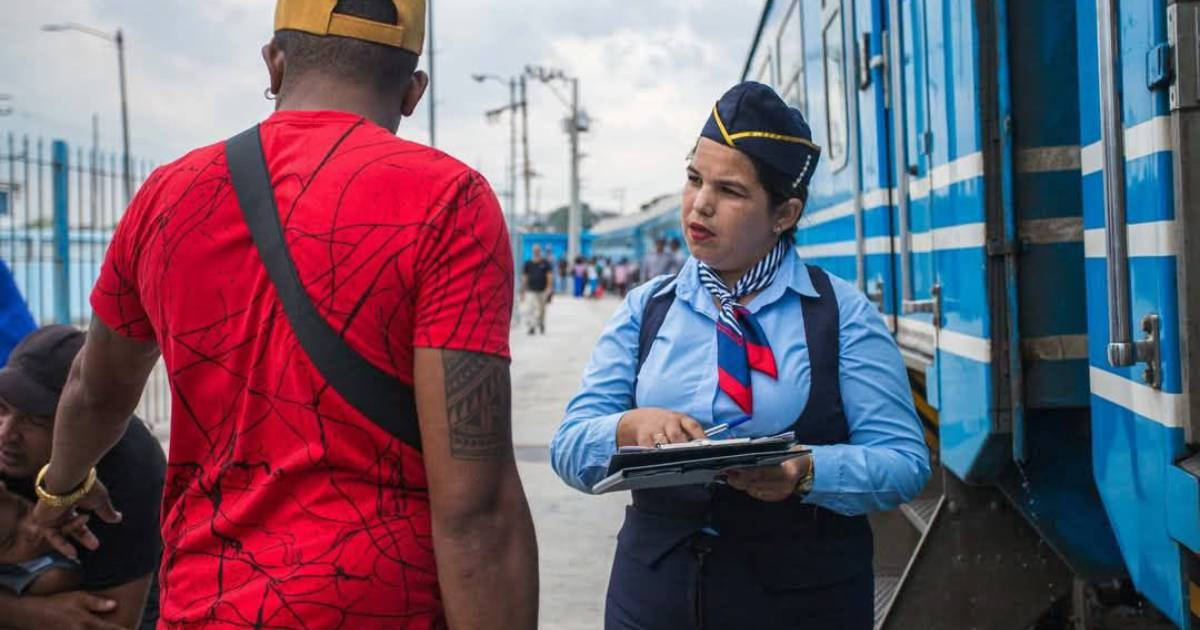
The Cuban Ministry of Transport acknowledged on Monday that the mechanism used since June to distribute the scarce tickets available in the country created "causes and conditions for the occurrence of corruption and indiscipline in the allocation of capacities."
The admission appears in an informative note published on social media by the organization itself and represents an official acknowledgment of the irregularities surrounding the system implemented amid the severe fuel and transportation crisis the island is experiencing.
The questioned mechanism came into effect on June 18, when the Ministry implemented a drastic cut in national services due to a lack of fuel.
The trains were reduced to one departure every 16 days to Santiago de Cuba, Guantánamo, Holguín, and Bayamo-Manzanillo, while Ómnibus Nacionales began operating three weekly services from Havana to the provincial capitals.
At the same time, the usual ticket sales through the Viajero agencies and the Viajando app were suspended. The few available seats were then allocated by provincial groups or commissions tasked with prioritizing cases deemed urgent.
Less than two months later, the Ministry itself acknowledged that this mechanism ended up creating conditions conducive to corruption and other irregularities.
The statement also reveals another issue: in the midst of a ticket shortage and with demand far exceeding supply, there were available capacities that were not fully utilized.
According to the agency, this situation was related to the reduction of services, the "poor handling of reservations in some areas," irregularities in capacity allocation, and the dissatisfaction generated among passengers. The problem had a notable impact on national trains and in the maritime service to the Isle of Youth.
However, the Ministry does not specify the extent of the "corruption and misconduct" mentioned in its own statement.
It does not identify the provinces where the irregularities occurred, does not inform about officials being investigated or sanctioned, and also fails to provide specific examples of the detected practices. The acknowledgment that conditions for corruption existed comes without names or public accountability.
Citizen complaints, however, had begun long before this official recognition.
At the end of July, Cubans publicly denounced the resale of tickets for up to 20,000 Cuban pesos, while also questioning the lack of transparency in the process used to allocate the available spots.
Weeks earlier, passengers in Cienfuegos had reported alleged illegal charges of 10,000 pesos additional by Viazul employees to travelers who already had valid tickets.
The recognition of the irregularities now coincides with a partial adjustment of the mechanism implemented in June.
In the same announcement, the Ministry announced that the sale of tickets will return to the agencies of Empresa Viajero in all municipalities where those offices exist.
Provincial groups, however, will continue to manage a minimum of resources allocated for cases deemed urgent.
Another change reduces the notice period for reservations across all services to three days. Authorities justified the measure due to the ongoing uncertainty surrounding the fuel supply.
Changes are arriving amid one of the most critical situations in Cuban transportation in recent years. Since the reduction implemented on June 18, securing a seat on a train or an interprovincial bus has become a race for thousands of people needing to travel between provinces.
The combination of an extremely limited supply and a discretionary system for deciding who could access the scarce resources created a situation that, as the Ministry now acknowledges, facilitated the emergence of irregularities.
Starting Wednesday, August 12, Viajero agencies will begin selling capacities for scheduled trips from the 15th onward.
The Viajando application, on the other hand, will remain out of service while technical work is being performed. The Ministry did not specify how long it will be suspended or when users will be able to purchase their tickets again through that platform.
The return of sales to the agencies signifies a shift in direction less than two months after the implementation of the exceptional mechanism, as authorities acknowledge the conditions that favored corruption, but still have not explained who benefited from the irregularities or what consequences will be faced by those responsible.
Related videos:
Filed under: