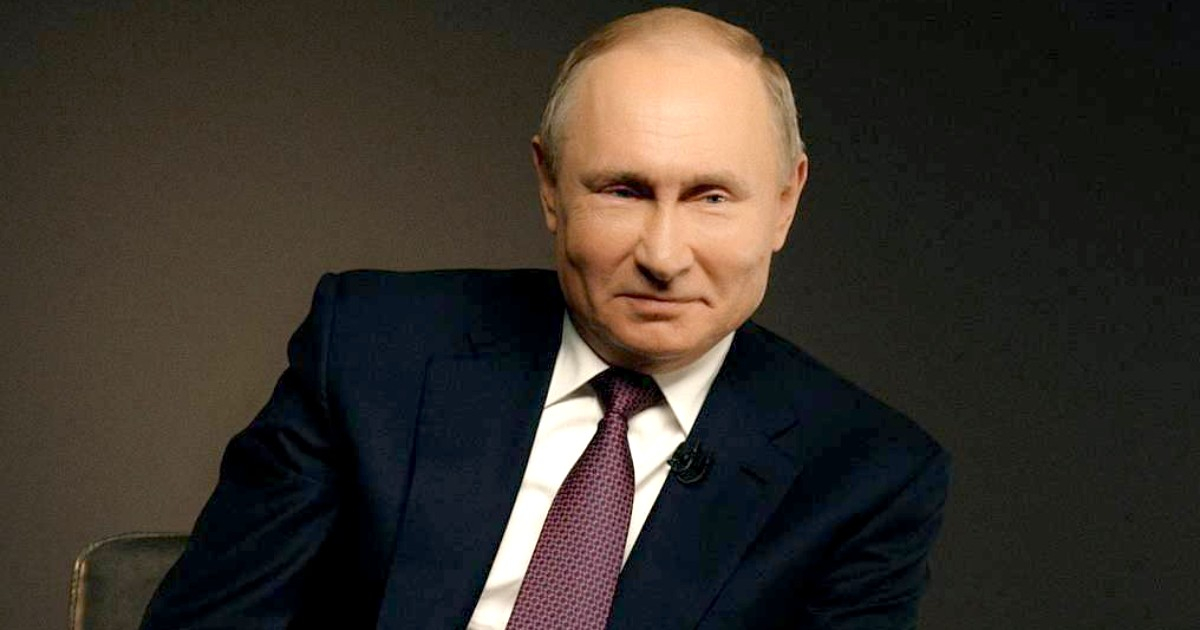
U.S. intelligence agencies warn that Russian President Vladimir Putin may authorize provocative actions on NATO territory, according to officials briefed on the matter who spoke with CBS News.
The assessment, originally published by The Wall Street Journal last Thursday, indicates that the likely aim would not be to trigger an outright war, but rather to test the cohesion of the alliance and the willingness of the Trump administration to defend an attacked ally.
The actions considered would not include a conventional military campaign, but rather what officials describe as “hybrid operations, cyberattacks, and other deniable measures.” This represents, according to sources, a significant shift in the Russian president's risk assessment compared to just a few months ago.
The historical paradox is hard to ignore: Putin invaded Ukraine on February 24, 2022, claiming that the potential accession of Kyiv to NATO posed a "direct threat" to Russia, despite Ukraine not being a member of the alliance.
Four years later, it is Moscow that threatens military action against countries that are indeed full members of the bloc.
The warning is backed by a series of specific incidents. Earlier this month, U.S. authorities assessed that a drone loaded with explosives found at the airport in Leipzig, Germany, was of Russian origin, although Berlin has not made an official public attribution. Russia labeled the discovery a "fabricated provocation."
The German incident adds to a pattern of escalation that includes the impact of a Russian Kh-101 missile on Polish territory on July 31, in an agricultural field in Lublin, described as the most serious violation of NATO territory since the start of the invasion. Romania has recorded at least 18 Russian air incursions so far in 2026.
In September 2025, Russian drones penetrated Polish airspace during attacks against Ukraine, marking the first time that a NATO member shot down Russian aircraft on its own territory. Warsaw then invoked Article 4 of the North Atlantic Treaty, and the alliance responded by launching Operation Eastern Sentinel to strengthen its eastern flank.
The NATO Secretary General, Mark Rutte, had already warned in December 2025: «We are the next target of Russia and we are already in danger», adding that Moscow might be ready to use military force against the alliance «in five years».
The situation is complicated by the doubts that President Donald Trump has expressed about Article 5, the principle of collective defense that requires the 32 members of the bloc to respond to an attack against any ally.
Trump stated in June 2025 that there are "numerous definitions" of the article and that he is not sure that European allies would defend the U.S. if it were attacked. At other times, he has said that he would protect NATO members, but he has also threatened to withdraw thousands of troops from Germany and has criticized allies for not increasing their defense spending.
While this is happening, Russia continues to suffer massive losses in Ukraine. The CIA director, John Ratcliffe, noted at a defense forum last month that newly recruited Russian soldiers at the front survive between 20 to 30 minutes before being killed or wounded, primarily due to the Ukrainian use of attack drones with artificial intelligence.
Russian casualties reach about 30,000 soldiers per month, a figure that exceeds the country's recruitment rate.
Washington's diplomatic efforts to end the war have stalled with no clear prospects for negotiations, leaving open the question of how far Putin is willing to go in the face of a coalition whose unity he himself seems to be assessing.
Related videos:
Filed under: