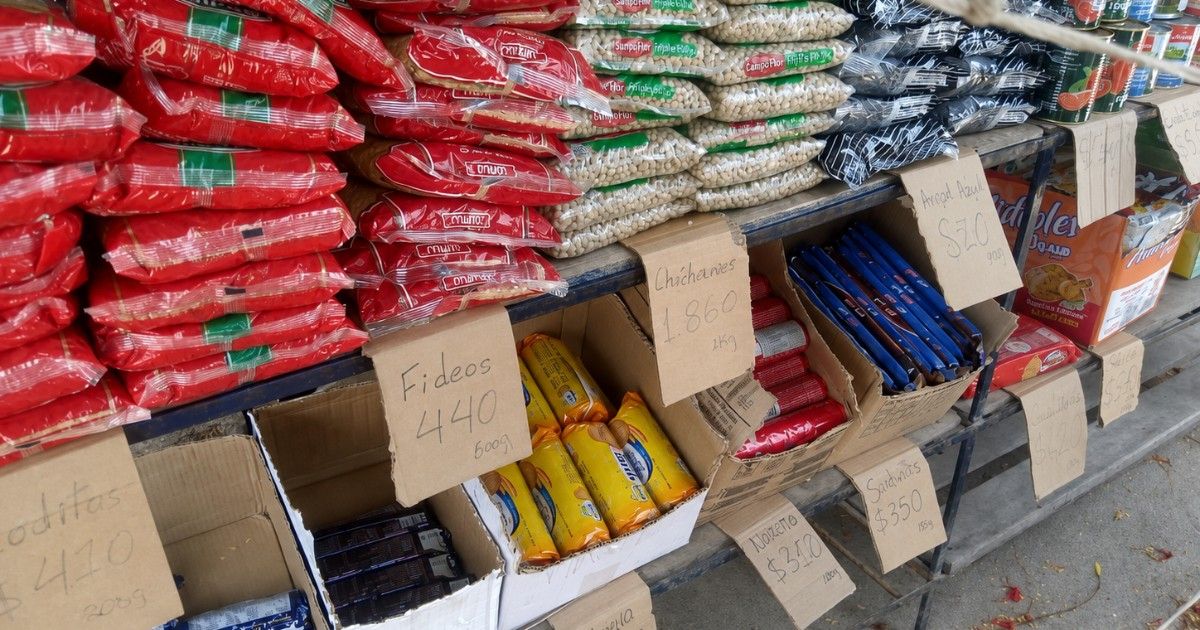
The authorities of the municipality of Holguín announced the creation of working groups to ensure that the commercial margin applied to several essential goods does not exceed 30%, in an effort to curb the rising prices affecting the population.
The measure was announced on Tuesday through an informative note from the Municipal Assembly and the Council of Administration of Holguín, following an extraordinary meeting held on Monday to address the public's complaints about the excessive price increases.
The control will cover meat products such as chicken, sausages, minced meat, and cold cuts, as well as eggs, powdered milk, pasta, rice, beans, and imported sugar, soap, detergents, and oil.
The authorities insisted that the decision “is not price control”, as it does not set a single selling price for each product.
"The Working Group does not set a single selling price. What it does is ensure that the profit margin for essential goods does not exceed 30%," the statement explained.
According to the announcement, any profit above that limit will be considered a violation of the pricing policy and will be subject to penalties "with the full weight of the law."
However, the text did not explain how the public will be able to verify the original cost declared by each merchant or calculate whether the applied margin actually meets the stipulated requirements.
That emptiness generated doubts among the users who reacted to the post.
"The people do not know or understand that commercial jargon, and much less can they see the purchase invoices," warned Dalis Espinosa Hernández.
Enoel Santana also asked how consumers will be able to know if the price correctly incorporates the 30% profit when they do not have access to the invoice that shows the initial cost of the product.
Other comments reflected distrust in the authorities' ability to enforce the decision.
"On paper, everything looks good, but it's not just about speculation; it's also about corruption, which starts with those who are supposed to uphold the rules," noted Manuel Perdomo.
Several residents reported that prices remained high following the announcement.
Maritza Rodríguez stated that a dozen eggs was being sold for 5,000 pesos, a package of chicken for 8,000, and oil for over 3,000 pesos, while Roelkis Ochoa Cuello reported seeing oil for 4,000 pesos and a dozen eggs for 4,500 in the surroundings of Las Baleares.
There were also warnings about a possible disappearance of goods. "Now sellers are hiding the merchandise like they did before, and nothing happens," commented Rosabel González, while Ana Cruz Leyva predicted that the products would disappear again.
Levis Luis Chacón Cisneros questioned the government's focus on pressuring the private sector and stated that the State, still the owner of the essential means of production, should focus on "PRODUCING, PRODUCING, AND PRODUCING" in order to compete with better offers and reduce speculation.
The decision from Holguín adds to a new wave of territorial controls. Matanzas established a maximum commercial margin of 30% and reference prices for basic food items, while Villa Clara set maximum prices, including 110 pesos per egg and 2,500 pesos per liter of oil.
The return of these measures comes less than two months after Miguel Díaz-Canel acknowledged that the previous price caps did not stop inflation and led to the disappearance of products, shifts to the illegal market, higher prices, and lower tax revenue.
The contradiction has also been pointed out by Cuban economists critical of the new controls.
Pedro Monreal summarized the regression with the phrase "they learned nothing," while Elías Amor warned that administratively limiting prices and margins could lead to immediate shortages.
Related videos:
Filed under: