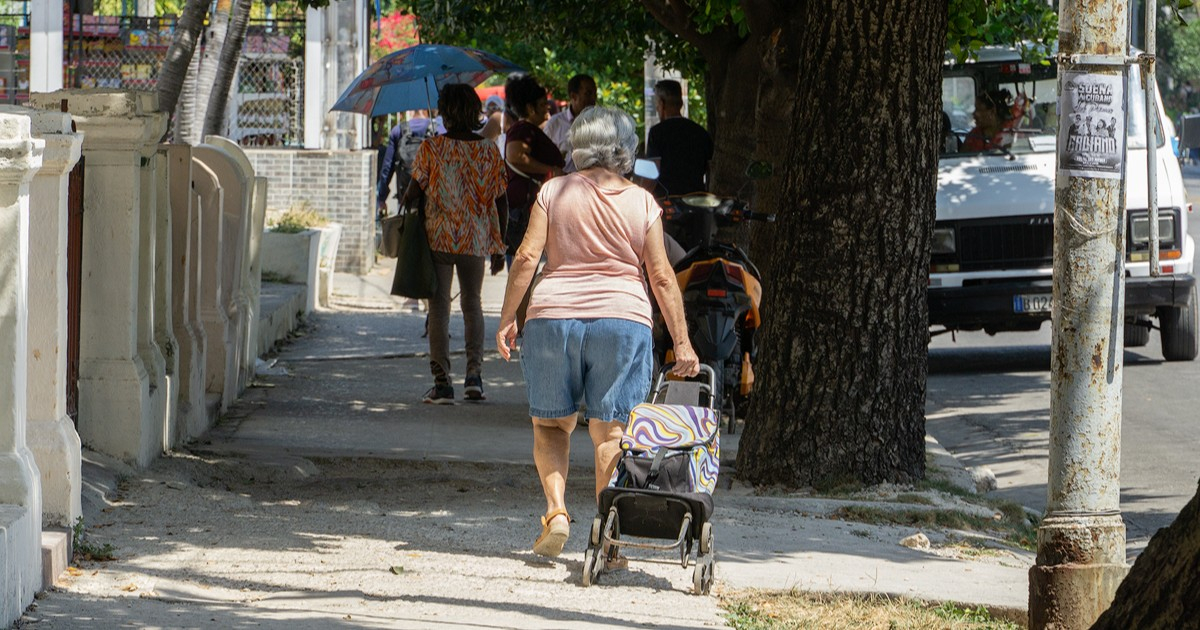
Mayumis Núñez is 44 years old, lives in Centro Habana, and sleeps on an improvised bed on the sidewalk in front of the building where she used to live, which has been declared uninhabitable after its collapse. Every morning, she climbs up to the ruins of her apartment to take a shower, if there is water, and then she leaves for work.
His story, reported by the AFP agency, is the most tangible representation of what it means to "resolve" in Cuba when there is no real solution.
The island's population is weary of constantly improvising solutions in the face of shortages, blackouts, and material deterioration. The accumulated stress and suffering are raising concerns among mental health specialists on the island.
Tania Peón, director of Mental Health in Havana, describes it bluntly: "It's stress on top of stress." According to her, "a large portion of the population lives in a constant state of alert" because "people are focused on meeting basic needs all the time," leaving no room for emotional rest.
The most serious warning issued by Peón is aimed at the younger generation: "In the first half of this year, we have been observing an increase in suicidal behavior among our teenagers" in Havana.
Scientific data supports that clinical perception. A study published in Social Science & Medicine —based on a survey of 415 Cuban adults conducted between July and November 2025— found devastating levels of psychological distress: 55.4% with extremely severe depression, 66% with severe anxiety, and 65.8% with extreme stress.
Researchers emphasize that the most harmful factor is not the duration of the power outages themselves, but their functional impact on interrupting fundamental routines such as cooking, sleeping, working, or studying. Younger adults turned out to be the group most vulnerable to both stress and depressive symptoms.
This analysis is compounded by the shortage of psychiatric medications. In 2026, in the country only 30% of the basic medication supply is covered. Among the missing medications are psychotropic drugs.
The housing context exacerbates the situation. Thousands of families live in tiny apartments and in poorly constructed buildings, facing a lack of drinking water and frequent power outages.
In Havana, around 1,000 buildings collapse each year. The housing deficit in Cuba exceeded 929,000 units according to estimates from 2026. The State completed only 5,493 housing units in 2025, compared to a plan of 10,795, according to official figures.
It is in this context that the case of Mayumis Núñez is situated: she is not an exception, but one of the dozens of families that remain homeless without any response from the regime.
For decades, "resolver" was an idea presented by the regime as a Cuban virtue, a testament to resilience and popular creativity. What the accumulated deterioration of 67 years of dictatorship reveals now is something else: a population subjected to constant, unrelenting pressure. This is taking a toll on the mental health of adults, young people, and adolescents.
Related videos:
Filed under: