
Related videos:
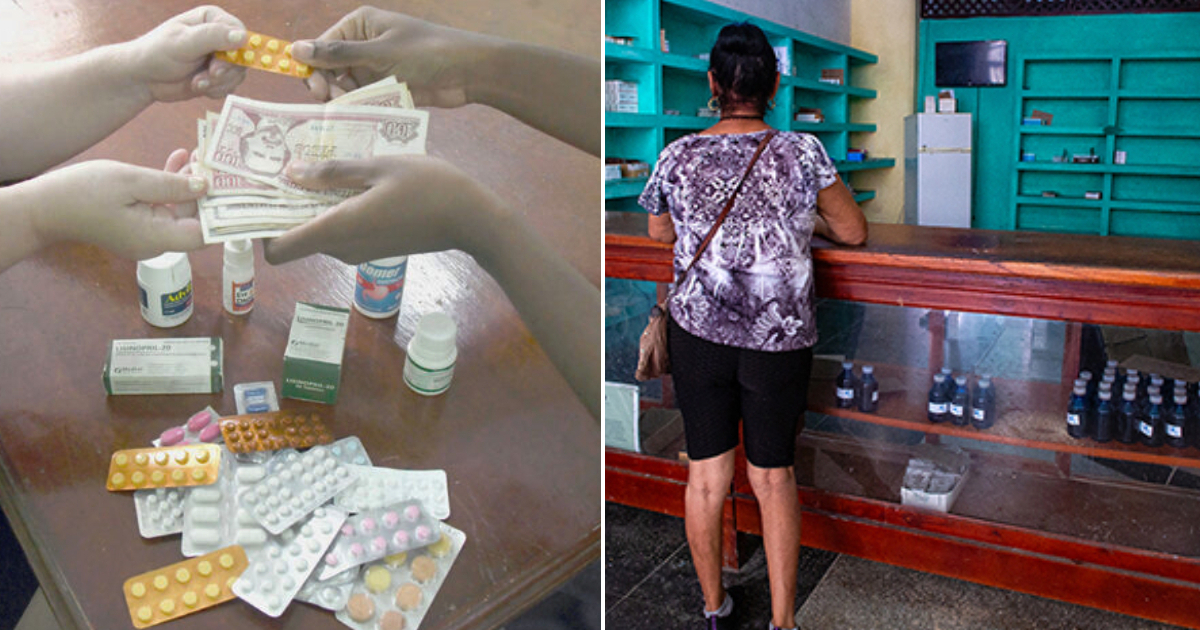
Most Cuban families have at least one member who turns to the black market to buy antidepressants, mood stabilizers, or over-the-counter stimulants, according to health professionals consulted by the British newspaper The Guardian across the island.
The report documents how the economic and energy crisis currently facing Cuba has triggered a serious mental health crisis that is driving the population towards widespread self-medication, in a scenario that many describe as more bleak than the collapse of the Soviet Union.
"Every day, someone can wake up without electricity, without the certainty of having breakfast, or without knowing how they will get to work. This generates a lot of stress, which is accompanied by numerous psychological manifestations: depression, intense anxiety, and mental fatigue. As a result, mental health problems have increased enormously," declared a psychology professor from Santiago de Cuba, who requested anonymity to speak freely.
The most commonly consumed over-the-counter medications are benzodiazepines such as chlordiazepoxide and clonazepam, alprazolam—known as Xanax—amitriptyline, and sertraline. A simple phone call is all it takes for these medications, often delivered in packaging with Cyrillic, Indian, or Chinese characters, to be brought to your doorstep by electric bicycles, but at a price that many cannot afford.
Cris Sánchez, a linguist who lived in London for 25 years and returned to Cuba in 2018 to care for his parents—his mother suffers from Alzheimer's and his father has Parkinson's—acknowledged being one of those cases. "Just to relieve a bit of the tension," he explained about his use of black market antidepressants. "I don't regret coming back to take care of my parents, but there are very few things I like about being in Cuba. I liked my life in London, and I don't like this one at all."
50% of the active population works in state offices that remain closed, leaving people with no other concern than survival. All this coincides with a contraction of GDP by 17% since 2019 and state pharmacies that are practically empty.
In the countryside, where black market prices are unaffordable, people turn to natural remedies. "Here they make infusions of mint, chamomile, basil, lime, and lemongrass," said Rosangela Reyes, 28, in El Cobre, Santiago de Cuba.
In cities, however, a more alarming phenomenon has emerged: the consumption of illicit drugs, historically a taboo in Cuba. The most prevalent one is "el químico," a synthetic cannabinoid similar to spice. The cases of poisoning in Havana nearly doubled between 2024 and 2025, rising from 467 to 886, according to the Cuban Ministry of Health.
The dependence on psychotropics is not new on the island. During the Special Period in the 1990s, when the economy contracted by at least 35% following the Soviet collapse, the government actively funded the production of psychoactive drugs. An anonymous caregiver bluntly summarized it: "They knew that the country was overconsuming these types of medications and their effects, but it was convenient for them to keep the people calm."
When the situation improved with tourism and the alliance with Venezuela, consumption decreased. However, those hopes faded with COVID-19, hyperinflation, and the repression of the protests in July 2021, which accelerated an exodus that has seen nearly 20% of the population leave the country in five years.
However, while the leader Miguel Díaz-Canel declared last month in front of foreign supporters that the Cuban people "prefer to die standing than to live on their knees," Gabriel Menéndez, a teacher in Santa Clara, expressed the sentiment of those who remained: "This time, there is no idea to cling to, only the need to accept the harsh reality of what is coming."
For the psychology professor from Santiago, the most devastating aspect of the crisis is not its intensity but its indefinite duration: "It is precisely the uncertainty—the not knowing how long this will last—that worsens the situation. If one knows that a problem will last seven days, one might think: 'I can handle that.' But we are experiencing a situation whose end is uncertain."
Filed under: