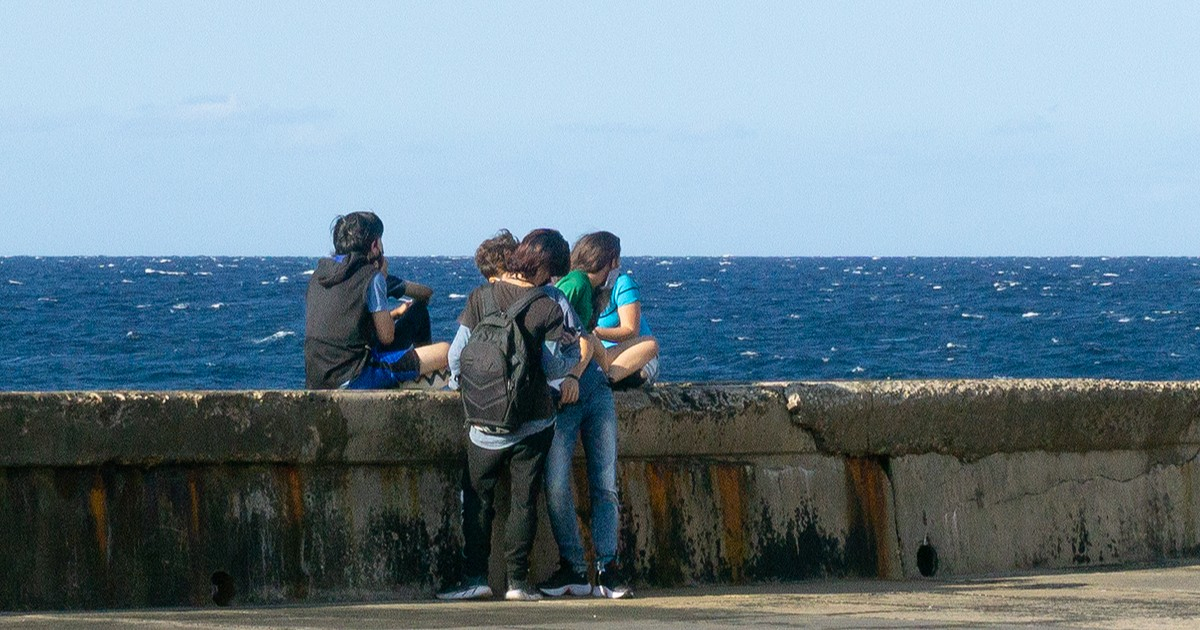
The crisis in Cuba has reduced the lives of millions of people to a single question: how to make it to the next day.
Beyond the food shortages or power outages, what is described in a report by the AFP agency is a less visible but equally devastating consequence: the inability to build a life plan.
Claudia Sifredo, a 29-year-old education student, has indefinitely set aside the possibility of becoming independent from her parents. "The future for me is uncertain," she summarizes.
The young woman describes her situation as "chaotic" and admits to living with "so much stress and uncertainty" that she doesn't know how to manage day-to-day life. She turns to therapy to learn how to focus on what she can control, in an environment that is completely beyond her power.
Leandro Wanton, an unemployed tour guide, confessed that the accumulated frustration hits him at the worst moments of the day. His words reveal how daily instability pushes him to his emotional limits.
Roberto Ronda, a 49-year-old chef who is trying to sustain a small food business in Old Havana with his partner, expressed: "There is no peace, there is no rest." For him, "mental health is wearing away," and he sees no way out "without a radical change" in the country.
These individual testimonies are part of a documented trend of deterioration of mental health in Cuba.
Tania Peón, director of Mental Health in Havana, warns that a large part of the population lives in a constant state of "alert," and notes that in the first half of 2026, there was a rise in suicidal behavior among adolescents in the capital.
The data supports that alarm. A study published in Social Science & Medicine found that among surveyed Cuban adults, "extremely severe" levels of depression were present in 55.4% of cases, severe anxiety in 66%, and extreme stress in 65.8%.
There is a direct relationship between the duration of blackouts and the deterioration of psychological well-being. The sociologist Elaine Acosta has described the phenomenon as a "mental health epidemic" fueled by economic precariousness, food shortages, and insufficient access to psychiatric care.
In August 2025, there had already been a rise in suicidal behaviors among adolescents in Holguín, linked to the exodus and social deterioration. A year later, the Director of Mental Health in Havana confirms that the trend has not reversed.
Related videos:
Filed under: