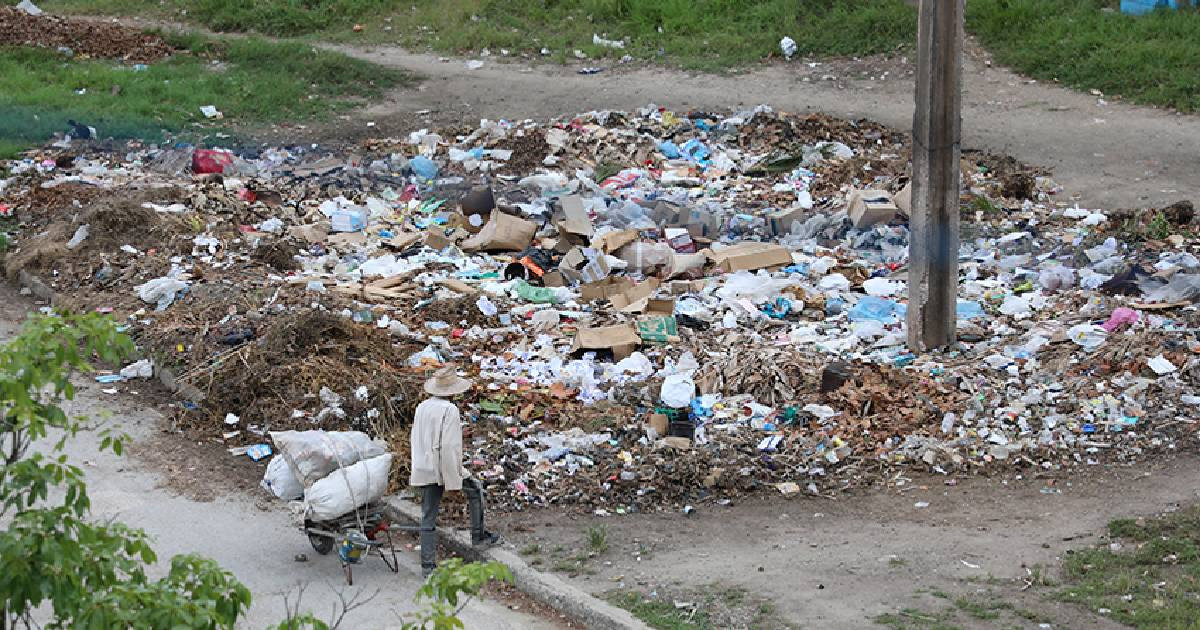
The accumulation of solid waste in the streets and neighborhoods of Las Tunas has reached critical levels, with open-air micro-dumps threatening public health and forcing the search for alternatives outside the state system, recognized this Saturday by the official newspaper 26.
The publication acknowledged that the proliferation of vectors, uncontrolled waste burning, and the inefficiency of the state system create a situation that requires a "collective and prompt" response.
Due to deficiencies in garbage collection, the mipyme Asfaltunas S.U.R.L. began collecting waste any day of the week, voluntarily and without expecting compensation in return.
At the same time, the Raw Materials Recovery Company is promoting the Reciclo Mi Barrio and Reciclo Más projects, aimed at supporting the state, residential, and private sectors.
The publication itself states that the lack of environmental awareness and the indifference from the population hinder the results.
The official newspaper concluded its message with a warning that highlights the seriousness of the situation: "Our province cannot afford to let waste become an epidemic. We are the Balcony of the East, we should present our best face to visitors."
However, the problem is not new nor is it only a result of individual behaviors. In February, the newspaper 26 acknowledged the existence of "hundreds of micro-dumps" in the province and noted that waste collection depended almost exclusively on animal-drawn carts.
Since then, the situation has evolved in a context of fuel shortages that further hinders the state system's ability to ensure waste collection.
The health consequences are severe: proliferation of vectors, increase in gastrointestinal and respiratory diseases, risk of leptospirosis and dengue, and uncontrolled burning of waste that exposes infants, the elderly, and pregnant women to toxic smoke.
In September 2025, a survey by the provincial body of the Communist Party in the eastern territory revealed that 81% of the residents of Tunas pointed out solid waste management as one of their main concerns, while also reporting spontaneous dumps, debris on public roads, and indiscriminate burning of garbage.
Despite the imposition of hundreds of fines for violations related to waste in 2025, the reorganization of the city into four zones, and the promotion of contracts with private waste collection companies, the public considers these measures insufficient.
Provincial leaders have tended to blame citizens and private businesses for the crisis, while on social media, the outrage is summarized in phrases like "in every block, a committee and a dump" or "what do we do with the garbage if they don't collect it? Do we eat it?"
Related videos:
Filed under: