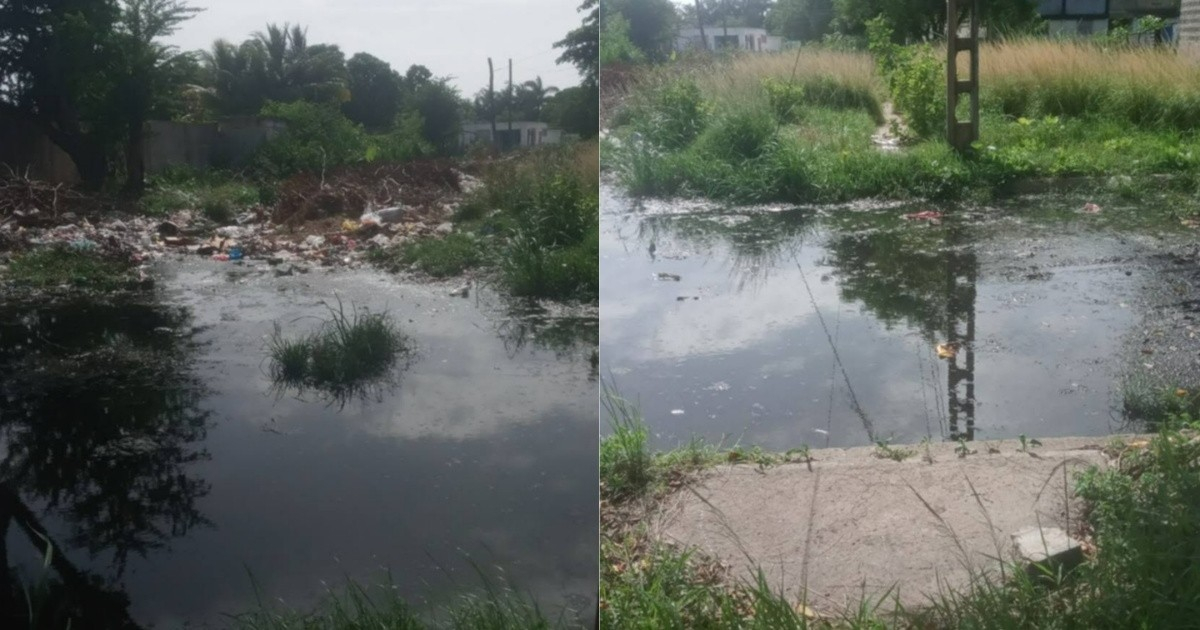
Residents of Camagüey have been living with overflowing sewage waters in the middle of the street for over four years, according to a complaint shared on Facebook that highlights an ongoing public health crisis with no solution in sight.
The situation is neither new nor isolated. In October 2025, residents of the Prieto neighborhood reported a blockage that lasted more than three months on Longitudinal Street between 2nd and Final, with sewage water in front of their houses and no response from the authorities.
In July of this year, the La Marina neighborhood showed a similar scene: sewage, accumulated garbage, and neglect as constants of daily life in that part of the city.
In May, a downpour lasting just an hour was enough to turn several streets in Camagüey into lakes due to blocked sewage systems, with the corner of San Ramón and Honda described as a spot that "has been obstructing the street after every downpour for years."
In June, an alert was raised about the quality of water in Camagüey, which had a foul smell and cloudy color, signs of contamination in the drinking supply. That same month, the municipality experienced several days without water due to a malfunction in the network.
The pattern has been repeating for years. In September 2024, the sewer system in the Saratoga neighborhood collapsed after a heavy downpour, with residents reporting water levels up to their knees. And in 2019, residents of the Boves neighborhood were already complaining about waiting over 15 years for road repairs, with leaks taking months to resolve.
Chronic power outages exacerbate the problem: by halting the water pumps, they accelerate the overflow of the networks and promote the contamination of the drinking water supply with wastewater. "Our pipes are releasing sewage," a Cuban resident reported in mid-month.
The structural figures explain the magnitude of the collapse. According to the Provincial Statistical Yearbook of 2023, only 27.2% of the population in Camagüey is connected to sewage systems; the remaining 72.8% relies on pits and latrines. On a national level, only 37% of Cubans have access to sanitation networks, and more than 173,000 people lack adequate systems for wastewater disposal.
In December 2023, the regime announced a Saudi credit of 50 million pesos to repair over 24.4 km of marginal collectors in the old Camagüey network. Two and a half years later, the streets remain flooded with sewage, and the residents are still waiting.
Related videos:
Filed under: