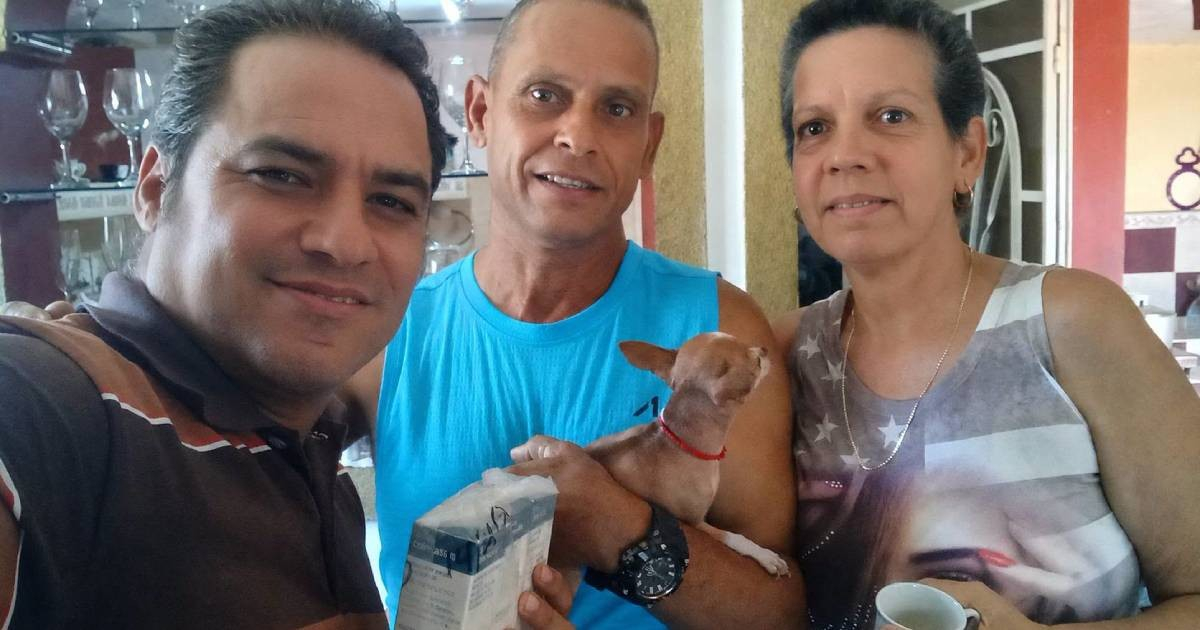
A couple from Pedro Betancourt, Matanzas, decided to give up hundreds of dollars to help a family that was desperately seeking a medication to treat their father's cancer.
José Luis and Liset donated three vials of cisplatin, a drug used in chemotherapy treatments, after learning through social media about the request for help from Leidi Ramírez, the patient's daughter.
Medications could reach about 130 dollars per vial in the informal market, according to information shared regarding the case. Instead of trying to sell them, the couple decided to turn over the three without asking for anything in return.
Behind the donation, there is also a personal story. Liset went through cancer treatment as well, and the vials became available after her medical process. Now recovered, she decided they could be used to give someone else a chance to continue their treatment.
The story was shared by journalist and activist Yaudel Rodríguez Vento, who days earlier had posted on Facebook Leidi's plea to obtain the medication her father needed.
The request began to mobilize several people until José Luis and Liset's message appeared.
Rodríguez Vento personally traveled to Pedro Betancourt to collect the medications, with the support of three other individuals identified as Odalis, Yunieski, and Yoli, and announced that they would be delivered to the family as soon as possible.
"Today I have in my hands those medications, a part of the treatment that Leidi Ramírez's father needs. In a few hours, I will deliver them, because when someone is waiting for medication to confront an illness, every hour counts," he wrote.
"There are still good people in this world."
Leidi's reaction revealed the significance that the assistance had for a family that had been searching for a solution for days.
"My God, I have no words to express what I am feeling. I am the desperate daughter and I don't know what to say; I only know that there are still good people in this world. Here I am, in pure tears from witnessing so much humanity," she commented in the post.
Rodríguez Vento shared that José Luis and Liset have been married for 40 years and met during their time in field school. He described them as "authentic country folks, people with a good, transparent, and noble soul."
A nephew of the couple also reacted to the story and stated that those who know them were not surprised by their decision.
"My uncle José and my aunt Liseth, noble and enterprising people who have never given what they have left over, have given everything," he wrote.
The gesture takes on an even greater significance given the value of oncological medications amidst the severe shortages facing the Cuban healthcare system. At the prices mentioned in the publication, the three vials would amount to about 390 dollars, a very high sum for most families on the island.
But for José Luis and Liset, their value was measured in a different way: they were medications that had been part of her battle against cancer and could now help another person face the same disease.
Searching for medications on social media
The case highlights an increasingly common reality in Cuba: families forced to turn to Facebook, WhatsApp, and other platforms to locate medications they cannot find in hospitals and pharmacies.
Cisplatin is among the chemotherapy drugs whose shortage has been acknowledged by the Cuban authorities for years, as part of a much broader deficit of essential medications.
The crisis reached particularly severe levels in 2026. In July, the management of BioCubaFarma acknowledged the difficulties in ensuring the supply of nearly 300 out of the 395 medications that the industry was supposed to provide to the National Health System.
In August, Miguel Díaz-Canel acknowledged that only about 30% of the basic medicine supply was available, a particularly troubling situation for those suffering from diseases that require ongoing treatments.
The scarcity takes on even more dramatic consequences for cancer patients, for whom a delay in obtaining medication can mean the interruption or postponement of treatment cycles.
In that void, informal solidarity networks have emerged, where family members, friends, emigrants, and strangers seek, buy, or donate medicines.
A commentator recounted that just a month earlier, her family needed to gather about 2,000 dollars to obtain medication for a 13-year-old cousin in Camagüey. According to her testimony, each box cost around 400 dollars, and the money was raised in just three hours thanks to a support chain organized on social media.
"Those chemotherapeutics are hard to find, and when you do, they're very expensive," summarized another user.
Stories like Leidi's reveal the human face of a health crisis where obtaining medication increasingly depends on having money, relatives abroad, or the luck of having a request reach someone willing to help.
This time, the request reached a couple from Matanzas who were well aware of what it means to confront cancer.
Rodríguez Vento summarized the gesture of José Luis and Liset with a phrase that ultimately became the heart of the story: "They didn't give away something they had in excess. They gifted something that could mean a lot to them. They gave a hope."
Related videos:
Filed under: