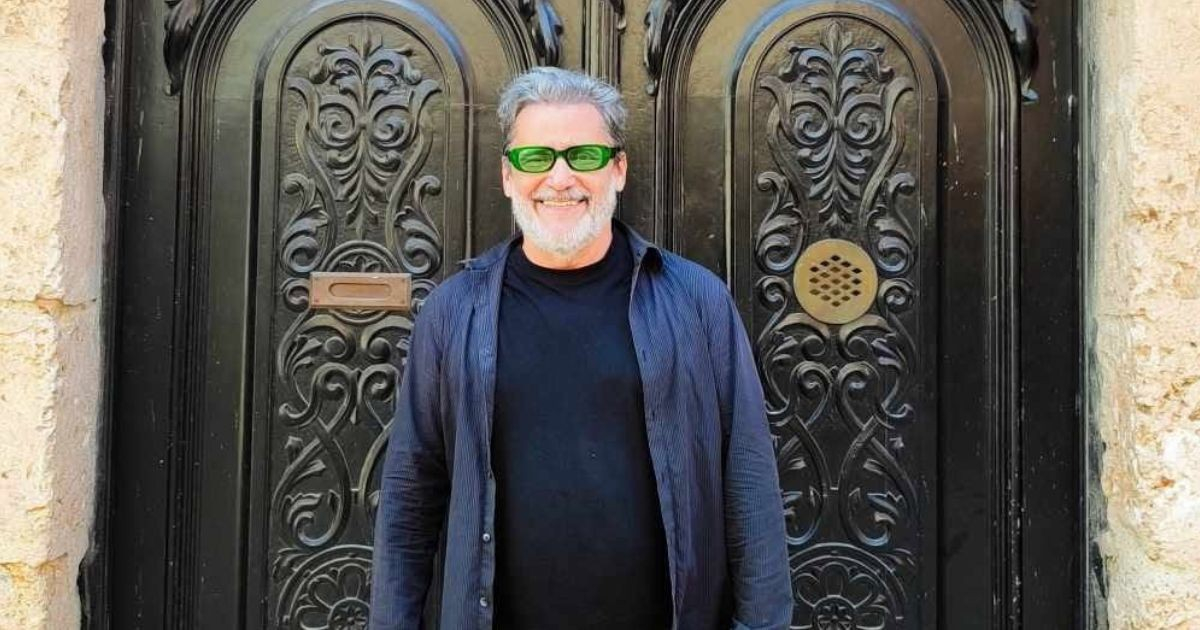
The Cuban professor and historian Julio César González Pagés stated this Tuesday that those who remain in Cuba and do not plan to leave in light of the "distressing calamities" facing the country are compelled to find new ways to get ahead: "We have no other option but to reinvent ourselves."
González Pagés shared his reflections in a Facebook post, where he described the Cuban population as trapped "between two intransigent ideological discourses" and stated that they live "in a daily survival limbo that seems to concern no one but ourselves".
The intellectual directed his critiques at opposing positions both inside and outside the island, questioning the attacks, discrediting, and discourse of people who, from social media, tell those living in Cuba what they should do.
"I hate the discredits from both sides and the people monetizing on social media with epileptic attacks telling us what 'the survivors' should do; it provokes a lot of disgust and repugnance," he wrote.
González also questioned the moral authority of some of those voices and argued that, apart from “some 'flatulence' that escaped the microphone,” they never made any other public gesture of protest while they were in Cuba.
In another moment of his reflection, he referenced the artist, dissident, and former political prisoner Luis Manuel Otero Alcántara, who left Cuba in July after spending five years in prison and arrived in the United States.
González stated that “the before and after of the reception” of Otero Alcántara “exposes the filters of power that determine someone’s eligibility” and compared certain behaviors of militants associated with the opposition to those of “some militants on this side of the pond.”
The historian also denounced his exclusion from cultural spaces within Cuba and specifically mentioned the Book Fair.
«Another Book Fair has come to an end where I was not invited for writing opinions like this that make me ineligible. Well, I haven't been invited for years now,» said the prominent professor, highlighting another instance of censorship in Cuba.
But his complaint went further. According to González, some people avoid him, while others have directly told him that their organizations don’t even allow them to like his posts.
They have extreme surveillance despite the lack of electricity, water, food, and medicine," he denounced.
For the professor, these shortcomings ultimately take precedence over political and ideological disputes.
He also mentioned that waking up to the complaints of his neighbors immediately brings him back to what he considers the priority of those who remain on the island: "surviving one more day."
In that context, he sarcastically commented on what he referred to as "the Cuban divismo's struggle for democracy, homeland, and whatever rhetoric can be added," and concluded that part of his reflection with an expression of uncertainty: "Maybe next year good things will happen."
González accompanied his post with an image of a medieval Irish engraving related to the so-called "pedorros or tira peos," whom he described as lesser artists situated alongside jugglers, jesters, acrobats, and storytellers.
He explained that they performed at parties and assemblies and were part of subordinate professions known as "fodána."
The new statements maintain a critical line that the intellectual has expressed over the past few months on his social media.
At the beginning of August, he questioned the official discourse of "creative resistance" and stated that he does not believe in those who talk about resisting without having experienced long days of blackouts, lack of water and food, or the sick without medication.
He also stated then that he has no intention of leaving Cuba; for that reason, he is part of the group of those who live on the island.
A month earlier, González criticized the privileges surrounding Raúl Guillermo Rodríguez Castro, "El Cangrejo", and contrasted that environment with the reality of Cubans who live without medication, food, water, or electricity.
A few weeks earlier, the historian had questioned Cuban emigrants in Spain who accuse those remaining on the island of cowardice.
On that occasion, he criticized that some people who today criticize from the outside remained silent or enjoyed privileges associated with the Cuban system for years.
Related videos:
Filed under: