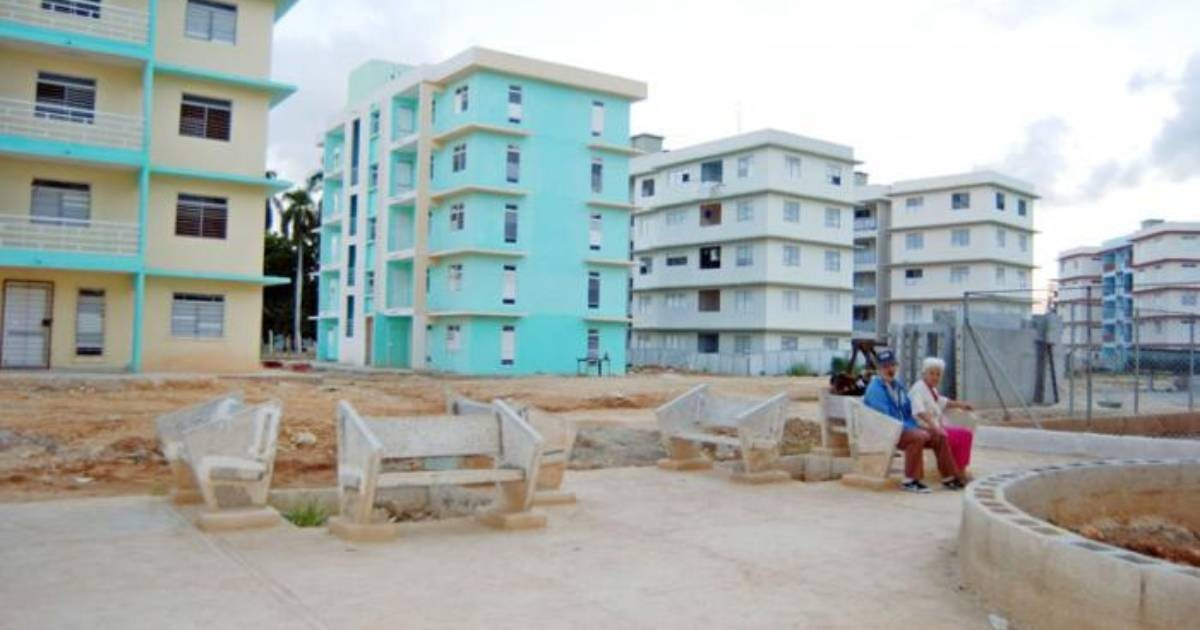
The United States government expanded its offensive of sanctions against the Cuban regime this Thursday by including, for the first time, the Ministry of Construction (MICONS) on the list of Specially Designated Nationals and Blocked Persons, known as SDN, by its English acronym, from the Office of Foreign Assets Control (OFAC).
The update published on August 20 by the Department of the Treasury also includes eight Cuban state-owned companies and three officials linked to the Cuban Institute of Friendship with the Peoples (ICAP), as part of the sanctions program associated with Executive Order 14404.
The designation of MICONS means that its assets and interests in property located in the United States or under the possession or control of U.S. persons are blocked and must be reported to OFAC. As a general rule, U.S. individuals and companies may not engage in transactions with the entity unless there is an applicable authorization or license.
The ministry, established in May 1963 and currently led by René Mesa Villafaña, oversees state policy related to construction and plays a role in one of the strategic sectors of the Cuban economy.
Eight state-owned companies are added to the blacklist
The new round of sanctions is not limited to MICONS. Washington also included Acinox Comercial, ACOREC S.A., CORATUR S.A., TRANSIMPORT, CONSUMIMPORT, the Comandante Ernesto Che Guevara Nickel Company, METALCUBA, and GEOMINSAL.
The designations extend U.S. restrictions to activities that encompass everything from foreign trade and tourism to the steel industry, transportation, and mining.
Among the sanctioned companies is the Comandante Ernesto Che Guevara Nickel Company, located in Moa, Holguín, which is linked to one of the main export activities of the Cuban economy.
METALCUBA and GEOMINSAL also appear, entities related to the metallurgical and mining sectors, respectively.
In the cases of CORATUR, TRANSIMPORT, and CONSUMIMPORT, the OFAC also identified them due to their connections with the Foreign Trade Business Group.
Being included on the SDN list poses an obstacle that can extend beyond operations directly related to the United States. Banks and foreign companies often take extra precautions with entities designated by OFAC due to the risk of becoming exposed to the U.S. sanctions regime.
Three officials from ICAP also sanctioned
The OFAC also included three officials associated with the Cuban Institute of Friendship with the Peoples (ICAP).
Among them is Fernando González Llort, president of the institution since 2017 and one of the five Cuban spies convicted in the United States for his involvement in the so-called Wasp Network.
Leima Martínez Freire and Noemi Ramona Rabaza Fernández were also appointed.
Washington also updated the information concerning ICAP, which was already listed among the sanctioned entities, to include new addresses associated with the organization.
Among them are the House of Friendship, located in El Vedado; the Salvador Allende Memorial House; and the Julio Antonio Mella International Camp, located in Caimito, Artemisa.
Washington tightens the grip on state structures
The measures announced this Thursday represent a new step in the campaign of maximum pressure that the administration of Donald Trump has launched against the economic, military, and governmental structures of the Cuban regime.
The offensive took on a new dimension with Executive Order 14404, signed by Trump on May 1, which expanded Washington's tools to sanction Cuban entities and apply pressure on foreign actors engaged in certain operations with designated individuals or institutions.
Since then, the sanctions have affected various areas of the state apparatus.
In June, GAESA, the Ministry of the Interior (MININT), the Ministry of the Revolutionary Armed Forces (MINFAR), the ICAP, and Miguel Díaz-Canel were designated. In July, Washington extended the measures to the Ministry of Tourism and the Rapid Response Brigades, and at the beginning of August, other entities linked to the military-industrial complex were added, including Tecnoimport and the Military Industry Union.
Related videos:
Filed under: