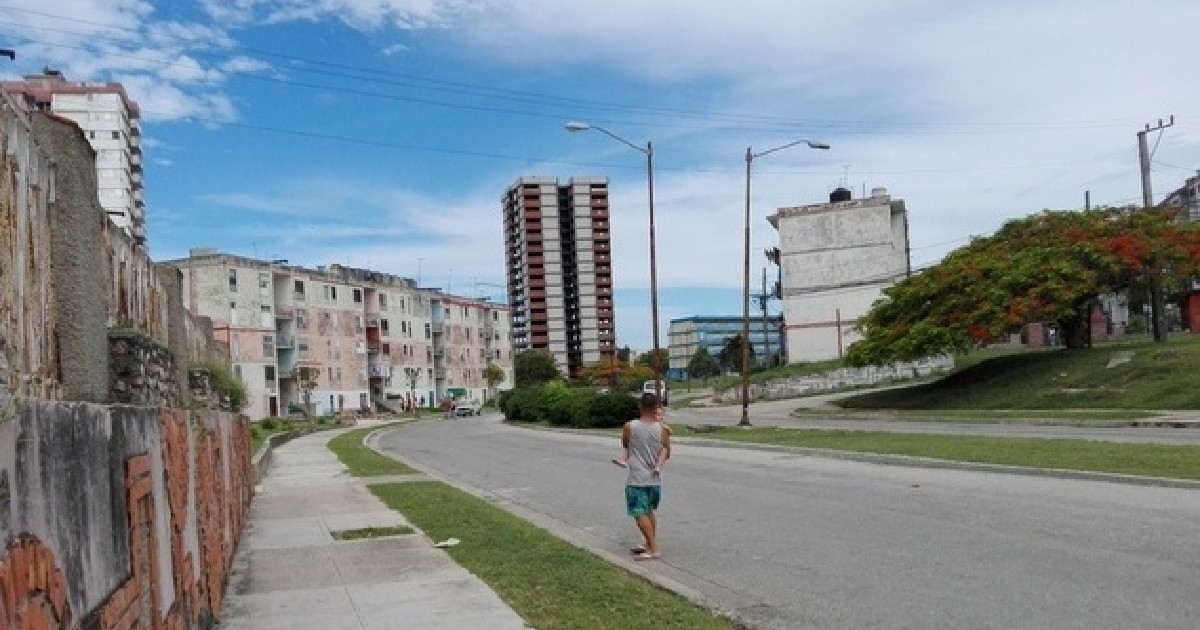
Families with children visited several recreational spots in Cienfuegos this Tuesday, finding no electricity, food, or water at any of them, according to a testimony posted on Facebook by the citizen José Alemán, who describes a total collapse of services in the province less than a week before the start of the school year.
Alemán recounts that a friend went to Playa Rancho Luna and found that state-run centers had no food, private businesses were not accepting electronic transfers, and the beers—served warm—were being sold for prices ranging from 580 to 850 Cuban pesos. The administrators at the location confirmed that there would be no electricity until Thursday.
"From there, they set out to find a place to spend the day with the children. They went by Playa Vista Alegre, La Laguna del Cura, La Punta, Covadonga, and nothing worked. Neither the state nor private individuals," Alemán wrote.
The situation described spans the entire province. In the town of Palmira, outages last three to four consecutive days, and when service is restored, it barely lasts three or four hours. "In Cienfuegos, nothing works, that is my opinion and conclusion," he stated.
The author also directly points to the management of local authorities: "They recently realized that the smallest province in the country has been facing a deficit of over 85 MW for months, surpassing several provinces like Las Tunas and Ciego de Ávila." He adds, "There you see the rampant corruption in society and that no one wants to address it."
The energy deficit in Cienfuegos is one of the most severe in the country in relative terms. On August 15, the province recorded a gap of 89 MW, while Unit 4 of the Carlos Manuel de Céspedes Thermoelectric Power Plant—located in that territory—has accumulated multiple emergency outages throughout 2026. On August 2, a simultaneous outage in the high-voltage lines Matanzas-Cienfuegos and Matanzas-Santa Clara divided the National Electroenergy System and left five western provinces without electricity for almost seven hours.
In mid-August, residents of the province reported outages lasting 50 to 60 consecutive hours, and in the community of Real Campiña, in Aguada de Pasajeros, 27 days without drinking water were documented since June.
The collapse comes at the worst time for Cuban families. On August 22, dozens of citizens protested outside the provincial government headquarters in Cienfuegos demanding answers regarding the blackouts and food loss. That same day, Cuban mothers publicly warned that they would not send their children to school if minimum conditions of electricity, water, and snacks were not guaranteed.
Despite this, the Minister of Education confirmed on Monday that the start of the school year will remain on September 1, without providing assurances about the conditions in which children will receive classes.
"Do not demand resistance and do not speak in the third person when a people die in the darkness lacking water and basic services," concludes Alemán in his post.
Related videos:
Filed under: