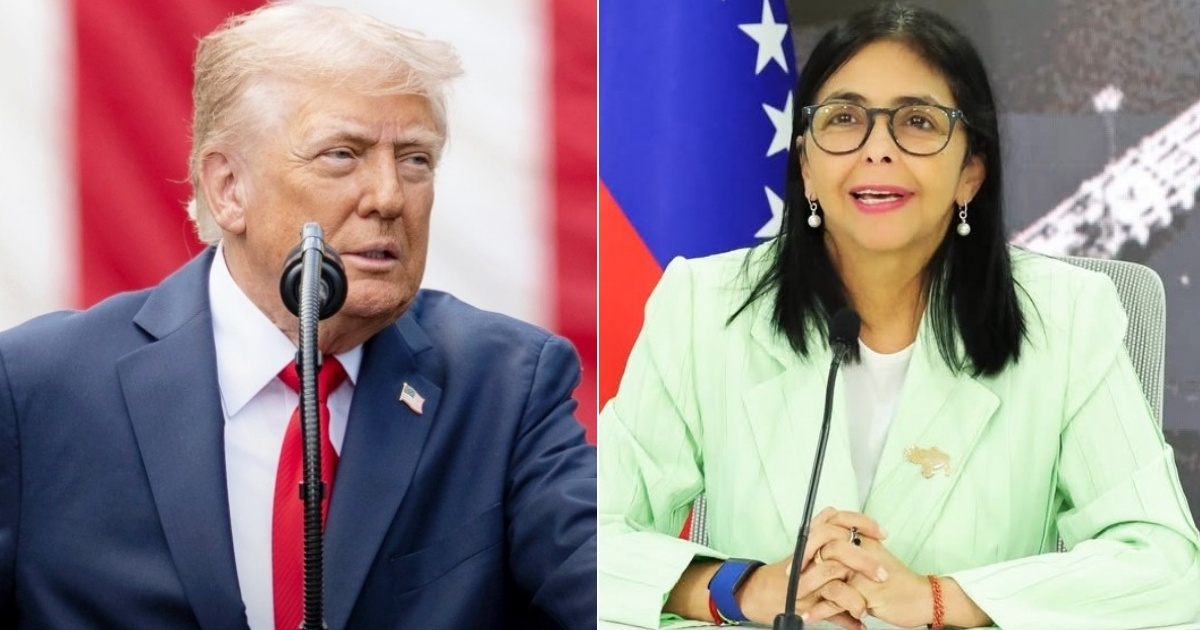
The president Donald Trump announced this Friday that the United States and Venezuela have signed what he described as "the largest oil agreement in world history," through which Washington gains majority control over more than 65 billion barrels of proven Venezuelan crude oil reserves, at no cost to the American taxpayer.
Trump made the announcement on his Truth Social platform and attributed the negotiation to Secretary of State Marco Rubio and Secretary of War Pete Hegseth, who worked in coordination with the acting president of Venezuela, Delcy Rodríguez, and with private sector partners.
"Under my direction, Secretary of State Marco Rubio and Secretary of War Pete Hegseth, working closely with the highly respected acting president of Venezuela, Delcy Rodríguez, and through a partnership with the private sector, have secured the majority control of the U.S. over more than 65 billion barrels of proven oil reserves in Venezuela, at no cost to the American taxpayer," wrote Trump.
According to the president, the transaction “more than doubles” the oil reserves of the United States, significantly increases the country’s energy supply, and will substantially reduce gasoline prices for Americans “in the long term.”
The 65 billion barrels mentioned by Trump represent approximately 21% of Venezuela's total proven reserves, which amount to around 303 billion barrels—the largest in the world—primarily concentrated in the Orinoco Oil Belt.
Reuters reported on Thursday that Washington was close to finalizing a long-term access agreement for Venezuelan reserves under a leasing model, and identified a list of 17 fields under negotiation, including areas in the Orinoco Belt and Lake Maracaibo.
Some of those fields are currently operated by a Chinese company under contracts signed during Nicolás Maduro's presidency.
The Washington Post warned that the scheme is "vast and potentially costly" and could face legal and constitutional challenges, both in Venezuela and in the United States.
The agreement is the culmination of a process that began following Maduro's capture by U.S. forces on January 3, 2026.
Since then, Washington took de facto control of Venezuelan oil exports: the first sales under U.S. supervision reached about 500 million dollars in January, and by the end of February, the accumulated volume had reached 2 billion dollars, with companies such as Valero, Chevron, Shell, Vitol, and Trafigura operating under special licenses.
In January, Trump had already announced that Venezuela would deliver between 30 and 50 million barrels at market price —a figure much lower than the reserves currently claimed— while the Secretary of Energy projected in February that Venezuelan crude would generate 10 billion dollars for the United States.
In May, Delcy Rodríguez stated that Venezuela was set to become a major producer under the new scheme, and in July, Trump described the relationship with Caracas as "excellent" just weeks before the mega-deal.
This Friday's announcement represents a qualitative leap compared to all previous agreements: moving from the management of sales and revenue flows to the intention of majority control over specific reserves, with development to be handled by American companies under a long-term leasing model.
"This transaction will greatly strengthen the already growing relationship between Venezuela and the United States," Trump concluded in his post.
Related videos:
Filed under: