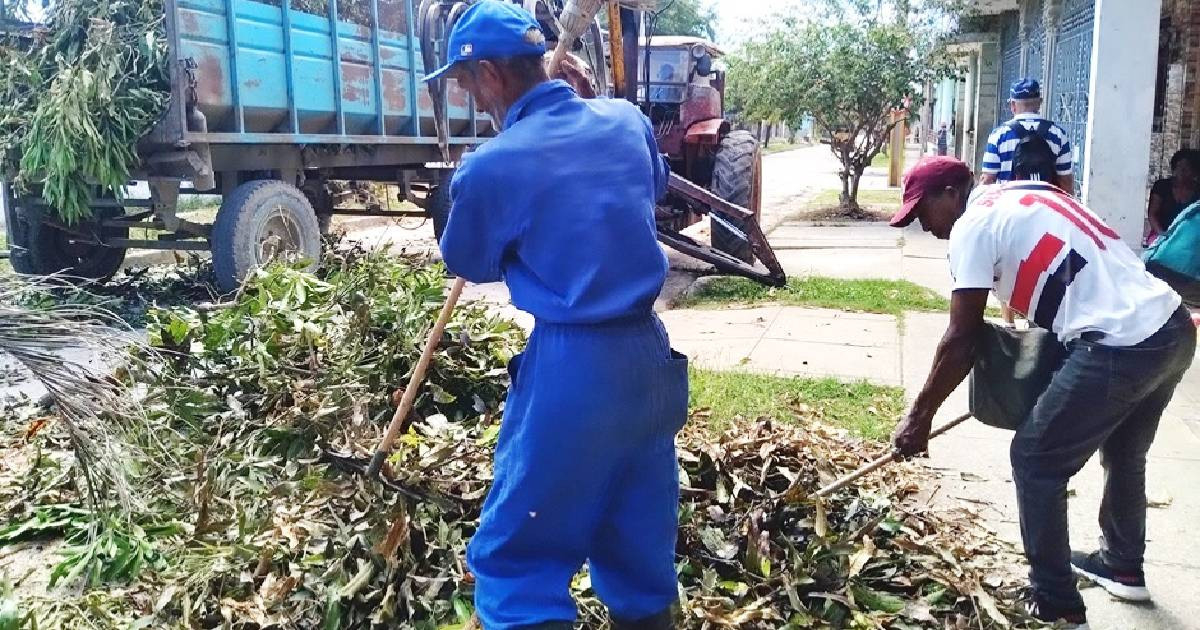
The proliferation of micro and mega landfills in the city of Guantánamo and in several municipal capitals dominated this Saturday's daily operational analysis meeting of the province, which remains under Epidemiological Alarm due to the advancement of dengue and other vectors.
The first secretary of the Communist Party in the territory, Yoel Pérez García, insisted that the collection of solid waste cannot rely solely on communal services.
"Contributing to solid waste collection should be a task for all organizations, entities, mass organizations, community factors, and popular participation," stated, according to a report from the official newspaper Venceremos.
The deputy governor Carlos Raúl Martínez Turro added an urgent argument, noting that the start of the school year is just days away and many of those landfills are located near daycare centers, primary schools, and other educational institutions, posing a direct health risk to children and teachers.
The accumulation of garbage is not a new phenomenon in Guantánamo. Data from 2023 revealed that the city generated approximately 1,200 cubic meters of waste daily, but only between 400 and 600 cubic meters were collected.
This chronic gap explains the ongoing formation of makeshift dumps that the authorities have been unable to eliminate for years.
In 2026, the crisis has deepened. In recent months, the fuel shortage paralyzed waste collection trucks and authorities turned to carts and animal traction to try to maintain some level of service.
In June, residents reported a large garbage dump in the heart of the city, with an increase in rodents and insects, and complaints about the inaction of the authorities.
Landfills become breeding grounds for the Aedes aegypti mosquito, the transmitter of dengue. At the end of July, Guantánamo concluded a week with 23 suspected cases of dengue and the municipalities of Imías and San Antonio del Sur were classified at an Alarm level within the Cuban endemic channel.
In mid-August, authorities acknowledged a significant worsening due to the increase of Aedes aegypti and deficiencies in the detection of fever cases, while identifying the municipalities of Guantánamo, Caimanera, San Antonio del Sur, El Salvador, and Niceto Pérez as the most affected.
The situation is set against a backdrop of a national crisis. Cuba ended 2025 with over 81,900 cases of dengue and chikungunya and at least 65 deaths, according to the Pan American Health Organization.
In June, the Deputy Minister of Public Health, Carilda Peña, publicly warned: "If we do not take a set of actions, we could face an epidemic".
Guantánamo is not the only province in this situation. The deterioration of communal services due to a lack of fuel and resources has led to similar problems in Pinar del Río, Holguín, Las Tunas, and Matanzas, where overflowing landfills have become a constant feature of the urban landscape.
Related videos:
Filed under: