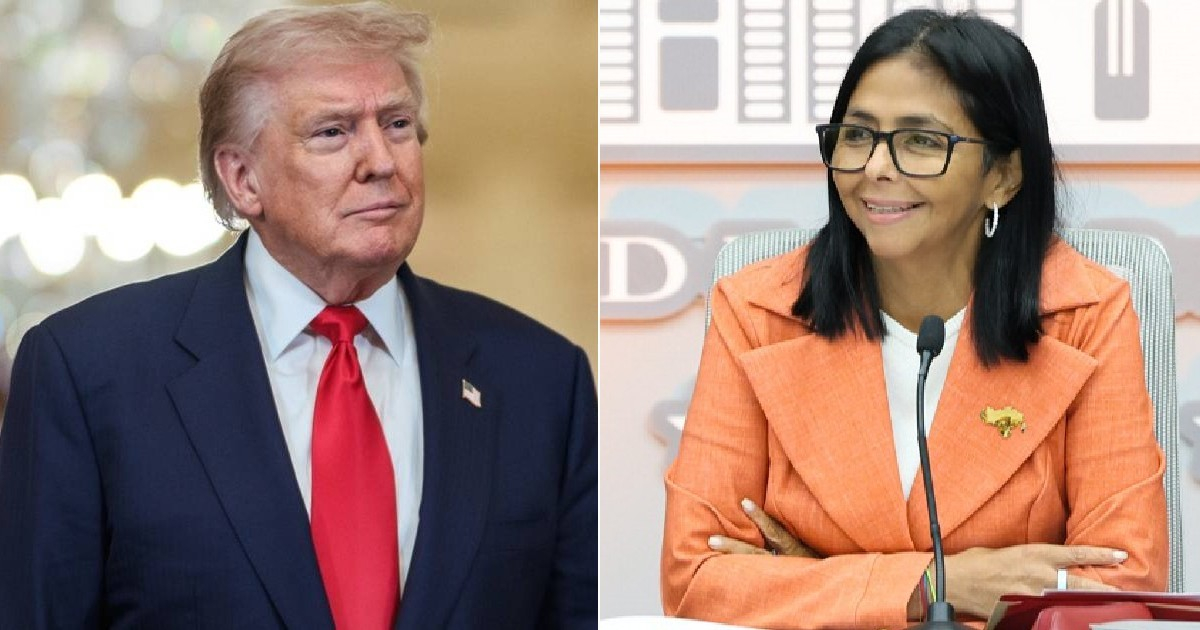
The interim president of Venezuela, Delcy Rodríguez, announced on Instagram the signing of agreements with Washington regarding energy, calling them a "historic milestone in bilateral relations between Venezuela and the U.S."
According to the statement, the agreement includes the development of 17 strategic fields with a proven potential of 65 billion barrels of oil, a projected investment of over 100 billion dollars, and more than 209 billion dollars in taxes for the Venezuelan state.
Delcy stated that it "will have a significant impact on the rebirth of our nation," and specifically thanked President Donald Trump, Secretary of State Marco Rubio, and the U.S. government "for their willingness to advance this agreement."
"This initiative is the result of strengthening the relationship between Venezuela and the United States, and it will facilitate a significant flow of investments aimed at the recovery and reconstruction of strategic infrastructure for the development of our hydrocarbon industry," he added.
For its part, the United Socialist Party of Venezuela (PSUV) issued an official statement expressing its "full support" for the interim president regarding the energy agreements signed with Washington, in a turn that marks a turning point in the Chavista discourse on oil sovereignty.
The document, published on X by the National Direction of the PSUV in Caracas, arrived just one day after Donald Trump proclaimed it on Truth Social as "the largest oil agreement in world history."
In a statement from a Venezuelan ruling party, it was declared: "The United Socialist Party of Venezuela, true to its historical commitment to national sovereignty and the welfare of the people, expresses its full support for our comrade Delcy Rodríguez, acting president of the Republic, regarding the agreements signed with the United States government on energy matters."
The text justified the support by stating that Venezuela needs "real solutions for economic revival, the restoration of public services, assistance for those affected by the double earthquake, job creation, and the recovery of workers' income."
The PSUV also framed the agreement as a way to overcome "more than a decade of economic sanctions, unilateral coercive measures, and unjust blockades," and called for taking advantage of "all possible tools, within the constitutional framework, to put our immense hydrocarbon reserves at the service of national development."
Those 65 billion barrels represent approximately 21% of Venezuela's total proven reserves—about 303 billion barrels, the largest in the world—mainly concentrated in the Orinoco Oil Belt.
Trump, when announcing the agreement on Truth Social, stated that the negotiation was led by Rubio and Secretary of War Pete Hegseth, and that the deal "more than doubles" the oil reserves of the United States at no cost to the taxpayer.
The PSUV's support for the agreement marks a historic turn for chavismo: in January 2026, Diosdado Cabello had gone from rejecting the sale of crude oil to Washington to publicly endorsing it with the statement, "if the United States is willing to buy our oil, we will sell it to them."
Months earlier, Rodríguez's praise for Chevron had generated criticism among chavista supporters who accused her of contradicting the historic discourse of the movement regarding oil sovereignty.
The agreement is the culmination of a process that began after the capture of Nicolás Maduro by U.S. forces on January 3.
According to a warning from the Washington Post, the scheme is "vast and potentially costly" and could face legal and constitutional challenges both in Venezuela and in the United States.
Related videos:
Filed under: