Matanzas will launch a multidisciplinary service for comprehensive pain management, both acute and chronic, in a territory that, like the country, has been facing unresolved health issues for months, reported the state agency ACN last Thursday.
The project is led by Dr. Adriano Alfonso Padrón, an anesthesiologist and head of the new service, who described the initiative as "a specialized service for the diagnosis and treatment of pain, with a comprehensive and multidisciplinary approach featuring consultations that will begin to be offered on Mondays, involving neurosurgeons, orthopedic specialists, and traumatologists, among other specialists, to address various painful conditions in one place," the source indicated.
In its first phase, the procedures will take place in a designated area within the provincial Oncology Hospital, designed to later incorporate more complex interventions for patients with various painful conditions.
The provincial consultation will be held in the former maternity hospital of the capital of Matanzas and will be accessible through referrals from primary and secondary care levels.
The planned techniques include ozone therapy in its various forms, platelet-rich plasma, ultrasound-guided blocks, therapeutic ultrasound, acupuncture, and electrotherapy. The service will also feature a specialist in natural and traditional medicine on a nearly full-time basis.
The project originates from research conducted by the University of Medical Sciences of Matanzas and is supported by the Direction of the Ministry of Foreign Trade in the province. Alfonso Padrón also emphasized that the service will place special emphasis on humanized childbirth, related to the flow of expectant mothers from the José Ramón López Tabrane Teaching Gynecological and Obstetric Hospital, aiming to apply analgesics during labor.
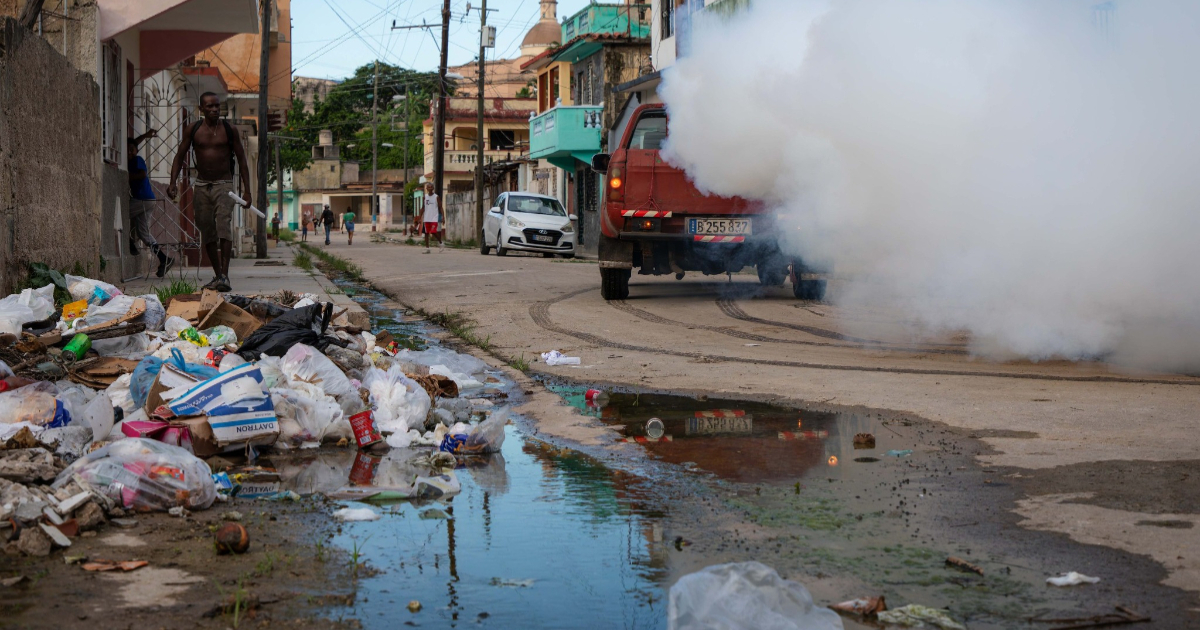
The announcement comes, however, at a time when the health situation in Matanzas contradicts any notion of progress. Throughout 2026, the province suspended elective surgeries in February to prioritize emergencies and oncology, recorded 18 active cases of hepatitis A in the Versalles neighborhood in April, identified its first cases of dengue of the season in June, and experienced a bedbug infestation at the López Tabrane Gyneco-Obstetric Hospital —the very center to which the new pain service aims to connect its humanized birth program.
More than 300,000 residents of the province lack stability in their water supply, as acknowledged by the First Deputy Prime Minister Inés María Chapman.
Deterioration is not exclusive to Matanzas. The Minister of Public Health, José Ángel Portal Miranda, admitted in February that the Cuban healthcare system was "on the brink of collapse". The UN reported in March nearly 100,000 postponed surgeries across the island and launched an emergency plan of 94.1 million dollars. For months, 461 out of 651 essential medications were out of stock in state pharmacies.
The pattern of health crisis is repeating across the country. This weekend, it was reported that pregnant women admitted to the hospital in Contramaestre had to carry buckets of water up the stairs due to a lack of basic services. And recently, it has emerged that, in the face of shortages, private economic actors have decided to deliver supplies, such as juices, to pediatric hospitals.
In that context, the pain management initiative from Matanzas emerges as a sign of slight progress amid a structural collapse that the regime itself has acknowledged, but which 67 years of dictatorship have intensified to the point of making it irreversible without a change in the system.
Related videos:
Filed under: