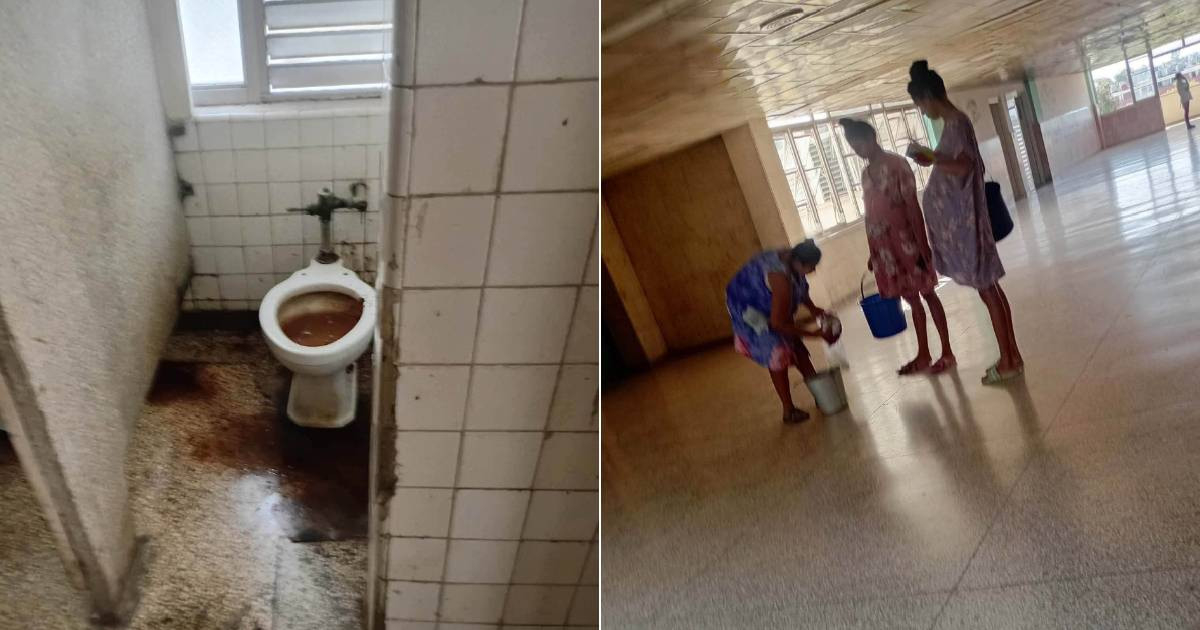
Pregnant women admitted to the Orlando Pantoja Tamayo General Hospital in Contramaestre, located in the province of Santiago de Cuba, are forced to carry buckets of water up and down the stairs because the facility lacks basic functioning services, alerted a complaint published on Facebook this Saturday.
"Hospital of torture. Pregnant women forced to carry their buckets of water, up and down the stairs, between society and misery. The best exercise for childbirth. No contractions, no forcing, and no tourniquets. Carry your little bucket of water until you reach 40 weeks," described with bitter irony the post signed by the user Yois Ramos.
The images accompanying the complaint show women in patient gowns handling cubes in the hospital corridors, as well as bathrooms in a state of extreme neglect, with toilets filled with reddish-brown water, wet floors covered in dirt, walls with mold and chronic moisture stains, and areas with accumulated garbage.
This is not the first time this hospital has been the focus of serious complaints. In December 2025, images shared on social media documented destroyed bathrooms, worms, cockroaches, rats, and a lack of medication, food, water, stretchers, and ambulances within the same facility.
In April, new complaints about the Pantoja Tamayo documented the Intensive Care Unit with overflowing toilets, floors flooded with unidentified liquids, rotten boxes, and scattered trash.
Public outrage in the comments of the post was widespread. Several users flatly rejected the official narrative that attributes the problems to the U.S. embargo.
"That's a lack of shame because they can't say that the blockade is also to blame, total audacity," wrote one person. Another was more direct about the internal management: "Shame is what they lack; pay the cleaning staff a decent wage so they can keep that hospital clean. What's the director there for, just to rob?"
A third comment summed up the feelings of many: "Going there will only make you sicker because the mess, the dirt, and the lack of hygiene make people more ill."
The situation in Contramaestre reflects a pattern of healthcare deterioration that affects hospitals across the island. In August, the William Soler Pediatric Hospital in Havana was reported for having abandoned bathrooms and service areas filled with debris.
On its part, the pediatric hospital in Cienfuegos has been dealing with a sewage leak that floods the emergency ramp for months.
At the Juan Bruno Zayas Hospital in Santiago de Cuba, also in August, a baby rat was spotted in the Perinatology room, an area designated for pregnant women and patients with high obstetric risk.
Pregnant women are one of the most vulnerable groups in this crisis. The Ministry of Public Health itself reported in February that 32,880 pregnant women were facing additional risks due to the fuel shortage, which directly affected ultrasounds and emergency transfers.
This Friday, the United Nations Children's Fund (Unicef) announced the shipment of 213,000 jars of prenatal supplements to Cuba, yet another indication of the ongoing shortage of supplies for pregnant women and nursing mothers that the Cuban healthcare system can no longer ensure on its own.
Related videos:
Filed under: