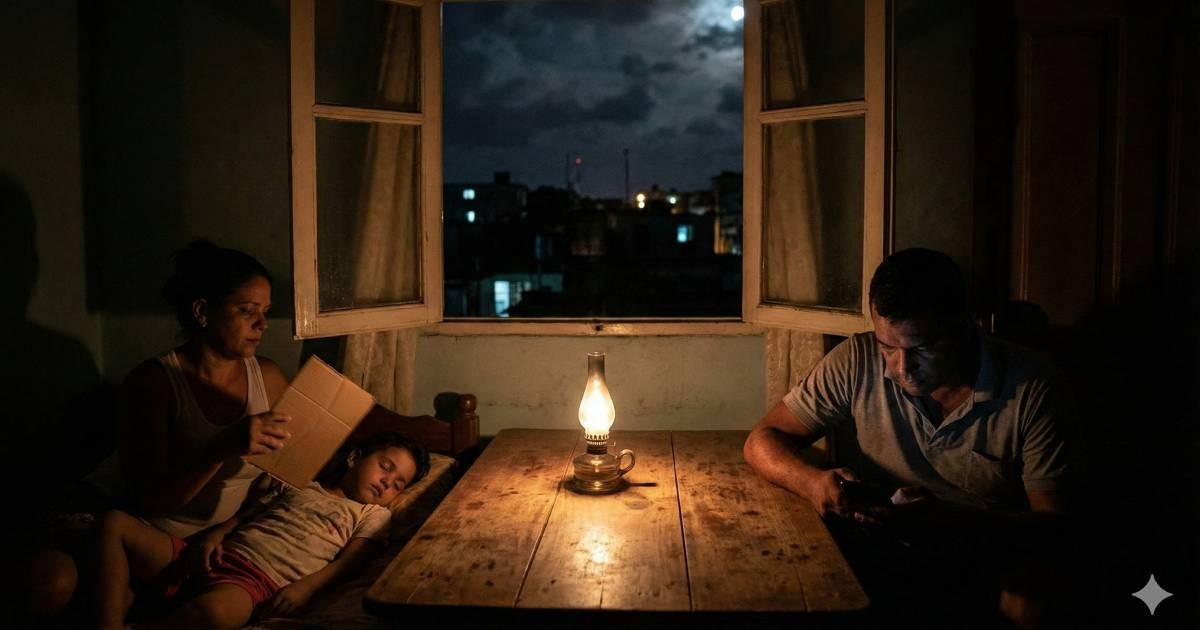
The Cuban electrical system closes August on the brink of its worst historical mark: the Electric Union predicts a shortfall of 2,410 MW during peak hours this Monday, just one megawatt below the record of 2,411 MW set on August 4, which would mean cutting off electricity to nearly 73% of the country simultaneously.
The events of Sunday were equally devastating. According to the official report, "yesterday the service was affected due to capacity deficits throughout the 24 hours, and the disruption continued during all the early morning hours," with a peak of 2,296 MW at 10:40 PM.
The forecast for the nighttime peak this Monday indicates an almost total collapse of the generating capacity: the system will have only 910 MW compared to a projected maximum demand of 3,300 MW, an unprecedented gap.
The situation of the thermoelectric plants is critical. Breakdowns have been reported in units 5, 6, and 8 of the Máximo Gómez thermoelectric plant in Mariel; unit 2 of the Ernesto Guevara de la Serna thermoelectric plant in Santa Cruz del Norte; unit 2 of the Lidio Ramón Pérez thermoelectric plant in Felton; and unit 6 of the Antonio Maceo thermoelectric plant in Renté.
These breakdowns are compounded by units undergoing maintenance: Unit 3 of Ernesto Guevara de la Serna, Units 5 and 6 of Antonio Maceo, and Unit 5 of the Diez de Octubre thermoelectric power plant in Nuevitas.
Distributed generation does not provide relief either. "106 distributed generation plants are out of service due to fuel unavailability," the report indicates, which also confirms the shutdown of the Patana de Regla, Patana de Melones, Mariel Fuel Plant, and Moa Fuel Plant.
The photovoltaic solar parks generated 4,331 MW/hour on Sunday, with a maximum output of 673 MW, a contribution that is insufficient to make up for the accumulated thermal deficit.
The close of August solidifies a summer of successive records. The escalation began with 2,341 MW on July 8, continued with 2,380 MW on July 29, and reached its peak with 2,411 MW at the beginning of August.
This month, the sixth and seventh total collapses of the National Electric System of the year were also recorded, on August 2 and 3, with complete national disconnections that left entire provinces in the dark for days.
The deterioration is due to structural causes that have been accumulating for decades: extreme aging of the thermoelectric infrastructure, chronic fuel shortages, lack of spare parts, and sustained underfinancing of the energy sector under the Cuban dictatorship.
According to the historical record of SEN outages, 2026 has accumulated at least seven total system disconnections, making this year the most critical in the recent electrical history of the island.
Related videos:
Filed under: