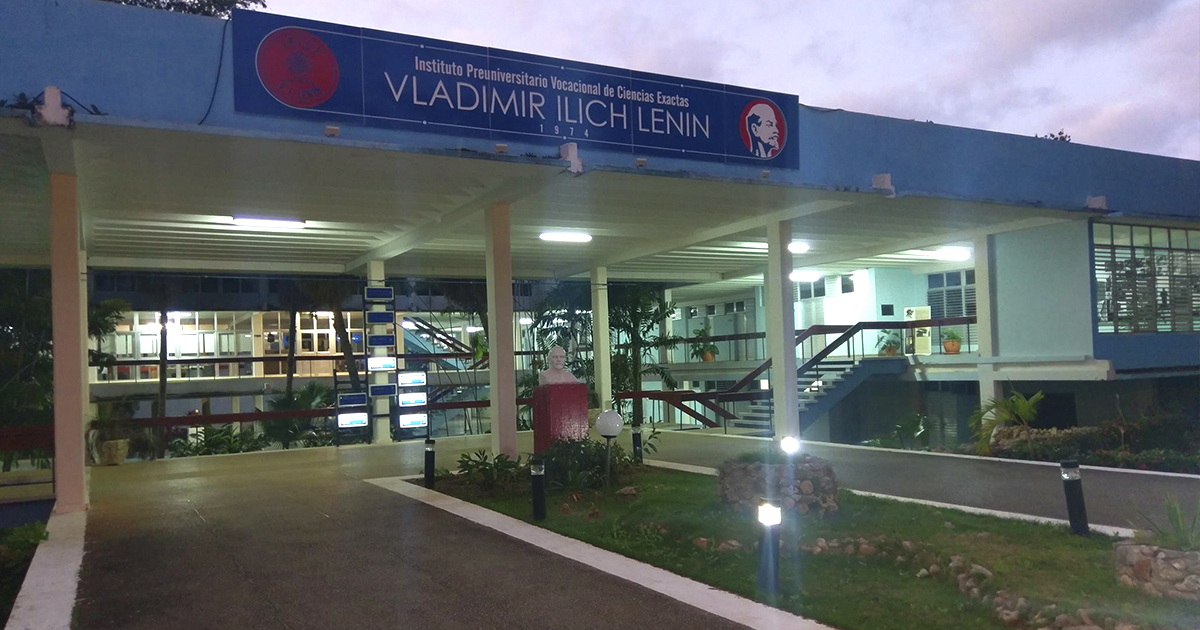
Families of students from the Lenin Vocational School in Havana reported serious shortages as the new school year approaches, including issues with water supply, a lack of approximately 400 mattresses, and the prospect of new power outages during the stay of the boarding students.
The complaint was disseminated this Monday by the Cuban activist Idelisa Diasniurka Salcedo Verdecia, who claimed to have received the information directly from parents and relatives concerned about the conditions in which their children will have to stay.
According to the testimony shared by the activist, during a meeting with the school administration, it was acknowledged that the water problem remains without a definitive solution.
The installed pump would not be operating with the necessary flow rate, and the newly acquired pumps would not be compatible with the existing installation, so work would still be underway on an alternative.
Families had also been informed that a Public Health check was expected to determine whether the available water could be considered safe to drink.
The complaint also states that the center is lacking approximately 400 mattresses. Some of the ones that exist would have had to be removed after a bedbug issue that occurred during the previous term, and among the proposed solutions, it was suggested that families with the means could bring their own mattresses for the students.
Salcedo questioned this "solution": "Since when is it the parents' responsibility to provide the necessary furniture for a state-run boarding school?" he wrote.
Blackouts are another concern raised. According to the version received by the activist, families have been advised to prepare containers to store water, rechargeable fans, and, if available, backup power equipment such as EcoFlow.
The publication also states that the institution would have warned that it would not be responsible for the safety of those specific equipment.
Another change noted by families is related to the fuel and transportation crisis. According to the complaint, a system of passes every 15 days is intended to be established: students would attend classes on a Monday and return home the following Friday.
This would mean that adolescents would spend about two consecutive weeks in a facility that, according to families, still faces difficulties with water, power outages, and the availability of mattresses.
Salcedo also warned about the impact that electrical outages could have on food preservation.
"It's not just about opening the school. It's about ensuring that it can remain open throughout the course under dignified conditions," the activist stated in her post.
The complaint also questions what would happen if the difficulties were temporarily resolved to allow the opening of the center, but reemerged weeks later.
The publication was accompanied by a photograph that, according to Salcedo, shows a school bathroom in a terrible state of hygiene.
Reactions of concern among parents and alumni
The complaint generated numerous reactions on social media. Some users described the conditions as "unacceptable" and expressed concern about the hygiene of the facilities and the presence of adolescents in residential care.
One person commented, "It is unacceptable what is happening to children and teenagers in schools," while another lamented, "How painful it is to see the school where I studied."
Others directly questioned the appropriateness of keeping scholarship students under the current circumstances and argued that, as long as adequate conditions do not exist, they should be allowed to continue their studies in external institutions and remain with their families.
The reports about Vocacional Lenin emerge at a time when the Cuban education system is attempting to start the 2026-2027 school year amid severe economic, energy, and transportation limitations.
This weekend, the official press portrayed the start of the school year as a demonstration of effort and resilience in the face of shortages, while schools and families are facing material difficulties in various parts of the country.
The Communist Party of Cuba itself described the start of the school year as "another act of heroism", referring to the economic conditions facing the educational system.
However, the reality behind the discourse is that the difficulties are not new.
In May, the Cuban government advanced the closure of the school year due to a lack of fuel and transportation issues, a situation that affected attendance and the operation of numerous centers.
Also, on the eve of the new school year, activists questioned whether teachers and students can manage the school year normally amid blackouts, food shortages, transportation difficulties, and the deterioration of facilities.
Related videos:
Filed under: