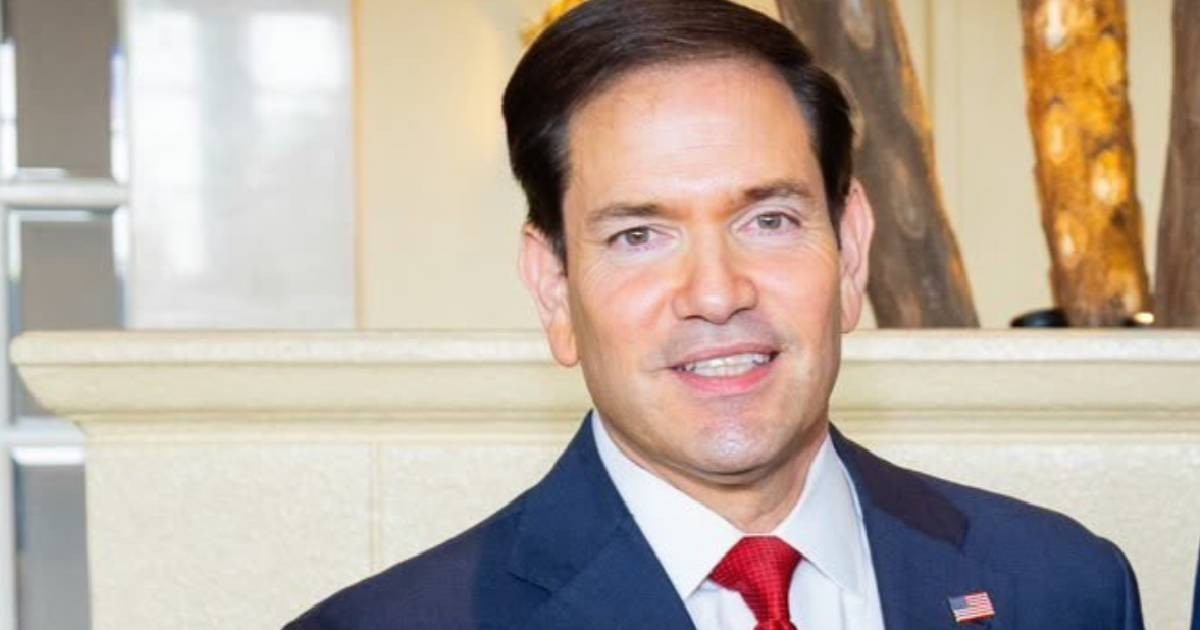
The U.S. Secretary of State, Marco Rubio, explained on Tuesday the details of the controversial oil agreement between Washington and Venezuela, and clarified that the pact was not signed with the interim government, but with North American Blue Energy Partners (NABEP), a private company in which the U.S. Department of War owns a 35% stake.
The agreement, announced by President Donald Trump at the end of August and described by the White House as "the largest oil agreement in history," grants NABEP concessions over 17 Venezuelan oil fields with estimated reserves of more than 65 billion barrels.
"This is not really an agreement with the interim government; it is an agreement with a private company that is participating alongside the United States, obviously through the system that exists at this moment," Rubio specified during an interview with journalist Sergio Novelli.
According to the Secretary of State, most of those 17 fields were previously under the control of Chinese and Russian interests, many of which had no active production. Rubio was straightforward in describing what happened during the Chavismo era.
"Cuba was being gifted billions of dollars' worth of oil barrels. China was paying very little for the oil, receiving it at a discount. In Russia's case, they were simply taking the oil in exchange for debt payments," he commented.
NABEP committed to investing up to 100 billion dollars in infrastructure and to paying around 200 billion in royalties and taxes throughout the duration of the agreement.
The U.S. will have the right to purchase 20% of the production at extraction cost for its strategic reserves.
There is, however, a discrepancy between sources: the Venezuelan government claims a duration of 25 years, while the White House has mentioned 100 years.
Rubio also responded to questions about Alejandro Betancourt, the Venezuelan businessman known as "bolichico" who controls NABEP and who is facing investigations for alleged money laundering in Spain and Switzerland, linked to a corruption scheme in PDVSA amounting to 4.85 billion dollars.
"We thoroughly investigated who we have in our system. Obviously, if this individual were under a U.S. investigation... there was no investigation against him within our system," stated the secretary, who also noted that Betancourt had supported the opposition during Juan Guaidó's time in 2019, which led to conflicts with the then-government of Maduro.
To ensure transparency in the handling of funds, Rubio noted that KPMG will conduct audits of all money generated in the short term, while in the long term, accountability will rest with a democratically elected government.
In political matters, the Secretary of State reiterated that Venezuela should eventually be governed by a government elected in free elections, although he did not set a specific date.
"For me, it would be as soon as possible. Obviously, the necessary conditions must exist, and those conditions need to be created," he said, listing among the requirements a legitimate National Electoral Council, reliable voting machinery, a free press, and international oversight.
About María Corina Machado, Rubio was emphatic: "María Corina Machado is a Venezuelan citizen who has every right to enter her country whenever she wants to return," although he expressed concern for her safety and emphasized that all exiled leaders should be able to return without danger.
Regarding Venezuelan migrants in the U.S., Rubio dismissed the idea that the Trump administration's policies are specifically directed against that community and noted that they apply to all migrants.
In response to the possibility of approving a new Deferred Forced Action (DED), he stated that "everything is possible," but clarified that this alternative is not being discussed at the moment.
Rubio mentioned that in October 2026, leaders of the 2015 National Assembly will meet to advance political negotiations, a step that Washington considers crucial for facilitating the transition to a legitimate government in Venezuela.
Related videos:
Filed under: