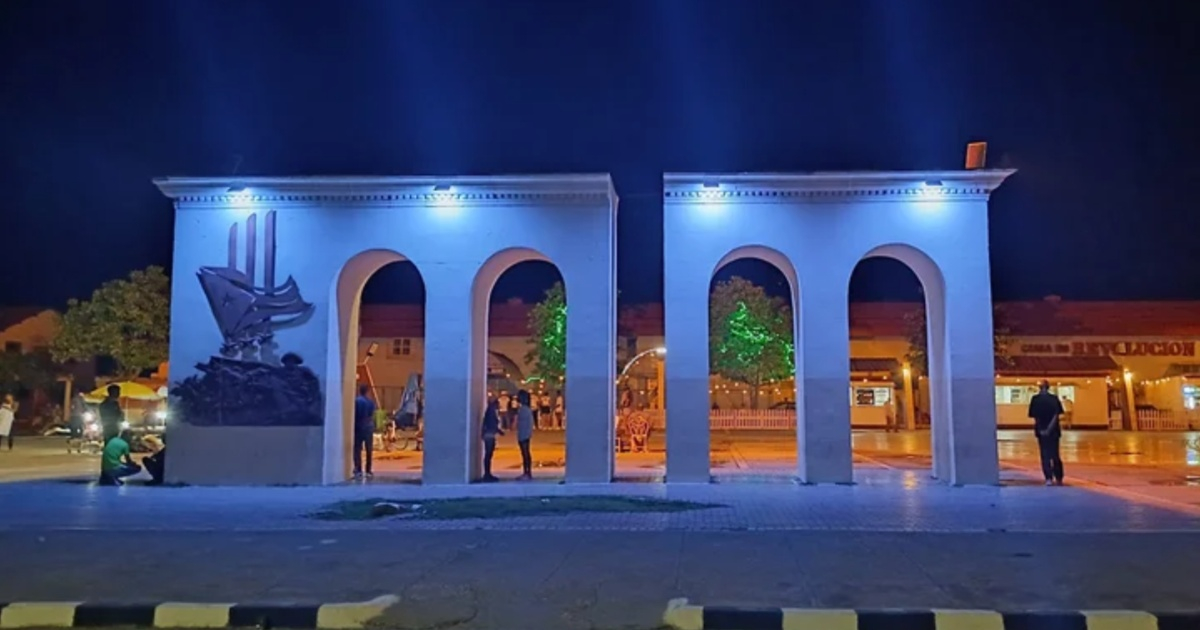
A driver of an electric tricycle lost his life in the early hours of August 30 in the vicinity of Los Coquitos de Jaibo, in the municipality of Guantánamo, following a knife attack that, according to a report shared by the Facebook profile linked to MININT "Guantánamo y su Verdad," allegedly stemmed from a dispute over the payment for a ride.
According to the preliminary report published by that official profile, two young cousins, aged 17 and 18, hired the driver's service at the intersection of Ahogados and 3 Sur.
The agreed price was 2,000 pesos per person, but upon arriving at the destination —in front of the entrance to Los Coquitos de Jaibo, near the El Guamá cafeteria— they only handed over 1,200 pesos in total, far below what was agreed.
The disagreement escalated into a discussion that turned into physical aggression: one of the young men pulled out a knife and attacked the driver, inflicting several wounds to the upper body, primarily in the neck area.
The victim was taken to the Provincial Hospital of Guantánamo, where they died while receiving medical care.
After the attack, the two young men took the tricycle and tried to hide it, according to the official report.
The vehicle was later found in a residence on Pedro A. Pérez and 9 Norte. The engine had been dismantled and sold; it was also recovered during the investigations.
Both individuals were identified and arrested as suspected direct perpetrators.
However, the version of the profile linked to the MININT did not convince those who are familiar with the case. In the comments of the post, several users pointed out inconsistencies that contradict the thesis of a mere dispute over money.
"That story is poorly told because if the problem of the two young men was that they lacked money and they left arguing while there were knives involved, why did they take the tricycle and dismantle it? There's more to the story here," wrote an internet user.
Another comment summed up the widespread skepticism: "That story is too manufactured and there are too many inconsistencies. A lot of things don't add up... at least the killers were arrested; we will find out what really happened at some point."
The most powerful voice was that of a young woman who identified herself as the victim's niece and confirmed the crime. "Even if that were the case, it doesn't justify anything. Don't speak about what you don't know. There is a family suffering. I want justice and for them to suffer the same as my uncle did," she wrote.
The inconsistencies pointed out by users —the theft of the tricycle, the dismantling of its motor for sale, and the alleged theft of the victim's shoes and cell phone— suggest a premeditated robbery motive, which the official account downplays by portraying the incident as a spontaneous dispute over payment.
So far, the fact has not been independently verified.
Electric tricycles are the main means of informal transportation in eastern provinces like Guantánamo, where public transport shortages are chronic. Their drivers often work at night and handle cash, which makes them vulnerable to assaults.
The official investigation is still ongoing, and it will be the judicial authorities who determine the legal classification of the act and the degree of responsibility of each individual involved.
The thefts of electric tricycles have occurred in various provinces. At the end of August, a family with two minors lost their main source of income after unknown individuals entered their home in Havana during the early morning and stole the electric tricycle they used for work.
At the beginning of that same month, a man was arrested in Guantánamo for the alleged theft of at least five of these vehicles.
In May, a man died during a robbery in Santiago de Cuba when he was attacked for his tricycle, while in June another victim reported the disappearance of theirs in Varadero.
Social media has sometimes been used to locate vehicles. In May, the police recovered a stolen tricycle in San Miguel del Padrón after it was identified in a sales advertisement on Facebook.
Related videos:
Filed under: