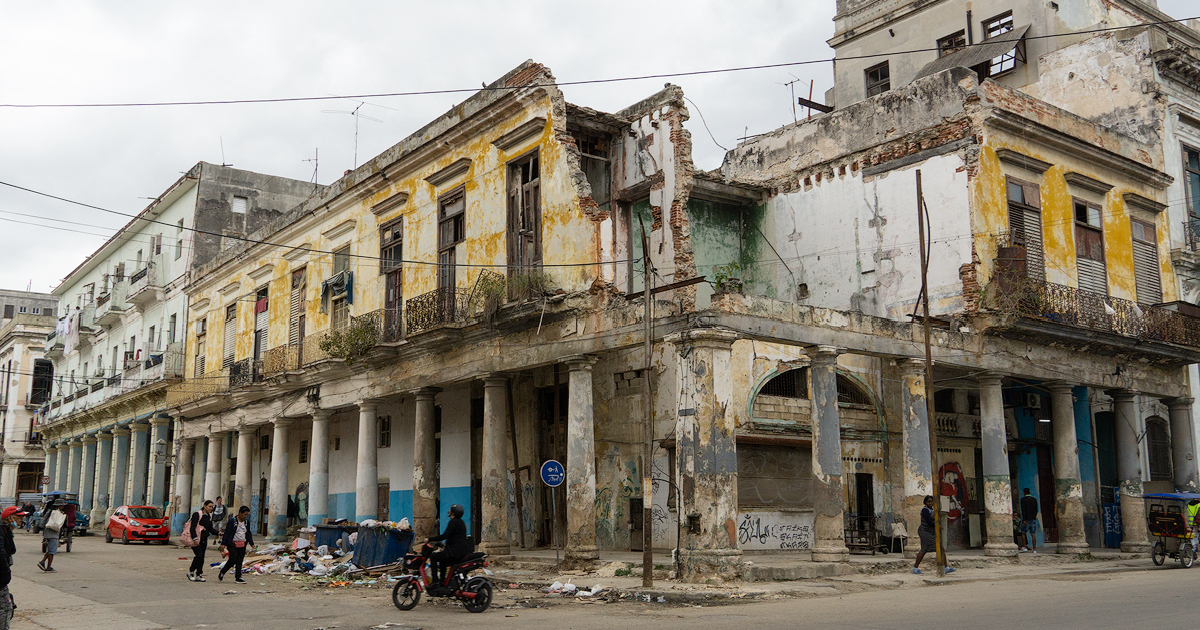
The Cuban regime announced this Friday that the 42nd edition of the Havana International Fair (FIHAV) will be held in a virtual format from November 24 to 26, 2026, as reported by the official Prensa Latina.
The announcement was made by Óscar Pérez-Oliva, Vice President of the Council of Ministers and head of the Ministry of Foreign Trade and Foreign Investment, during a press conference held this Friday.
The announcement comes at the worst economic moment for Cuba in decades: a projected GDP contraction between -6.5% and -7.2% for 2026, chronic blackouts, shortages of fuel and food, and inflation that independent estimates place near 70%.
The only confirmed in-person event will be on November 26, featuring an Investment Forum where an update on the Business Opportunities Portfolio in Cuba will be presented.
As a new feature of this edition, Pérez-Oliva highlighted the creation of a specific space for interaction with Cuban businesspeople residing abroad, a segment that the regime has sought to engage with in recent years due to the shortage of foreign currency.
The official also noted that the fair will serve as a platform to showcase the 176 economic and social transformations approved by the government in 2026, described as the most significant economic reform in decades and driven by the depth of the crisis.
At the same time, Pérez-Oliva himself acknowledged that several foreign companies that participate annually in FIHAV will not be present at this edition.
"We are aware that many foreign companies that provided services in Cuba have withdrawn due to the financial persecution caused by the implementation of the maximum pressure policy of the U.S. administration," he stated.
Despite this, the minister remained optimistic: "Companies that participated annually will not be present, but a significant number of new players should be involved."
The virtual format is not an isolated novelty. In May of this year, the International Tourism Fair also adopted an online format with only one in-person day in Varadero, and the International Book Fair was postponed and relocated due to power outages.
The pattern reflects the actual operational limitations of the country, which the regime presents as modernization decisions.
The previous edition, FIHAV 2025, was held in person at Expocuba from November 24 to 29, 2025, featuring over 700 exhibitors from 63 countries and 250 Cuban companies. On that occasion, the government also announced measures to open up to foreign investment and for Cubans living abroad as potential investors, promises that have not reversed the economic deterioration.
The Cuban economy has recorded a decline of over 15% since 2020, according to the Center for the Study of the Cuban Economy, as reported by international media.
The withdrawal of the Canadian company Sherritt following the sanctions of May 2026 – which halted the Energas power plant in Matanzas – illustrates the true extent of this deterioration, which the regime attributes to the U.S. embargo but which has structural roots in six decades of a centralized economic model.
Related videos:
Filed under: